• Latest News

    Monday, May 23, 2016

    The American Prejudice Against Color


    In 1853, William G. Allen, the "Coloured Professor" of Classics at New York Central College, became engaged to Mary King, a student at the coeducational, racially integrated school and daughter of a local white abolitionist minister. Rumors of their betrothal incited a mob of several hundred men armed with "tar, feathers, poles, and an empty barrel spiked with shingle nails." Allen and King narrowly escaped with their lives, married in New York City, and then fled as fugitives to England and Ireland. Their love story and brave resistance were recorded in engrossing detail by Allen in two pamphlets-The American Prejudice Against Color: An Authentic Narrative, Showing How Easily the Nation Got into An Uproar (1853) and A Short Personal Narrative (1860). Reproduced here in their entirety, Allen's forthright, eloquent, and ironic accounts, which include excerpts from abolitionist and anti-abolitionist newspaper reports about the incident, drew renewed threats against the exiled pair as well as support from the couple's circle of anti-slavery friends and allies, a diverse group including Harriet Beecher Stowe, Beriah Green, Gerrit Smith, Reverend Samuel J. May, and George Thompson. The experiences related by Allen vividly illustrate the rampant fears of "amalgamation" that sparked violent protests in antebellum America. He also reveals white abolitionists' contradictions regarding mixed-race relationships. Also contained in this volume is Louisa May Alcott's M.L., a fictional tale of interracial love based on her familiarity with the Allen-King episode through her abolitionist uncle, the Reverend Samuel J. May. Alcott's story was refused by The Atlantic magazine because, she said, it "might offend the dear South." An insightful introduction by editor Sarah Elbert places the writings within a historical and cultural context. She details William G. Allen's notable career as a graduate of the Oneida Institute and as an active abolitionist in the network reaching from New York's North Star Country through Boston, Canada, England, and Ireland. In exile, William and Mary King Allen, important members of the trans-Atlantic movement, continued their struggle for "free association" and supported their family by teaching poor children in London.


    Download Link

    Religion and AIDS in Africa


    The African AIDS epidemic has sparked fierce debate over the role of religion. Some scholars and activists argue that religion is contributing to the spread of HIV and to the stigmatization of people living with AIDS. Others claim that religion reduces the spread of HIV and promotes care and support for the sick and their survivors.

    Religion and AIDS in Africa offer the first comprehensive empirical account of the impact of religion on the AIDS epidemic. Jenny Trinitapoli and Alexander Weinreb draw upon extensive fieldwork in Malawi, including hundreds of interviews with religious leaders and lay people, and survey data from more than 30 other sub-Saharan African countries. Their research confirms the importance of religious narratives and institutions in everything related to AIDS in Africa. Among other key findings, Trinitapoli and Weinreb show that a combination of religious and biomedical approaches to prevention reduces risk most effectively; that a significant minority of religious leaders encourage condom use; that Christian congregations, in particular, play a crucial role in easing suffering among the sick and their dependents; and that religious spaces, in general, are vital for disseminating information and developing new strategies for HIV prevention and AIDS mitigation.

    For anyone wishing to move beyond the rhetoric and ideology that plague debates about one of the most challenging crises of our time, Religion and AIDS in Africa is the authoritative account. It will change the way readers think about religious life and about AIDS in the region.


    Download Link

    Reconstructing Womanhood: The Emergence of the Afro-American Woman Novelist


    This cultural history of nineteenth-century narratives of slave and free women traces the ways in which these writings began to resist dominant literary conventions and to offer the first alternative versions of black womanhood. Covering the period between the 1850s and the turn of the century, it depicts an era of intense cultural and political activity when Afro-American women first began to emerge as novelists. Why black women wrote novels, and what they thought novels could do, are among the questions discussed. Students of American literature and of black history; women's studies.


    Download Link
    Friday, May 20, 2016

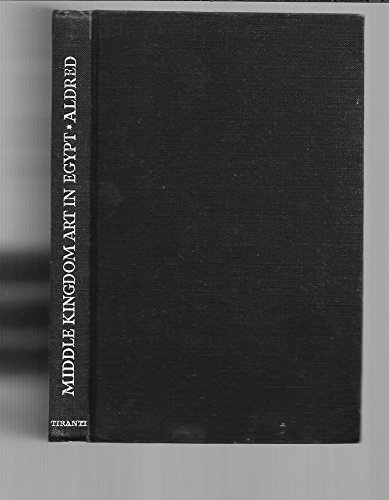
    Middle Kingdom Art In Ancient Egypt, 2300-1590 B.C


    A companion volume to the author's: Old Kingdom art 3188 to 2294 B.C., and New Kingdom art 1500 to 1315 B.C.


    Download Link
    Sunday, May 1, 2016

    Medieval Africa 1250-1800


    This radically revised and updated companion volume to the authors' well-known Africa since 1800 (now in its fourth edition) takes African history from about 1250 AD, when African societies were expanding their political and economic scope, and when Islamic influences were already reaching across the Sahara and down the Indian Ocean coastline. It continues through the period of early European contact from the fifteenth century onward, with much emphasis on expanding Atlantic trade.


    Download Link

    Igbo Arts: Community and Cosmos


    This exhibition catalog is a striking reflect off the arts originating from the Igbo people in Nigeria. The Igbo produce a wide variety of art including traditional figures, masks, artifacts, and textiles, plus works in metals such as bronze. Artworks from the Igbo have been found from as early as 9th century with the bronze artifacts found at Igbo Ukwu. This catalog is exquisitely illustrated throughout with 338 color and b/w photographic reproductions.


    Download Link

    History of The Negro Race In America 1619 To 1800


    George Washington Williams was an American Civil War veteran, minister, politician, lawyer, journalist, and groundbreaking historian of African-American history. Shortly before his death he traveled to King Leopold II's Congo Free State. Shortly before his death he traveled to King Leopold II's Congo Free State. Shocked by what he saw, he wrote an open letter to Leopold about the suffering of the region's inhabitants at the hands of Leopold's agents, which spurred the first public outcry against the regime running the Congo under which millions lost their lives.


    Download Link

    History of Ancient Egypt


    George Rawlinson (1812-1902) was a prolific author about classical history, and History of Ancient Egypt is one of Rawlinson’s most famous works. From the Library and Lighthouse of Alexandria to the Great Pyramid at Giza, the Ancient Egyptians produced several wonders of the world, revolutionized architecture, and construction, created some of the world’s first systems of mathematics and medicine, and established language and art that spread across the known world. With world-famous leaders like King Tut and Cleopatra, it’s no wonder that today’s world has so many Egyptologists.
    What makes the accomplishments of the Ancient Egyptians all the more remarkable is that Egypt was historically a place of great political turbulence. Its position made it both valuable and vulnerable to tribes across the Mediterranean and the Middle East, and Ancient Egypt had no shortage of its own internecine warfare. Its most famous conquerors would come from Europe, with Alexander the Great laying the groundwork for the Hellenic Ptolemy line and the Romans extinguishing that line after defeating Cleopatra and driving her to suicide.


    Download Link

    Evil In Africa: Encounters With The Everyday


    William C. Olsen, Walter E. A. van Beek, and the contributors to this volume seek to understand how Africans have confronted evil around them. Grouped around notions of evil as a cognitive or experiential problem, evil as the malevolent process, and evil as an inversion of justice, these essays investigate what can be accepted and what must be condemned in order to evaluate being and morality in African cultural and social contexts. These studies of evil entanglements take local and national histories and identities into account, including state politics and civil war, religious practices, Islam, gender, and modernity.


    Download Link
    Scroll to Top