• Latest News

    Tuesday, September 29, 2015

    After the Dance: My Life with Marvin Gaye

    A riveting cautionary tale about the ecstasy and dangers of loving Marvin Gaye, a performer passionately pursued by all—and a searing memoir of drugs, sex, and old school R&B from the wife of legendary soul icon Marvin Gaye. After her seventeenth birthday in 1973, Janis Hunter met Marvin Gaye—the soulful prince of Motown with the seductive liquid voice whose chart-topping, socially conscious album What’s Going On made him a superstar two years earlier. Despite a seventeen-year-age difference and Marvin’s marriage to the sister of Berry Gordy, Motown’s founder, the enchanted teenager and the emotionally volatile singer began a scorching relationship. One moment Jan was a high school student; the next she was accompanying Marvin to parties, navigating the intriguing world of 1970s-‘80s celebrity; hanging with Don Cornelius on the set of Soul Train, and helping to discover new talent like Frankie Beverly. But the burdens of fame, the chaos of dysfunctional families, and the irresistible temptations of drugs complicated their love. Primarily silent since Marvin’s tragic death in 1984, Jan at last opens up, sharing the moving, fervently charged story of one of music history’s most fabled marriages. Unsparing in its honesty and insight, illustrated with sixteen pages of black-and-white photos, After the Dance reveals what it’s like to be in love with a creative genius who transformed popular culture and whose artistry continues to be celebrated today. Download Link

    Soul Train: The Music, Dance, and Style of a Generation

    From Ahmir "Questlove" Thompson of the award-winning hip-hop group the Roots, comes this vibrant book commemorating the legacy of Soul Train—the cultural phenomenon that launched the careers of artists such as Tina Turner, Stevie Wonder, the Jackson 5, Whitney Houston, Lenny Kravitz, LL Cool J, and Aretha Franklin. Questlove reveals the remarkable story of the captivating program, and his text is paired with more than 350 photographs of the show's most memorable episodes and the larger-than-life characters who defined it: the great host Don Cornelius, the extraordinary musicians, and the people who lived the phenomenon from dance floor. Gladys Knight contributed a foreword to this incredible volume. Nick Cannon contributed the preface. Download Link
    Monday, September 28, 2015

    Religion and Hip Hop

    From Don Imus's "nappy headed-ho's" and default public scapegoating of Hip Hop culture to the burial of the "N" word by black religious leaders, Religion and Hip Hop settles the score between the sacred and the profane by drawing on data on youth and religion, recently published books by rappers that look like Bibles, and new religious sensibilities among youth culture. What we call religious in Hip Hop and youth culture, aint' that religious, after all. Miller suggests, "We must begin again by rethinking the religious." Religion and Hip Hop brings together the category of religion, hip hop cultural modalities and the demographic of youth. Bringing postmodern theory and critical approaches in the study of religion to bear on Hip Hop cultural practices, this book examines how scholars in religious and theological studies have deployed and approached religion when analyzing Hip Hop data. Using existing empirical studies on youth and religion to the cultural criticism of the Humanities, Religion and Hip Hop argues that common among existing scholarship is a thin interrogation of the category of religion. As such, Miller calls for a redescription of religion in popular cultural analysis - a challenge she further explores and advances through various materialist engagements. Going beyond the traditional and more common approach of analyzing rap lyrics, from film, dance, to virtual reality, Religion and Hip Hop takes a fresh approach to exploring the paranoid posture of the religious in popular cultural forms, by going beyond what "is" religious about Hip Hop culture. Rather, Miller explores what rhetorical uses of religion in Hip Hop culture accomplish for various and often competing social and cultural interests. Download Link

    White people do not know how to behave at entertainments designed forladies & gentlemen of colour: William Brown's African & American theater

    In August 1821, William Brown, a free man of color and a retired ship's steward, opened a pleasure garden on Manhattan's West Side. It catered to black New Yorkers, who were barred admittance to whites-only venues offering drama, music, and refreshment. Over the following two years, Brown expanded his enterprises, founding a series of theaters that featured African Americans playing a range of roles unprecedented on the American stage and that drew increasingly integrated audiences. Marvin McAllister explores Brown's pioneering career and places his theatrical experiments within the broader context of American social, political, and cultural history. He reveals how each of Brown's ventures--the African Grove, the Minor Theatre, the American Theatre, and the African Company--explicitly cultivated an intercultural, multiracial environment. He also investigates the negative white reactions, verbal and physical, that led to Brown's managerial retirement in 1823. Brown left his mark on American theater by shaping the careers of his performers and creating new genres of performance. Beyond that legacy, says McAllister, this nearly forgotten theatrical innovator offered a blueprint for a truly inclusive national theater. Download Link

    Destiny and Race: Selected Writings, 1840-1898

    A major 19th-century reformer and intellectual, Alexander Crummell (1819-1898) was the first black American to receive a degree from Cambridge University. Upon graduation, he sailed to Liberia, where from 1853 to 1872 he worked as a farmer, educator, small business operator, and Episcopal missionary. Returning to America in 1873, he established St. Luke's Episcopal Church in Washington, D.C., serving as its pastor until 1894. Crummell remained active in the black community throughout his later years and in 1897 founded the American Negro Academy, which he intended as a challenge to the power of Booker T. Washington's accommodationist philosophy. Download Link
    Sunday, September 27, 2015

    American Warlord: A True Story

    Chucky Taylor is the American son of the infamous African dictator Charles Taylor. Raised by his mother in the Florida suburbs, at the age of 17 he followed his father to Liberia, where he ended up leading a murderous militia. Chucky is now in a federal penitentiary, the only American ever convicted of torture. This shocking and essential work of reportage tells his tragic and terrifying story for the first time. Download Link

    Edward Wilmot Blyden: Pan-Negro Patriot, 1832-1912

    Edward Wilmot Blyden, widely known as the father of Pan-Africanism, was born on August 3, 1832 in Saint Thomas, in what are now the U.S Virgin Islands. Blyden was the third of seven children and was born to Romeo and Judith Blyden, a tailor and schoolteacher, respectively. The family lived in a predominantly Jewish and English speaking community, and attended church at the integrated Dutch Reformed Church. Blyden’s parents were free and literate at a time when most blacks on the islands were enslaved and illiterate. In 1842, the family moved to Porto Bello, Venezuela where Blyden first discovered his facility with languages. He also found that black free Venezuelans performed much the same menial labor as enslaved blacks in the Virgin Islands. Upon the family’s return to Saint Thomas Blyden became a student of Rev. John P. Knox, the pastor at the Dutch Reformed Church. Rev. Knox, impressed with Blyden’s scholarly potential, his mentor and through him Blyden decided to become a clergyman. In May 1850, Blyden accompanied Mrs. Knox, the clergyman’s wife, to the U.S to enroll into Rutgers’ Theological College in New Jersey but was refused admission because of his race. Blyden turned his attention to Africa. The West African nation of Liberia had become independent in 1847. Blyden accepted an offer in 1850 to come to Liberia to teach. Soon after his arrival in January 1851, Blyden was employed at Alexander High School in Monrovia. There he began self-directed studies of theology, the classics, geography and mathematics. In 1858 Blyden was ordained a Presbyterian Minister and appointed Principal of Alexander High School. He was also appointed editor of the Liberian Herald, then the only newspaper in the nation, by Liberian President Joseph Roberts. Drawing on both scriptures and science, Blyden challenged the arguments about black inferiority that were increasingly popular in Europe and North America during this period. He argued black equality and used examples of little known but successful persons of African ancestry. Between 1856 and 1887 Blyden authored four books, A Voice From Bleeding Africa (1856); A Vindication of the African Race; Being a Brief Examination of the Arguments in Favor of African Inferiority (1862); Africa for the Africans (1872); and Christianity, Islam and the Negro Race (1887) as well as numerous articles to advance his case. Blyden also challenged black and mulatto elites in Liberia who hoped to monopolize political power. During the 1860s and early 1870s Blyden was Liberia’s Secretary of State and Professor of Classics at Liberia College. From these posts he called for the emigration of skilled and intelligent Black West Indians and African Americans to Liberia. Not surprisingly his proposals drew determined opposition from the Liberian elite. Nonetheless in 1885, Blyden ran for President of Liberia. After his defeat he went into self-imposed exile in neighboring Sierra Leone. Edward Wilmot Blyden died in Sierra Leone on February 7, 1912. Download Link

    The Impact of the Haitian Revolution in the Atlantic World David P.Geggus

    The slave revolution that two hundred years ago created the state of Haiti alarmed and excited public opinion on both sides of the Atlantic. Its repercussions ranged from the world commodity markets to the imagination of poets, from the council chambers of the great powers to slave quarters in Virginia and Brazil and most points in between. Sharing attention with such tumultuous events as the French Revolution and the Napoleonic War, Haiti's fifteen-year struggle for racial equality, slave emancipation, and colonial independence challenged notions about racial hierarchy that were gaining legitimacy in an Atlantic world dominated by Europeans and the slave trade. The Impact of the Haitian Revolution in the Atlantic World explores the multifarious influence -- from economic to ideological to psychological -- that a revolt on a small Caribbean island had on the continents surrounding it. Fifteen international scholars, including eminent historians David Brion Davis, Seymour Drescher, and Robin Blackburn, explicate such diverse ramifications as the spawning of slave resistance and the stimulation of slavery's expansion, the opening of economic frontiers, and the formation of black and white diasporas. They show how the Haitian Revolution embittered contemporary debates about race and abolition and inspired poetry, plays, and novels. Seeking to disentangle its effects from those of the French Revolution, they demonstrate that its impact was ambiguous, complex, and contradictory. Download Link

    Shaka Zulu (Hero Journals)

    What was life like as leader of the Zulu Kingdom in Africa? Why not let Shaka Zulu tell you about it? Youll read about his triumphant victories and agonizing defeats, as well as learning what day-to-day life was like for the Zulu people. A postscript explains how and what happened after he died. Download Link

    Odun: Discourses, Strategies and Power in the Yoruba Play ofTransformation
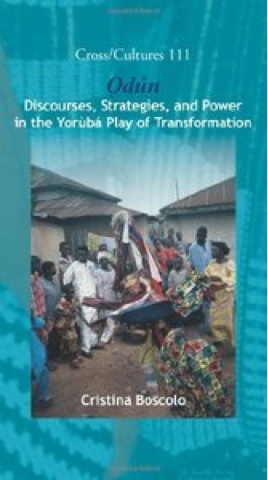
    A poetic 'voice' scans the rhythm of academic research, telling of the encounter with odún ; then the voice falls silent. What is then raised is the dust of a forgotten academic debate on the nature of theatre and drama, and the following divergent standpoints of critical discourses bent on empowering their own vision, and defining themselves, rather, as counterdiscourses. This, the first part of the book: a metacritical discourse, on the geopolitics (the inherent power imbalances) of academic writing and its effects on odún , the performances dedicated to the gods, ancestors, and heroes of Yorùbá history. But odún : where is it? and what is it? And the 'voice'? The many critical discourses have not really answered these questions. In effect, odún is many things. To enable the reader to see these, the study proceeds with an 'intermezzo': a frame of reference that sets odún , the festival, in its own historico-cultural ecoenvironment, identifying the strategies that inform the performance and constitute its aesthetic. It is a 'classical' yet, for odún , an innovative procedure. This interdisciplinary background equips the reader with the knowledge necessary to watch the performance, to witness its beauty, and to understand the 'half words' odún utters. And now the performance can begin. The 'voice' emerges one last time, to introduce the second section, which presents two case studies. The reader is led, day by day, through the celebrations - odún edì , Morèmi's story, and its realization in performance; then confrontation by the masks of the ancestors duing odún egúngún (particularly as held in Ibadan). The meaning of odún becomes clearer and clearer. Odún is poetry, dances, masks, food, prayer. It is play ( eré ) and belief ( ìgbàgbó ). It is interaction between the players (both performers and spectators). It is also politics and power. It contains secrets and sacrifices. It is a reality with its own dimension and, above all, as the quintessential site of knowledge, it possesses the power to transform. In short, it is a challenge - a challenge that the present book and its voices take up. Download Link

    The Tears of Re: Beekeeping in Ancient Egypt

    According to Egyptian mythology, when the ancient Egyptian sun god Re cried, his tears turned into honey bees upon touching the ground. For this reason, the honey bee was sacrosanct in ancient Egyptian culture. From the art depicting bees on temple walls to the usage of beeswax as a healing ointment, the honey bee was a pervasive cultural motif in ancient Egypt because of its connection to the sun god Re. Gene Kritsky delivers the first book to examine the relationship between the honey bee and ancient Egyptian culture, through the lenses of linguistics, archeology, religion, health, and economics. Kritsky delves into ancient Egypt's multifaceted society, and traces the importance of the honey bee in everything from death rituals to trade. In doing so, Kritsky brings new evidence to light of how advanced and fascinating the ancient Egyptians were. This richly illustrated work appeals to a broad range of interests. For archeology lovers, Kritsky delves into the archeological evidence of Egyptian beekeeping and discusses newly discovered tombs, as well as evidence of manmade hives. Linguists will be fascinated by Kritsky's discussion of the first documented written evidence of the honeybee hieroglyph. And anyone interested in ancient Egypt or ancient cultures in general will be intrigued by Kritsky's treatment of the first documented beekeepers. This book provides a unique social commentary of a community so far removed from modern humans chronologically speaking, and yet so fascinating because of the stunning advances their society made. Beekeeping is the latest evidence of how ahead of their times the Egyptians were, and the ensuing narrative is as captivating as every other aspect of ancient Egyptian culture. Download Link

    Alexander Crummell: A Study of Civilization and Discontent


    This remarkable biography, based on much new information, examines the life and times of one of the most prominent African-American intellectuals of the nineteenth century. Born in New York in 1819, Alexander Crummell was educated at Queen's College, Cambridge, after being denied admission to Yale University and the Episcopal Seminary on purely racial grounds. In 1853, steeped in the classical tradition and modern political theory, he went to the Republic of Liberia as an Episcopal missionary, but was forced to flee to Sierra Leone in 1872, having barely survived republican Africa's first coup. He accepted a pastorate in Washington, D.C., and in 1897 founded the American Negro Academy, where the influence of his ideology was felt by W.E.B. Du Bois and future progenitors of the Garvey Movement. A pivotal nineteenth-century thinker, Crummell is essential to any understanding of twentieth-century black nationalism. Download Link
    Saturday, September 26, 2015

    Speaking Treason Fluently: Anti-Racist Reflections From an Angry WhiteMale

    In this highly anticipated follow-up to White Like Me: Reflections on Race from a Privileged Son , activist Tim Wise examines the way in which institutional racism continues to shape the contours of daily life in the United States, and the ways in which white Americans reap enormous privileges from it. The essays included in this collection span the last ten years of Wise’s writing and cover all the hottest racial topics of the past decade: affirmative action, Hurricane Katrina, racial tension in the wake of the Duke lacrosse scandal, white school shootings, racial profiling, phony racial unity in the wake of 9/11, and the political rise of Barack Obama. Wise’s commentaries make forceful yet accessible arguments that serve to counter both white denial and complacency—two of the main obstacles to creating a more racially equitable and just society. Speaking Treason Fluently is a superbly crafted collection of Wise’s best work, which reveals the ongoing salience of race in America today and demonstrates that racial privilege is not only a real and persistent problem, but one that ultimately threatens the health and well-being of the entire society. Download Link

    Ten Hills Farm: The Forgotten History of Slavery in the North

    Ten Hills Farm tells the powerful saga of five generations of slave owners in colonial New England. Settled in 1630 by John Winthrop--who would later become governor of the Massachusetts Bay Colony--Ten Hills Farm was a six-hundred-acre estate just north of Boston. Winthrop, famous for envisioning his 'city on the hill' and lauded as a paragon of justice, owned slaves on that ground and passed the first law in North America condoning slavery. In this mesmerizing narrative, C. S. Manegold exposes how the fates of the land and the families that lived on it were bound to America's most tragic and tainted legacy. Challenging received ideas about America and the Atlantic world, Ten Hills Farm digs deep to bring the story of slavery in the North full circle--from concealment to recovery. Manegold follows the compelling tale from the early seventeenth to the early twenty-first century, from New England, through the South, to the sprawling slave plantations of the Caribbean. John Winthrop, famous for envisioning his "city on the hill" and lauded as a paragon of justice, owned slaves on that ground and passed the first law in North America condoning slavery. Each successive owner of Ten Hills Farm--from John Usher, who was born into money, to Isaac Royall, who began as a humble carpenter's son and made his fortune in Antigua--would depend upon slavery's profits until the 1780s, when Massachusetts abolished the practice. In time, the land became a city, its questionable past discreetly buried, until now. Challenging received ideas about America and the Atlantic world, Ten Hills Farm digs deep to bring the story of slavery in the North full circle--from concealment to recovery. Download Link

    Bewitching Development: Witchcraft and the Reinvention of Developmentin Neoliberal Kenya

    These days, development inspires scant trust in the West. For critics who condemn centralized efforts to plan African societies as latter day imperialism, such plans too closely reflect their roots in colonial rule and neoliberal economics. But proponents of this pessimistic view often ignore how significant this concept has become for Africans themselves. In Bewitching Development , James Howard Smith presents a close ethnographic account of how people in the Taita Hills of Kenya have appropriated and made sense of development thought and practice, focusing on the complex ways that development connects with changing understandings of witchcraft. Similar to magic, development’s promise of a better world elicits both hope and suspicion from Wataita. Smith shows that the unforeseen changes wrought by development—greater wealth for some, dashed hopes for many more—foster moral debates that Taita people express in occult terms. By carefully chronicling the beliefs and actions of this diverse community—from frustrated youths to nostalgic seniors, duplicitous preachers to thought-provoking witch doctors— Bewitching Development vividly depicts the social life of formerly foreign ideas and practices in postcolonial Africa. Download Link

    Malcolm X. Rights Activist and Nation of Islam Leader

    More than a string of fact and dates, the Essential Lives series reveals the influences that shaped each individual and how, in turn, each individual shaped American history. Complemented by archival photos and clear narration, these biographies begin with a snapshot in time to pique interest before continuing along with chronological coverage. Malcolm X describes how a young Malcolm Little, abandoned after his father died (presumably murdered by the KKK) and his mother was institutionalized, turned to a life of crime. The text focuses on his conversion to the Nation of Islam and his eventual roles as charismatic minister and civil rights activist. The balanced treatment does not shy away from controversy as it compares and contrasts Malcolm X’s and Martin Luther King Jr.’s approaches to civil rights. This series does an excellent job of depicting each individual as a nuanced human rather than an icon. Download Link

    Malcolm Little. The Boy Who Grew Up to Become Malcolm X

    Malcolm X grew to be one of America’s most influential figures. But first, he was a boy named Malcolm Little. Written by his daughter, this inspiring picture book biography celebrates a vision of freedom and justice. Bolstered by the love and wisdom of his large, warm family, young Malcolm Little was a natural born leader. But when confronted with intolerance and a series of tragedies, Malcolm’s optimism and faith were threatened. He had to learn how to be strong and how to hold on to his individuality. He had to learn self-reliance. Together with acclaimed illustrator AG Ford, Ilyasah Shabazz gives us a unique glimpse into the childhood of her father, Malcolm X, with a lyrical story that carries a message that resonates still today—that we must all strive to live to our highest potential. Download Link

    Between Cross and Crescent: Christian and Muslim Perspectives onMalcolm and Martin

    Professors Baldwin and Al-Hadid, at Vanderbilt and Tennessee State Universities respectively, persuasively argue that El-Hajj Malik El-Shabazz (better known as Malcolm X) and Martin Luther King Jr. shared the same views about the American and worldwide race struggle at their deaths. They offer refreshing biographical insights based on exhaustive research. With the exception of one chapter, which eloquently describes Malcolm X's evolution from Nation of Islam doctrine into Sunni Islam, each chapter presents both men's views on specific topics. The historical material is laced with an overview of contemporary events such as the Million Man March, the United Nations World Conference on Racism and the attacks on America on September 11. The most satisfying portraits emerge out of the chapters on El-Shabazz's and King's relationships with their wives and children. Stronger editing would have eliminated repetition, unnecessary length and a lack of focus. A clear description of how NOI doctrine differs from Islam is missing, leaving the uninformed reader to assume that Sunni Muslims share the NOI's views on race and gender. Baldwin and Al-Hadid show a bias toward King, glossing over his extramarital affairs and plagiarism while extensively quoting El-Shabazz's more incendiary remarks. The authors illustrate how El-Shabazz and King, though not reluctant leaders, unwillingly became prisoners of circumstance El-Shabazz by NOI doctrine and King by white liberals. That these leaders' message still resonates is proof of how profound and gifted they both were, and how much has been left undone since their deaths. Download Link

    The Political Legacy of Kwame Nkrumah of Ghana

    This work contributes to the fields of political science, sociology, development, economics, and international relations to furnish an understanding of the role and impact of one of Africa's, and indeed the entire Third World's, leading political figures. Download Link

    In the Name of Elijah Muhammad: Louis Farrakhan and The Nation of Islam

    In the Name of Elijah Muhammad tells the story of the Nation of Islam—its rise in northern inner-city ghettos during the Great Depression through its decline following the death of Elijah Muhammad in 1975 to its rejuvenation under the leadership of Louis Farrakhan. Mattias Gardell sets this story within the context of African American social history, the legacy of black nationalism, and the long but hidden Islamic presence in North America. He presents with insight and balance a detailed view of one of the most controversial yet least explored organizations in the United States—and its current leader. Beginning with Master Farad Muhammad, believed to be God in Person, Gardell examines the origins of the Nation. His research on the period of Elijah Muhammad’s long leadership draws on previously unreleased FBI files that reveal a clear picture of the bureau’s attempts to neutralize the Nation of Islam. In addition, they shed new light on the circumstances surrounding the murder of Malcolm X. With the main part of the book focused on the fortunes of the Nation after Elijah Muhammad’s death, Gardell then turns to the figure of Minister Farrakhan. From his emergence as the dominant voice of the radical black Islamic community to his leadership of the Million Man March, Farrakhan has often been portrayed as a demagogue, bigot, racist, and anti-Semite. Gardell balances the media’s view of the Nation and Farrakhan with the Nation’s own views and with the perspectives of the black community in which the organization actively works. His investigation, based on field research, taped lectures, and interviews, leads to the fullest account yet of the Nation of Islam’s ideology and theology, and its complicated relations with mainstream Islam, the black church, the Jewish community, extremist white nationalists, and the urban culture of black American youth, particularly the hip-hop movement and gangs. Download Link

    A Taste of Power: A Black Woman's Story

    Brown's account of her life at the highest levels of the Black Panther party's hierarchy. More than a journey through a turbulent time in American history, this is the story of a black woman's battle to define herself. Download Link

    A Time to Break Silence. The King Legacy Series, Book 10

    A Time to Break Silence presents Martin Luther King, Jr.'s most important writings and speeches—carefully selected by teachers across a variety of disciplines—in an accessible and user-friendly volume. Now, for the first time, teachers and students will be able to access Dr. King's writings not only electronically but in stand-alone book form. Arranged thematically in five parts, the collection includes nineteen selections and is introduced by award-winning author Walter Dean Myers. Included are some of Dr. King’s most well-known and frequently taught classic works, including “Letter from Birmingham Jail” and “I Have a Dream,” as well as lesser-known pieces such as “The Sword that Heals” and “What Is Your Life’s Blueprint?” that speak to issues young people face today. Download Link

    Martin & Malcolm & America: A Dream or a Nightmare

    This groundbreaking and highly acclaimed work examines the two most influential African-American leaders of this century. While Martin Luther King, Jr., saw America as essentially a dream . . . as yet unfulfilled, Malcolm X viewed America as a realized nightmare. James Cone cuts through superficial assessments of King and Malcolm as polar opposites to reveal two men whose visions are complementary and moving toward convergence. Download Link
    Wednesday, September 23, 2015

    Waste of a White Skin: The Carnegie Corporation and the Racial Logic ofWhite Vulnerability

    A pathbreaking history of the development of scientific racism, white nationalism, and segregationist philanthropy in the U.S. and South Africa in the early twentieth century, Waste of a White Skin focuses on the American Carnegie Corporation’s study of race in South Africa, the Poor White Study, and its influence on the creation of apartheid. This book demonstrates the ways in which U.S. elites supported apartheid and Afrikaner Nationalism in the critical period prior to 1948 through philanthropic interventions and shaping scholarly knowledge production. Rather than comparing racial democracies and their engagement with scientific racism, Willoughby-Herard outlines the ways in which a racial regime of global whiteness constitutes domestic racial policies and in part animates black consciousness in seemingly disparate and discontinuous racial democracies. This book uses key paradigms in black political thought—black feminism, black internationalism, and the black radical tradition— to provide a rich account of poverty and work. Much of the scholarship on whiteness in South Africa overlooks the complex politics of white poverty and what they mean for the making of black political action and black people’s presence in the economic system. Download Link
    Tuesday, September 22, 2015

    Closer to Freedom: Enslaved Women and Everyday Resistance in thePlantation South

    Recent scholarship on slavery has explored the lives of enslaved people beyond the watchful eye of their masters. Building on this work and the study of space, social relations, gender, and power in the Old South, Stephanie Camp examines the everyday containment and movement of enslaved men and, especially, enslaved women. In her investigation of the movement of bodies, objects, and information, Camp extends our recognition of slave resistance into new arenas and reveals an important and hidden culture of opposition. Camp discusses the multiple dimensions to acts of resistance that might otherwise appear to be little more than fits of temper. She brings new depth to our understanding of the lives of enslaved women, whose bodies and homes were inevitably political arenas. Through Camp's insight, truancy becomes an act of pursuing personal privacy. Illegal parties ("frolics") become an expression of bodily freedom. And bondwomen who acquired printed abolitionist materials and posted them on the walls of their slave cabins (even if they could not read them) become the subtle agitators who inspire more overt acts. The culture of opposition created by enslaved women's acts of everyday resistance helped foment and sustain the more visible resistance of men in their individual acts of running away and in the collective action of slave revolts. Ultimately, Camp argues, the Civil War years saw revolutionary change that had been in the making for decades. Download Link

    Brooklyn's Promised Land: The Free Black Community of Weeksville, NewYork

    In 1966 a group of students, Boy Scouts, and local citizens rediscovered all that remained of a then virtually unknown community called Weeksville: four frame houses on Hunterfly Road. The infrastructures and vibrant histories of Weeksville, an African American community that had become one of the largest free black communities in nineteenth century United States, were virtually wiped out due to Brooklyn’s exploding population and expanding urban grid. Weeksville was founded by African American entrepreneurs after slavery ended in New York State in 1827. Located in eastern Brooklyn, Weeksville provided a space of physical safety, economic prosperity, education, and even political power. It had a high rate of property ownership, offered a wide variety of occupations, and hosted a relatively large proportion of skilled workers, business owners, and professionals. Inhabitants organized churches, a school, orphan asylum, home for the aged, newspapers, and the national African Civilization Society. Notable residents of Weeksville, such as journalist and educator Junius P. Morell, participated in every major national effort for African American rights, including the Civil War. In Brooklyn’s Promised Land, Judith Wellman not only tells the important narrative of Weeksville’s growth, disappearance, and eventual rediscovery, but also highlights the stories of the people who created this community. Drawing on maps, newspapers, census records, photographs, and the material culture of buildings and artifacts, Wellman reconstructs the social history and national significance of this extraordinary place. Through the lens of this local community, Brooklyn’s Promised Land highlights themes still relevant to African Americans across the country. Download Link

    African American Women and Christian Activism: New York's Black YWCA,1905-1945

    The middle class black women who people Judith Weisenfeld’s history were committed both to social action and to institutional expression of their religious convictions. Their story provides an illuminating perspective on the varied forces working to improve quality of life for African Americans in crucial times. When undertaking to help young women migrating to and living alone in New York, Weisenfeld’s protagonists chose to work within a national evangelical institution. Their organization of a black chapter of the Young Women’s Christian Association in 1905 was a clear step toward establishing a suitable environment for young working women; it was also an expression of their philosophy of social uplift. And predictably it was the beginning of an equal rights struggle—to work as equals with white women activists. Growing and adapting as New York’s black community evolved over the decades, the black YWCA assumed a central role both in the community’s religious life and as a training ground for social action. Weisenfeld’s analysis of the setbacks and successes closes with the National YWCA’s vote in 1946 to adopt an interracial charter and move toward integration of local chapters, thus opening the door to a different set of challenges for a new generation of black activists. Weisenfeld’s account gives a vibrant picture of African American women as significant actors in the life of the city. And it bears telling witness to the religious, class, gender, and racial negotiations so often involved in American social reform movements. Download Link

    The Black Musician and the White City: Race and Music in Chicago,1900-1967

    Amy Absher’s The Black Musician and the White City tells the story of African American musicians in Chicago during the mid-twentieth century. While depicting the segregated city before World War II, Absher traces the migration of black musicians, both men and women and both classical and vernacular performers, from the American South to Chicago during the 1930s to 1950s. Absher’s work diverges from existing studies in three ways: First, she takes the history beyond the study of jazz and blues by examining the significant role that classically trained black musicians played in building the Chicago South Side community. By acknowledging the presence and importance of classical musicians, Absher argues that black migrants in Chicago had diverse education and economic backgrounds but found common cause in the city’s music community. Second, Absher brings numerous maps to the history, illustrating the relationship between Chicago’s physical lines of segregation and the geography of black music in the city over the years. Third, Absher’s use of archival sources is both extensive and original, drawing on manuscript and oral history collections at the Center for Black Music Research in Chicago, Columbia University, Rutgers’s Institute of Jazz Studies, and Tulane’s Hogan Jazz Archive. By approaching the Chicago black musical community from these previously untapped angles, Absher offers a history that goes beyond the retelling of the achievements of the famous musicians by discussing musicians as a group. In The Black Musician and the White City, black musicians are the leading actors, thinkers, organizers, and critics of their own story. Download Link

    The Other Black Bostonians: West Indians in Boston, 1900-1950

    This study of Boston’s West Indian immigrants examines the identities, goals, and aspirations of two generations of black migrants from the British-held Caribbean who settled in Boston between 1900 and 1950. Describing their experience among Boston’s American-born blacks and in the context of the city’s immigrant history, the book charts new conceptual territory. The Other Black Bostonians explores the pre-migration background of the immigrants, work and housing, identity, culture and community, activism and social mobility. What emerges is a detailed picture of black immigrant life. Johnson’s work makes a contribution to the study of the black diaspora as it charts the history of this first wave of Caribbean immigrants. Download Link

    The Strike That Changed New York: Blacks, Whites, and the OceanHill-Brownsville Crisis

    The review below shows the passion this episode created and can still evoke. To argue that Nauman wasn't "fired" is rather disingenuous. The letter he received stated "The Governing Board of the Ocean Hill Brownsville Demonstration School District has voted to end your employment in the schools of this district." Sounds like a pink slip to me. More importantly, as the reviewer below notes, is that "community control" was seen as as the last-ditch solution to the persistent problems faced by African-Americans in the school system. They were (and are) getting third-rate educations. The argument was (and is): why? "Cultural" reasons? Racism? If the African-American community ran its own schools, the argument went, black children would… One of the key points made by this book is that the Ocean Hill-Brownsville strike had the effect of making New York Jews "white" in the sense that they joined with their Italian and Irish outer-borough neighbors against the blacks. This seismic shift has largely remained intact. You can easily get by with reading only chapters 1-3, 5-6. Read this book if you have an interest in New York City history, politics of the "white backlash", and/or the rise of conservatism in the 1970s. Download Link

    Sir Arthur Lewis: A Biography

    Sir Arthur Lewis (1915-1991) was the first person to answer these questions in a systematic way. But he was much more than this; he was also the first Afro-Caribbean to be a professor at a British university, and the first black man to win the Nobel Prize for Economics. He had to fight against prejudice, in a way which for us, the best part of a century later ,is hard to imagine. Lewis was also more than an academic economist. He believed 'that economics 'concerns life more than numbers', and wrote in a simple style, accessible to all. In Africa, the West Indies and Moss Side (Manchester) in the 1950s and early 1960s, side by side with his academic work, he was also working as an activist to try and achieve a fair deal for the poor. But those attempts ended in frustration, and he was astonished to be awarded the Nobel Prize, in 1979, when he thought he had been forgotten. Barbara Ingham and Paul Mosley's biography describes the man, and the social relationships, behind these astonishing achievements. Although Lewis liked to present himself as a rational individualist who worked his way up by himself, both the ladders he managed to climb, and the snakes he often slipped down, cannot be understood without considering Lewis' friendships, rivalries and the structures of the societies in which he attempted, sometimes happily and sometimes disastrously, to intervene. Download Link
    Sunday, September 20, 2015

    The Legacy of Egypt (Legacy Series)

    This completely revised edition of a classic study of ancient Egypt takes full account of recent scholarly work. Tracing the values and achievements of the early inhabitants of the Nile valley, the late Harris's study includes chapters on "Mystery, Myth, and Magic," "The Hieroglyphic Tradition," mathematics and astronomy, medicine, law, literature, diplomacy, and the ancient Egyptian legacy to Africa and Islam. Download Link

    Abusir: Realm of Osiris

    At the center of the world-famous pyramid field of the Memphite necropolis there lies a group of pyramids, temples, and tombs named after the nearby village of Abusir. Long overshadowed by the more familiar pyramids at Giza and Saqqara, this area has nonetheless been the site, for the last forty years, of an extensive operation to discover its past. This exciting new book-richly endowed with black-and-white historical photographs, color plates of contemporary work, and informative illustrations-at last documents the uncovering by a dedicated team of Czech archaeologists of a hitherto neglected wealth of ancient remains dating from the Old Kingdom to the Late Period. This is Abusir, realm of Osiris, God of the dead, and its story is one of both modern archaeology and the long-buried mysteries that it seeks to uncover. Download Link

    Slow Fade to Black: The Negro in American Film, 1900-1942

    Set against the backdrop of the black struggle in society, Slow Fade to Black is the definitive history of African-American accomplishment in film--both before and behind the camera--from the earliest movies through World War II. As he records the changing attitudes toward African-Americans both in Hollywood and the nation at large, Cripps explores the growth of discrimination as filmmakers became more and more intrigued with myths of the Old South: the "lost cause" aspect of the Civil War, the stately mansions and gracious ladies of the antebellum South, the "happy" slaves singing in the fields. Cripps shows how these characterizations culminated in the blatantly racist attitudes of Griffith's The Birth of a Nation, and how this film inspired the N.A.A.C.P. to campaign vigorously--and successfully--for change. While the period of the 1920s to 1940s was one replete with Hollywood stereotypes (blacks most often appeared as domestics or "natives," or were portrayed in shiftless, cowardly "Stepin Fetchit" roles), there was also an attempt at independent black production--on the whole unsuccessful. But with the coming of World War II, increasing pressures for a wider use of blacks in films, and calls for more equitable treatment, African-Americans did begin to receive more sympathetic roles, such as that of Sam, the piano player in the 1942 classic Casablanca. A lively, thorough history of African-Americans in the movies, Slow Fade to Black is also a perceptive social commentary on evolving racial attitudes in this country during the first four decades of the twentieth century. Download Link

    Making Movies Black: The Hollywood Message Movie from World War II tothe Civil Rights Era

    This is the second volume of Thomas Cripps's definitive history of African-Americans in Hollywood. It covers the period from World War II through the civil rights movement of the 1960s, examining this period through the prism of popular culture. Making Movies Black shows how movies anticipated and helped form America's changing ideas about race. Cripps contends that from the liberal rhetoric of the war years--marked as it was by the propaganda catchwords brotherhood and tolerance--came movies that defined a new African-American presence both in film and in American society at large. He argues that the war years, more than any previous era, gave African-American activists access to centers of cultural influence and power in both Washington and Hollywood. Among the results were an expanded black imagery on the screen during the war--in combat movies such as Bataan, Crash Dive, and Sahara; musicals such as Stormy Weather and Cabin in the Sky; and government propaganda films such as The Negro Soldier and Wings for this Man (narrated by Ronald Reagan!). After the war, the ideologies of both black activism and integrationism persisted, resulting in the 'message movie' era of Pinky, Home of the Brave, and No Way Out, a form of racial politics that anticipated the goals of the Civil Rights Movement. Delving into previously inaccessible records of major Hollywood studios, among them Warner Bros., RKO, and 20th Century-Fox, as well as records of the Office of War Information in the National Archives, and records of the NAACP, and interviews with survivors of the era, Cripps reveals the struggle of both lesser known black filmmakers like Carlton Moss and major figures such as Sidney Poitier. More than a narrative history, Making Movies Black reaches beyond the screen itself with sixty photographs, many never before published, which illustrate the mood of the time. Revealing the social impact of the classical Hollywood film, Making Movies Black is the perfect book for those interested in the changing racial climate in post-World War II American life Download Link

    The Louisiana Native Guards: The Black Military Experience During theCivil War

    Early in the Civil War, Louisiana's Confederate government sanctioned a militia unit of black troops, the Louisiana Native Guards. Intended as a response to demands from members of New Orleans' substantial free black population that they be permitted to participate in the defense of their state, the unit was used by Confederate authorities for public display and propaganda purposes but was not allowed to fight. After the fall of New Orleans, General Benjamin F. Butler brought the Native Guards into Federal military service and increased their numbers with runaway slaves. He intended to use the troops for guard duty and heavy labor. His successor, Nathaniel P. Banks, did not trust the black Native Guard officers, and as he replaced them with white commanders, the mistreatment and misuse of the black troops steadily increased. The first large-scale deployment of the Native Guards occurred in May, 1863, during the Union siege of Port Hudson, Louisiana, when two of their regiments were ordered to storm an impregnable hilltop position. Although the soldiers fought valiantly, the charge was driven back with extensive losses. The white officers and the northern press praised the tenacity and fighting ability of the black troops, but they were still not accepted on the same terms as their white counterparts. After the war, Native Guard veterans took up the struggle for civil rights - in particular, voting rights - for Louisiana's black population. The Louisiana Native Guards is the first account to consider that struggle. By documenting their endeavors through Reconstruction, James G. Hollandsworth places the Native Guards' military service in the broader context of a civil rights movement thatpredates more recent efforts by a hundred years. This remarkable work presents a vivid picture of men eager to prove their courage and ability to a world determined to exploit and demean them. Download Link
    Friday, September 18, 2015

    The Ethiopian Jewish Exodus: Narratives of the Migrational Journey toIsrael, 1977-1985

    Between 1977 and 1985, some 20,000 Ethiopian Jews left their homes in Ethiopia and - motivated by an ancient dream of returning to the land of their ancestors, 'Yerussalem' - embarked on a secret and highly traumatic exodus to Israel. Due to various political circumstances they had to leave their homes in haste, go a long way on foot through unknown country, and stay for a period of one or two years in refugee camps, until they were brought to Israel. The difficult conditions of the journey included racial tensions, attacks by bandits, night travel over mountains, incarceration, illness and death. A fifth of the group did not survive the journey. This interdisciplinary, ground-breaking book focuses on the experience of this journey, its meaning for the people who made it, and its relation to the initial encounter with Israeli society. The author argues that powerful processes occur on such journeys that affect the individual and community in life-changing ways, including their initial encounter with and adaptation to their new society. Analysing the psychosocial impact of the journey, he examines the relations between coping and meaning, trauma and culture, and discusses personal development and growth. Download Link

    Handbook of West African Art

    This handbook was originally assembled as a catalogue for use with a special exhibit of West African art shown at the Milwaukee Public Museum in 1953. However, as much of the coverage presents original data or deals with such areas as the British Cameroons on which little has been written, the text was revised with the idea of presenting a handbook that would have both popular and reference value. Download Link

    Black Germany: The Making and Unmaking of a Diaspora Community,1884-1960

    This groundbreaking history traces the development of Germany's black community, from its origins in colonial Africa to its decimation by the Nazis during World War II. Robbie Aitken and Eve Rosenhaft follow the careers of Africans arriving from the colonies, examining why and where they settled, their working lives and their political activities, and giving unprecedented attention to gender, sexuality and the challenges of 'mixed marriage'. Addressing the networks through which individuals constituted community, Aitken and Rosenhaft explore the ways in which these relationships spread beyond ties of kinship and birthplace to constitute communities as 'black'. The study also follows a number of its protagonists to France and back to Africa, providing new insights into the roots of Francophone black consciousness and postcolonial memory. Including an in-depth account of the impact of Nazism and its aftermath, this book offers a fresh critical perspective on narratives of 'race' in German history. Download Link
    Wednesday, September 16, 2015

    Message to the People: The Course of African Philosophy

    In September 1937, three years before his death, Marcus Garvey assembled a small group of his most trusted organizers. For almost a quarter of a century he had led the Universal Negro Improvement Association, at its peak the largest international mass movement in the history of African peoples. Now he wanted to pass on the lessons he had learned, to the group best suited to carry the struggle forward. For one month he instructed this elite student body, twevle hours a day, seven days a week. The sessions were secret and much of the instruction was not written down. The students did, however receive written copies of twenty-two lessons, which Garvey called the Course of African Philosophy. This fascinating distillation of a great leader's experience is published here for the first time. Download Link

    Advancing the Ball: Race, Reformation, and the Quest for Equal CoachingOpportunity in the NFL

    Following the NFL's desegregation in 1946, opportunities became increasingly plentiful for African American players--but not African American coaches. Although Major League Baseball and the NBA made progress in this regard over the years, the NFL's head coaches were almost exclusively white up until the mid-1990s. Advancing the Ball chronicles the campaign of former Cleveland Browns offensive lineman John Wooten to right this wrong and undo decades of discriminatory head coach hiring practices--an initiative that finally bore fruit when he joined forces with attorneys Cyrus Mehri and Johnnie Cochran. Together with a few allies, the triumvirate galvanized the NFL's African American assistant coaches to stand together for equal opportunity and convinced the league to enact the "Rooney Rule," which stipulates that every team must interview at least one minority candidate when searching for a new head coach. In doing so, they spurred a movement that would substantially impact the NFL and, potentially, the nation. Featuring an impassioned foreword by Coach Tony Dungy, Advancing the Ball offers an eye-opening, first-hand look at how a few committed individuals initiated a sea change in America's most popular sport and added an extraordinary new chapter to the civil rights story. Download Link

    Black Puerto Rican Identity and Religious Experience

    Loiza is a Puerto Rican town known for best representing the African traditions, a community of a mostly black population affected by profound racial discrimination and poverty. But many Loiza residents strongly identify themselves in religious terms, strategically managing their individual, familial, gender, generational, local, national, and racial identities through a spiritual prism that effectively helps them cope with and transform their difficult reality. Based on twelve months of fieldwork, this study shows how believers experience their religion in its various dimensions. Writing as a native ethnographer, the author offers the personal religious histories of many of Loiza’s residents, some of whom she follows northward to the United States as they re-create regional and political boundaries. Hernández Hiraldo plays the role of participant observer, a social scientist with affection for her subjects, who shared the most important aspects of their spiritual lives with her. Her narratives reveal an unusually nuanced understanding of the role of faith in the lives of Loiza’s people. Arguing that understanding and respecting the power of religion in this community is essential to addressing and remedying its social problems, Hernández Hiraldo contests the characterization of Puerto Rico as a culturally homogenous country with a monolithic church. She analyzes the changing nature of Catholicism on the island and the challenges it faces from the community’s other denominations, especially the Pentecostal churches, many of which are struggling to preserve their congregations. Download Links
    Tuesday, September 15, 2015

    African Art: The Years Since 1920

    A survey of the art forms and styles that have evolved in modern Africa. Download Link

    Bound for the Promised Land: African American Religion and the GreatMigration

    Bound for the Promised Land is the first extensive examination of the impact of the Great Migration - the movement from South to North and from country to city by hundreds of thousands of African Americans following World War I - on the American religious landscape. In focusing on this phenomenon's religious and cultural implications, Milton C. Download Link

    Africa's Living Arts

    Describes the clothing, personal ornaments, household goods, religious and ceremonial objects, hunting implements, and other items of ancient and modern Africa which, though largely functional comprise the major portion of the continent's art. Download Link
    Sunday, September 13, 2015

    Sampling Many Pots: An Archaeology of Memory and Tradition at aBahamian Plantation

    The enslaved population of Clifton Plantation was an early 19th-century cultural mélange including native Africans, island-born Creoles, and African-American slaves brought by the owners from the American South as part of the Loyalist resettlement. This study of the multi-ethnic African community explores the diverse ways that members of this single plantation community navigated the circumstances of enslavement and negotiated the construction of New World identities within their families and with their neighbors. Focusing on the household and community levels of social integration at Clifton Plantation, New Providence, Bahamas, from 1812 to1833, this study employs a variety of evidence to reconstruct not only the structures and artifacts of the plantation but the identities and lives of the individuals who used them. Not only do we know the names, ages, origins, spouses, children, and kinfolk of most of the inhabitants, but the study provides additional detail about their jobs, work schedules, rewards and punishments, material culture, and religious belief systems. Drawing upon archaeological evidence from a tightly controlled excavation of the site, historical data on the plantation, its owner, and the enslaved and free Africans and African Americans residing there, and ethnographic data from West Africa, the Caribbean, and North America, this volume provides a remarkably detailed picture of the lives of the plantation’s enslaved and indentured residents. Utilizing the detailed contextual data, the authors are able to trace changes in the culture and identities of the individual residents over the two decades of their community’s existence. In so doing, Wilkie and Farnsworth demonstrate just how much more can be understood about the lives of enslaved peoples in the New World through this kind of community study. Download Link

    George Henry White: An Even Chance in the Race of Life

    Although he was one of the most important African American political leaders during the last decade of the nineteenth century, George Henry White has been one of the least remembered. A North Carolina representative from 1897 to 1901, White was the last man of his race to serve in Congress during the post-Reconstruction period, and nearly thirty years would pass before another African American was elected to either the House or Senate. At once the most acclaimed and reviled symbol of the freed slaves whose cause he heralded, White remains today largely a footnote to history. In this exhaustively researched biography, Benjamin R. Justesen rescues from obscurity the fascinating story of this compelling figure's life and accomplishments. Download Link

    Anna Julia Cooper, Visionary Black Feminist: A Critical Introduction

    May has written the first book to really situate Cooper as a radical intellectual. She elucidates not only Cooper's brilliant critique of racism and sexism, but her cross-disciplinary analysis of literature, education, religion, law and American culture. Most importantly, May establishes Cooper's philosophy of liberation--one that is global, historically grounded, passionate, and lived. From now on, anyone teaching 20th century intellectual history must come to terms with Anna Julia Cooper. --Robin D. G. Kelley, Columbia University, author of Freedom Dreams: The Black Radical Imagination "May persuasively argues that Cooper's philosophical ideas are much more revolutionary--radical even--and subversive of dominant ideology than previously judged. This book will become central to the scholarship on 19th and early 20th century African American women writers." --Trudier Harris, UNC Chapel Hill, author of Saints, Sinners, Saviors: Strong Black Women in African American Literature Download Link
    Scroll to Top