Friday, July 31, 2015
Mississippi in Africa: The Saga of the Slaves of Prospect HillPlantation and Their Legacy in Liberia Today
When wealthy Mississippi cotton planter Isaac Ross died in 1836, his will decreed that his plantation, Prospect Hill, should be liquidated and the proceeds from the sale be used to pay for his slaves' passage to the newly established colony of Liberia in western Africa. Ross's heirs contested the will for more than a decade, prompting a deadly revolt in which a group of slaves burned Ross's mansion to the ground. But the will was ultimately upheld. The slaves then emigrated to their new home, where they battled the local tribes and built vast plantations with Greek Revival-style mansions in a region the Americo-Africans renamed "Mississippi in Africa." In the late twentieth century, the seeds of resentment sown over a century of cultural conflict between the colonists and tribal people exploded, begetting a civil war that rages in Liberia to this day. Tracking down Prospect Hill's living descendants, deciphering a history ruled by rumor, and delivering the complete chronicle in riveting prose, journalist Alan Huffman has rescued a lost chapter of American history whose aftermath is far from over.
Download Link
The Unspoken Alliance: Israel's Secret Relationship with ApartheidSouth Africa
Prior to the Six-Day War, Israel was a darling of the international left, vocally opposed to apartheid and devoted to building alliances with black leaders in newly independent African nations. South Africa, for its part, was controlled by a regime of Afrikaner nationalists who had enthusiastically supported Hitler during World War II. But after Israel’s occupation of Palestinian territories in 1967, the country found itself estranged from former allies and threatened anew by old enemies. As both states became international pariahs, a covert—and lucrative—military relationship blossomed between these seemingly unlikely allies.
Based on extensive archival research and exclusive interviews with former generals and high-level government officials in both countries, The Unspoken Alliance tells a troubling story of Cold War paranoia, moral compromises, and startling secrets.
Download Link
The Triangle: A Year on the Ground with New York's Bloods and Crips
The Linden Triangle: Linden Avenue and Linden Place, Hempstead, Long Island. At this blighted intersection, seemingly forgotten by the middle and upper class communities that surround it, the dream of suburban comfort and safety has devolved into a nightmare of flying bullets and bloodshed. Here, a war between the Bloods and Crips has torn a once-peaceful neighborhood apart.The Triangle: A Year on the Ground with New York's Bloods and Crips, tells the true story of one year in the life of a suburban village-turned-war-zone. Written by Kevin Deutsch, award-winning criminal justice reporter for Newsday, it follows two warring gangs and the anti-violence activists and police desperate to stop them. As the body
count climbs and conflict spreads to New York City, young men wielding military grade weaponry wage a prolonged battle over pride, respect, revenge, and their legacies.Based on immersive reporting and interviews with more than 250 gang members, their families, drug addicts, police, and others, this is the first insider account of a New York Bloods-Crips gang war from the only journalist ever given access to the crews' secretive realm. The Triangle is a chilling investigation of a world in which teenagers shoot their childhood friends over gang allegiance; where rape is used as a form of retaliation; and once-promising students are molded into cold-blooded assassins.
Download Link
The Slave Trade (Slavery in the Americas)
The transatlantic slave trade forcibly brought thousands of Africans to the Americas. In doing so, it impacted peoples and cultures across the globe. The legacy of the slave trade has had lasting effects on the American culture for generations. From the new set "Slavery in the Americas", "The Slave Trade" explores this intriguing time in American history more thoroughly. Topics include: slavery's beginnings in North America; the need for sugar plantations to have slave labor; the Middle Passage; the American slave trade; abolishing the slave trade; illegal continuation of the slave trade; and the end of the slave trade.
Download Link
Life Under Slavery (Slavery in the Americas)
When the African people were first brought to the New World, estranged from their homeland, they adapted their native rituals, religions, customs, language, and arts to their new home. In doing so, they held onto their rich heritage while introducing aspects of it into the Americas. From the new set Slavery in the Americas, "Life Under Slavery" explores this intriguing time in American history more thoroughly. Topics include: the blending of different African ethnic groups; the black codes and slave life; the cotton gin and the profitability of slavery; new family structures that evolved in response to broken families; the roles of the Freedmen's Aid Society and the American Missionary Society in preparing blacks for freedom.
Download Link
"Or Does It Explode?": Black Harlem in the Great Depression
The Great Depression was a time of hardship for many Americans, but for the citizens of Harlem it was made worse by past and present discrimination. Or Does It Explode? examines Black Harlem from the 1920s through the Depression and New Deal to the outbreak of World War II. It describes the changing economic and social lives of Harlemites, and the complex responses of a resilient community to racism and poverty. Greenberg demonstrates that far from remaining passive in the face of hard times, Harlemites mobilized to better their opportunities and living conditions through numerous organizations and grass-roots political activism. Their successes led to changed employment practices and new government programs. This progress was not always enough, however, and the resulting anger of the community twice exploded in riot, in 1935 and 1943. The book traces the history of these protests, both organized and spontaneous. It places them within their political and economic contexts by exploring the diversity of Harlem's family and community life, its experiences with work and relief, and its interaction with the administrations of New York City and New Deal agencies.
Download Link
Thursday, July 30, 2015
Black Bourgeoisie: The Book That Brought the Shock of Self-Revelationto Middle-Class Blacks in America
A classic analysis of the Black middle class studies its origin and development, accentuating its behavior, attitudes, and values during the 1940s and 1950s
Download Link
Tuesday, July 28, 2015
Of Africa by Wole Soyinka
A member of the unique generation of African writers and intellectuals who came of age in the last days of colonialism, Wole Soyinka has witnessed the promise of independence and lived through postcolonial failure. He deeply comprehends the pressing problems of Africa, and, an irrepressible essayist and a staunch critic of the oppressive boot, he unhesitatingly speaks out. In this magnificent new work, Soyinka offers a wide-ranging inquiry into Africa's culture, religion, history, imagination and identity. He seeks to understand how the continent's history is entwined with the histories of others, while exploring Africa's truest assets: "its humanity, the quality and valuation of its own existence, and modes of managing its environment - both physical and intangible (which includes the spiritual)". Fully grasping the extent of Africa's most challenging issues, Soyinka nevertheless refuses defeatism. With eloquence he analyzes problems ranging from the meaning of the past to the threat of theocracy. He asks hard questions about racial attitudes, inter-ethnic and religious violence, the viability of nations whose boundaries were laid out by outsiders, African identity on the continent and among displaced Africans, and more. Soyinka's exploration of Africa relocates the continent in the reader's imagination and maps a course toward an African future of peace and affirmation.
Download Link
Glorying in Tribulation: The Life Work of Sojourner Truth
In Glorying in Tribulation, Stetson presents a new dimension of Sojourner Truth's character. Much of the information regarding this oft-quoted African American woman is either the stuff of legend or is in dispute. This important new biography takes both legend and fact and sets them into a larger historical context. The authors utilize archival sources, and other forms of direct and indirect evidence to create a better understanding of Truth. We see her victories as well as her defeats--we see her as a real person. Truth comes alive in the pages of this book through her poignant, prophetic words and we realize that what she spoke of in the nineteenth century is just as relevant to us today.
Glorying in Tribulation offers students, scholars, and teachers of American history and culture studies a comprehensive look and a new perspective on Truth's contribution to American history. It is a long-overdue, exciting interpretation of the meaning of Sojourner Truth's life.
Download Link
Madame C. J. Walker (Life Skills Biographies)
A biography of the African American businesswoman whose invention of facial creams and other cosmetics led to great financial success and who, throughout her life, devoted herself to many social and political causes.
Download Link
The Rebellious Life of Mrs. Rosa Parks
Presenting a corrective to the popular notion of Rosa Parks as the quiet seamstress who, with a single act, birthed the modern civil rights movement, Theoharis provides a revealing window into Parks’s politics and years of activism. She shows readers how this civil rights movement radical sought—for more than a half a century—to expose and eradicate the American racial-caste system in jobs, schools, public services, and criminal justice.
Download Link
Trayvon Martin, Race, and American Justice: Writing Wrong
Trayvon Martin, Race, and "American Justice": Writing Wrong is the first comprehensive text to analyze not only the killing of Trayvon Martin, but the implications of this event for the state of race in the United States. Bringing together contributions from a variety of disciplines and approaches, this text pushes readers to answer the question: "In the wake of the killing of Trayvon Martin, and the acquittal of his killer, how post-racial can we claim to be?" This collection of short and powerful chapters is at times angering and at times hopeful, but always thought provoking, critical, and poignant. This interdisciplinary volume is well suited for undergraduate and graduate students as well as faculty in sociology, social work, law, communication, and education. This book can also be read by anyone interested in social justice and equity through the lens of race in the 21st century. "This text is an invitation to a rebellion-the inevitable insurgency of Black youth brewing right now across the land as the descendants of enslaved workers step up to exercise their agency, and at that moment become agents of liberty and actors in history." - William Ayers, Distinguished Professor from the University of Illinois-Chicago "... the authors [...] offer incisive and vivid examinations of the contours of white supremacy today, inviting readers into a much-needed discussion of moral questions surrounding the very foundation life in the U.S." - Christine Sleeter, Professor Emerita, California State University Monterey
Download Link
Emperor Shaka the Great: A Zulu Epic
Tells how the Zulu's themselves view their empire, both in the past and the present.
Download Link
Who Was the Hair-Care Millionaire? Madam C. J. Walker
Lots of people dream of being a millionaire, but Madam C. J. Walker actually became one with her revolutionary hair care system. Learn about Madam C. J. Walker's life and the discovery of her hair care products. Make your own homemade bubble bath, too!
Download Link
Legal History of the Color Line: The Rise and Triumph of the One-DropRule
Every Year, 35,000 Black-Born Youngsters Redefine Themselves as White. About 1/3 of "White" Americans have detectable African DNA.
Genealogists were the first to learn that America's color line leaks. Black researchers often find White ancestry. White genealogists routinely uncover Black ancestry. Molecular anthropologists now confirm Afro-European mixing in our DNA. The plain fact is that few Americans can truly say that they are genetically unmixed. Yet liberals and conservatives alike agree that so-called Whites and Blacks are distinct political "races." When did ideology triumph over reality? How did America paint itself into such a strange corner?
Americans changed their concept of "race" many times. Eston Hemings, Jefferson's son, was socially accepted as a White Virginian because he looked European. Biracial planters in antebellum South Carolina assimilated into White society because they were rich. Intermarried couples were acquitted despite the laws because some courts ruled that anyone one with less than one-fourth African ancestry was White, while others ruled that Italians were Colored. Dozens of nineteenth-century American families struggled to come to grips with notions of "racial" identity as the color line shifted and hardened into its present form.
This 542-page book tells their stories in the light of genetic admixture studies and in the records of every appealed court case since 1780 that decided which side of the color line someone was on. Its index lists dozens of 19th-century surnames. It shows that: The color line was invented in 1691 to prevent servile insurrection. The one-drop rule was invented in the North during the Nat Turner panic. It was resisted by Louisiana Creoles, Florida Hispanics, and the maroon (triracial) communities of the Southeast. It triumphed during Jim Crow as a means of keeping Whites in line by banishing to Blackness any White family who dared to establish friendly relations with a Black family. This analysis of the nearly 300 appealed court cases that determined Americans' "racial" identity may be the most thorough study of the legal history of the U.S. color line yet published.
Download Link
African American Women and the Vote, 1837-1965
Written by leading scholars of African American and women's history, the essays in this volume seek to reconceptualize the political history of black women in the United States by placing them "at the center of our thinking." The book explores how slavery, racial discrimination, and gender shaped the goals that African American women set for themselves, their families, and their race and looks at the political tools at their disposal. By identifying key turning points for black women, the essays create a new chronology and a new paradigm for historical analysis. The chronology begins in 1837 with the interracial meeting of antislavery women in New York City and concludes with the civil rights movement of the 1960s.
The contributors focus on specific examples of women pursuing a dual ambition: to gain full civil and political rights and to improve the social conditions of African Americans. Together, the essays challenge us to rethink common generalizations that govern much of our historical thinking about the experience of African American women.
Contributors include Bettina Aptheker, Elsa Barkley Brown, Willi Coleman, Gerald R. Gill, Ann D. Gordon, Evelyn Brooks Higginbotham, Cynthia Neverdon-Morton, Martha Prescod Norman, Janice Sumler-Edmond, Rosalyn Terborg-Penn, and Bettye Collier-Thomas.
Download Link
Monday, July 27, 2015
Slavery in the Arab World
"...A comprehensive portrait of slavery in the Islamic world from earliest times until today..."–Arab Book World
Download Link
Sunday, July 26, 2015
Faith of Our Fathers: An Examination of the Spiritual Life of Africanand African-American People by Mumia Abu Jaml
From the founding legends of Abyssinia’s royal house to the hidden "hush harbors" of black captives in the America’s southland, Mumia Abu-Jamal presents a moving portrayal of black faith over the span of 500 years.
In this book, his first work of history, the acclaimed essayist pens a probing panorama of the spiritual life of African people, who, dispensed from their motherland, molded a love of freedom into religious practice and resistance to racist tyranny.
"Mumia Abu-Jamal’s Faith of Our Fathers captures black religion’s ambiguity and complexity. Well-researched and lucidly written, his insights rest on sound scholarly judgment...this book is a creative engagement by one who knows existentially what it means to search for freedom in chains."
--From the Preface by James H. Cone, Briggs Distinguished Professor, Union Theological Seminary
Download Link
The Classroom and the Cell: Conversations on Black Life in America by Mumia Abu Jamal
This collection of conversations between celebrity intellectual Marc Lamont Hill and famed political prisoner Mumia Abu-Jamal is a shining example of African American men speaking for themselves about the many forces impacting their lives. Covering topics such as race, politics, hip-hop culture, education, mass incarceration, and love, their discussions shine a spotlight on some of the most pressing issues in 21st century African American life.
Download Link
Live from Death Row by Mumia Abu Jamal
Once a prominent radio reporter, Mumia Abu-Jamal is now in a Pennsylvania prison awaiting his state-sactioned execution. In 1982 he was convicted and sentenced to death for the murder of Philadelphia police officer Daniel Faulkner after a trial many have criticized as profoundly biased. Live From Death Row is a collection of his prison writings--an impassioned yet unflinching account of the brutalities and humiliations of prison life. It is also a scathing indictment of racism and political bias in the American judicial system that is certain to fuel the controversy surrounding the death penalty and freedom of speech.
Download Link
Towards Colonial Freedom: Africa in the Struggle Against World Imperialism By Kwame Nkrumah
This book is about Africa’s struggle against world imperialism. This classic title was completed in 1945. In the words of the author, Kwame Nkrumah, “Most of the points I made then have been borne to the letter, and confirmed by subsequent developments in Africa and Asia”
Download Link
Self-Taught: African American Education in Slavery and Freedom
In this previously untold story of African American self-education, Heather Andrea Williams moves across time to examine African Americans' relationship to literacy during slavery, during the Civil War, and in the first decades of freedom. Self-Taught traces the historical antecedents to freedpeople's intense desire to become literate and demonstrates how the visions of enslaved African Americans emerged into plans and action once slavery ended.
Enslaved people, Williams contends, placed great value in the practical power of literacy, whether it was to enable them to read the Bible for themselves or to keep informed of the abolition movement and later the progress of the Civil War. Some slaves devised creative and subversive means to acquire literacy, and when slavery ended, they became the first teachers of other freedpeople. Soon overwhelmed by the demands for education, they called on northern missionaries to come to their aid. Williams argues that by teaching, building schools, supporting teachers, resisting violence, and claiming education as a civil right, African Americans transformed the face of education in the South to the great benefit of both black and white southerners.
Download Link
Taboo: Why Black Athletes Dominate Sports And Why We're Afraid To TalkAbout It
In virtually every sport in which they are given opportunity to compete, people of African descent dominate. East Africans own every distance running record. Professional sports in the Americas are dominated by men and women of West African descent. Why have blacks come to dominate sports? Are they somehow physically better? And why are we so uncomfortable when we discuss this? Drawing on the latest scientific research, journalist Jon Entine makes an irrefutable case for black athletic superiority. We learn how scientists have used numerous, bogus "scientific" methods to prove that blacks were either more or less superior physically, and how racist scientists have often equated physical prowess with intellectual deficiency. Entine recalls the long, hard road to integration, both on the field and in society. And he shows why it isn't just being black that matters—it makes a huge difference as to where in Africa your ancestors are from.Equal parts sports, science and examination of why this topic is so sensitive, Taboois a book that will spark national debate.
Download Link
The New Plantation: Black Athletes, College Sports, and PredominantlyWhite NCAA Institutions
The New Plantation examines the controversial relationship between Black athletes and predominantly White NCAA Division I Institutions (PWIs), fully revealing the magnitude of the forces that affect Black athletes' experiences at PWIs. Hawkins provides a counter-hegemonic discourse and a conceptual framework for understanding how the structural arrangements of PWIs present challenges to Black athletes' academic success; while some have overcome these challenges and gone on to successful careers, many have succumbed to these prevailing structural arrangements and have not benefited academically or athletically. Hawkins makes a call for academic reform, collective accountability from the communities that bear the burden of nurturing athletic talent and the institutions that benefit from it, and collective consciousness among the Black males who make up the largest percentage of athletes in revenue-generating sports for the NCAA and its member institutions.
Download Link
Black Business in the New South: A Social History of the NC Mutual LifeInsurance Company
At the turn of the century, the North Carolina Mutual Life Insurance Company became the "world's largest Negro business." Located in Durham, North Carolina, which was known as the "Black Wall Street of America," this business came to symbolize the ideas of racial progress, self-help, and solidarity in America. Walter B. Weare's social and intellectual history, originally published in 1973 (University of Illinois Press) and updated here to include a new introduction, still stands as the definitive history of black business in the New South. Drawing on a wide range of sources—including personal papers of the company's leaders and oral history interviews—Weare traces the company's story from its ideological roots in the eighteenth century to its economic success in the twentieth century.
Download Link
Origins of the Civil Rights Movements
On December 1, 1955, in Montgomery, Alabama, Mrs. Rosa Parks, weary after a long day at work, refused to give up her bus seat to a white man…and ignited the explosion that was the civil rights movement in America. In this powerful saga, Morris tells the complete story behind the ten years that transformed America, tracing the essential role of the black community organizations that was the real power behind the civil rights movement. Drawing on interviews with more than fifty key leaders, original documents, and other moving firsthand material, he brings to life the people behind the scenes who led the fight to end segregation, providing a critical new understanding of the dynamics of social change.
Download Link
Spies of Mississippi: The True Story of the Spy Network that Tried toDestroy the Civil Rights Movement
The Spies of Mississippi is a compelling story of how state spies tried to block voting rights for African Americans during the Civil Rights era. This book sheds new light on one of the most momentous periods in American history.
Author Rick Bowers has combed through primary-source materials and interviewed surviving activists named in once-secret files, as well as the writings and oral histories of Mississippi civil rights leaders. Readers get first-hand accounts of how neighbors spied on neighbors, teachers spied on students, ministers spied on church-goers, and spies even spied on spies.
The Spies of Mississippi will inspire readers with the stories of the brave citizens who overcame the forces of white supremacy to usher in a new era of hope and freedom—an age that has recently culminated in the election of Barack Obama
Download Link
Saturday, July 25, 2015
Proudly We Can Be Africans: Black Americans and Africa, 1935-1961
The mid-twentieth century witnessed nations across Africa fighting for their independence from colonial forces. By examining black Americans' attitudes toward and responses to these liberation struggles, James Meriwether probes the shifting meaning of Africa in the intellectual, political, and social lives of African Americans. Paying particular attention to such important figures and organizations as W. E. B. Du Bois, Martin Luther King Jr., and the NAACP, Meriwether incisively utilizes the black press, personal correspondence, and oral histories to render a remarkably nuanced and diverse portrait of African American opinion.
Meriwether builds the book around seminal episodes in modern African history, including nonviolent protests against apartheid in South Africa, the Mau Mau war in Kenya, Ghana's drive for independence under Kwame Nkrumah, and Patrice Lumumba's murder in the Congo. Viewing these events within the context of their own changing lives, especially in regard to the U.S. civil rights struggle, African Americans have continually reconsidered their relationship to contemporary Africa and vigorously debated how best to translate their concerns into action in the international arena.
Grounded in black Americans' encounters with Africa, this transnational history sits astride the leading issues of the twentieth century: race, civil rights, anticolonialism, and the intersections of domestic race relations and U.S. foreign relations.
Download Link
Adam of Ife: Black Women in Praise of Black Men
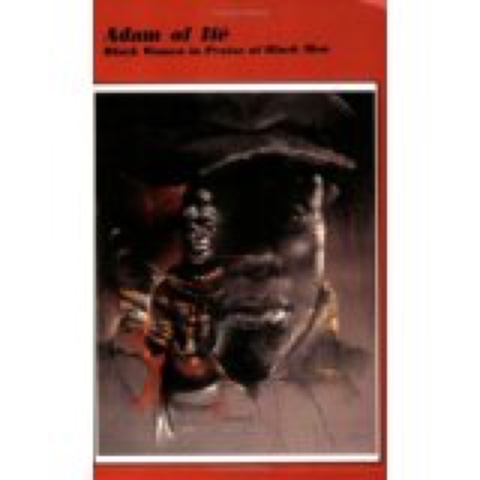
This ground-breaking anthology of poetry contains an informative foreword by the editor, Naomi Long Madgett, which traces the historical influences that have cast so many contemporary African American men in a negative light.
The book is divided into eight sections: "Fathers," "Brothers, Sons and Other Youth," "Lovers," "Street Scene," "Beacons," "Music-Makers," "In Light and Shadow," and "In This Sad Place." Each of these section titles is preceded by a group of four portraits drawn by the late Carl Owens.
This is an extremely important book that educates its readers, portraying African American men in many positive ways and denying the stereotypical images that too often prevail. The message is not overshadowed by the fine literary quality of the poems by 55 African American women. The title refers to Ifé, a city in Nigeria which, according to legend, was the birthplace of mankind.
Download Link
Thomas Sankara: An African Revolutionary
Thomas Sankara, often called the African Che Guevara, was president of Burkina Faso, one of the poorest countries in Africa, until his assassination during the military coup that brought down his government. Although his tenure in office was relatively short, Sankara left an indelible mark on his country’s history and development. An avowed Marxist, he outspokenly asserted his country’s independence from France and other Western powers while at the same time seeking to build a genuine pan-African unity.
Ernest Harsch traces Sankara’s life from his student days to his recruitment into the military, early political awakening, and increasing dismay with his country’s extreme poverty and political corruption. As he rose to higher leadership positions, he used those offices to mobilize people for change and to counter the influence of the old, corrupt elites. Sankara and his colleagues initiated economic and social policies that shifted away from dependence on foreign aid and toward a greater use of the country’s own resources to build schools, health clinics, and public works. Although Sankara’s sweeping vision and practical reforms won him admirers both in Burkina Faso and across Africa, a combination of domestic opposition groups and factions within his own government and the army finally led to his assassination in 1987.
This is the first English-language book to tell the story of Sankara’s life and struggles, drawing on the author’s extensive firsthand research and reporting on Burkina Faso, including interviews with the late leader. Decades after his death, Sankara remains an inspiration to young people throughout Africa for his integrity, idealism, and dedication to independence and self-determination.
Download Link
The Hip Hop Wars: What We Talk About When We Talk About Hip Hop--andWhy It Matters
Hip-hop is in crisis. For the past dozen years, the most commercially successful hip-hop has become increasingly saturated with caricatures of black gangstas, thugs, pimps, and ’hos. The controversy surrounding hip-hop is worth attending to and examining with a critical eye because, as scholar and cultural critic Tricia Rose argues, hip-hop has become a primary means by which we talk about race in the United States.
In The Hip-Hop Wars, Rose explores the most crucial issues underlying the polarized claims on each side of the debate: Does hip-hop cause violence, or merely reflect a violent ghetto culture? Is hip-hop sexist, or are its detractors simply anti-sex? Does the portrayal of black culture in hip-hop undermine black advancement?
A potent exploration of a divisive and important subject, The Hip-Hop Wars concludes with a call for the regalvanization of the progressive and creative heart of hip-hop. What Rose calls for is not a sanitized vision of the form, but one that more accurately reflects a much richer space of culture, politics, anger, and yes, sex, than the current ubiquitous images in sound and video currently provide.
Download Link
Brave Black Women: From Slavery to the Space Shuttle
Writing especially for students in grades four through eight, Ruthe Winegarten and Sharon Kahn trace the history of black women from slavery until today. Adapted from the award-winning Black Texas Women, the book profiles teachers, businesswomen, civil rights leaders, community activists, doctors, nurses, athletes, musicians, artists, and political leaders and concludes with a biography of Barbara Jordan.
Download Link
The Jim Crow Laws and Racism in United States History
Highlighting the efforts of both blacks and whites to promote racial equality in the face of violent attempts to preserve white supremacy, Author David K. Fremon shows how segregation made the South a caste system. He traces the history of racial discrimination from the end of the Civil War through the Jim Crow era of segregation. After years of enduring separate facilities—including water fountains, telephone books, hospitals, and cemeteries—for whites and blacks, Fremon shows how African Americans and their white supporters were eventually able to win the battle for equal rights.
Download Link
To Die for the People
Long an iconic figure for radicals, Huey Newton is now being discovered by those interested in the history of America’s social movements. This new release of a classic collection of his writings and speeches traces the development of Newton’s personal and political thinking, as well as the radical changes that took place in the formative years of the Black Panther Party. More than just a historic record, Newton’s prescience and foresight make these documents strikingly pertinent today.
Huey Newton was the founder, leader, and chief theoretician of the Black Panther Party, and one of America’s most dynamic and important revolutionary philosophers.
Download Link
Freedoms Given, Freedoms Won: Afro-Brazilians in Post-Abolition SãoPaolo and Salvador
Freedoms Given, Freedoms Won explores the ways Afro-Brazilians in two major cities adapted to the new conditions of life after the abolition of slavery and how they confronted limitations placed on their new freedom. The book sets forth new ways of understanding why the abolition of slavery did not yield equitable fruits of citizenship, not only in Brazil, but throughout the Americas and the Caribbean.\
Afro-Brazilians in Sao Paulo and Salvador lived out their new freedom in ways that raise issues common to the entire Afro-Atlantic diaspora. In Sao Paulo, they initiated a vocal struggle for inclusion in the creation of the nation's first black civil rights organization and political party, and they appropriated a discriminatory identity that isolated blacks. In contrast, African identity prevaled over black identity in Salvador, where social protest was oriented toward protecting the right of cultural pluralism.\
Of all the eras and issues studied in Afro-Brazilian history, post-abolition social and political action has been the most neglected. Butler provides many details of this period for the first time in English and supplements published sources with original oral histories, Afro-Brazilian newspapers, and new state archival documents currently being catalogued in Bahia. Freedoms Given, Freedoms Won sets the Afro-Brazilian experience in a national context as well as situating it within the Afro-Atlantic diaspora through a series of explicit parallels, particularly with Cuba and Jamaica.
Download Link
Harriet Tubman: Conductor on the Underground Railroad
The Horn Book called this classic biography of Harriet Tubman an "unusually well-written and moving life of the 'Moses of her people.'" An accessible portrait of the woman who guided more than 300 slaves to freedom as a conductor on the Underground Railroad, Harriet Tubman: Conductor on the Underground Railroad was an ALA Notable Book and a New York Times Outstanding Book, and includes an index.
Download Link
The New H.N.I.C.: The Death of Civil Rights and the Reign of Hip Hop
“Those who are hip have always known that Black music is about more than simply nodding your head, snapping your fingers, and patting your feet. Like the proverbial Dude, back on the block, Dr. Todd Boyd, in his groundbreaking book The New H.N.I.C., tells us that like the best of this oral tradition, hip hop is a philosophy and worldview rooted in history and at the same time firmly of the moment. Dr. Boyd's improvisational flow is on point like be bop Stacy Adams and The New H.N.I.C.,in both style and substance, breaks down how this monumental cultural shift has come to redefine the globe. With mad props and much love, Dr. Boyd’s The New H.N.I.C. is the voice of a generation and stands poised at the vanguard of our future.”
Download Link
Captive Nation: Black Prison Organizing in the Civil Rights Era
In this pathbreaking book, Dan Berger offers a bold reconsideration of twentieth century black activism, the prison system, and the origins of mass incarceration. Throughout the civil rights era, black activists thrust the prison into public view, turning prisoners into symbols of racial oppression while arguing that confinement was an inescapable part of black life in the United States. Black prisoners became global political icons at a time when notions of race and nation were in flux. Showing that the prison was a central focus of the black radical imagination from the 1950s through the 1980s, Berger traces the dynamic and dramatic history of this political struggle.
The prison shaped the rise and spread of black activism, from civil rights demonstrators willfully risking arrests to the many current and former prisoners that built or joined organizations such as the Black Panther Party. Grounded in extensive research, Berger engagingly demonstrates that such organizing made prison walls porous and influenced generations of activists that followed.
Download Link
Conflicting Missions: Havana, Washington and Africa, 1959-1976
A sweeping Cold War history that challenges views of Cuba's involvement in African liberation struggles; This is a compelling account of Cuban policy in Africa from 1959 to 1976 and of its escalating clash with U.S. policy toward the continent. Piero Gleijeses's fast-paced narrative takes the reader from Cuba's first steps to assist Algerian rebels fighting France in 1961, to the secret war between Havana and Washington in Zaire in 1964-65 - where 100 Cubans led by Che Guevara clashed with 1,000 mercenaries controlled by the CIA - and, finally, to the dramatic dispatch of 30,000 Cubans to Angola in 1975-76, which stopped the South African advance on Luanda and doomed Henry Kissinger's major covert operation there. Based on unprecedented archival research and firsthand interviews in virtually all of the countries involved - Gleijeses was even able to gain extensive access to closed Cuban archives - the book sheds new light on U.S. foreign policy and CIA covert operations. It revolutionizes our view of Cuba's international role, challenges conventional U.S. beliefs about the influence of the Soviet Union in directing Cuba's actions in Africa, and provides, for the first time ever, a look from the inside at Cuba's foreign policy during the Cold War.
Download Link
LAbyrinth: A Detective Investigates the Murders of Tupac Shakur andNotorious B.I.G., the Implication of Death Row Records' Suge Knight,and the Origins of the Los Angeles Police Scandal
Acclaimed journalist Randall Sullivan follows Russell Poole, a highly decorated LAPD detective who in 1997 was called to investigate a controversial cop-on-cop shooting, eventually to discover that the officer killed was tied to Marion “Suge” Knight’s notorious gangsta rap label, Death Row Records. During his investigation, Poole came to realize that a growing cadre of black officers were allied not only with Death Row, but with the murderous Bloods street gang. And incredibly, Poole began to uncover evidence that at least some of these “gangsta cops” may have been involved in the murders of rap superstars Notorious B.I.G. and Tupac Shakur.
Igniting a firestorm of controversy in the music industry and the Los Angeles media, the hardcover publication of LAbyrinth helped to prompt two lawsuits against the LAPD (one brought by the widow and mother of Notorious B.I.G., the other brought by Poole himself) that may finally bring this story completely out of the shadows.
Download Link
Friday, July 24, 2015
Beaches, Blood, and Ballots: A Black Doctor's Civil Rights Struggle
This book, the first to focus on the integration of the Gulf Coast, is Dr. Gilbert R. Mason's eyewitness account of harrowing episodes that occurred there during the civil rights movement. Newly opened by court order, documents from the Mississippi Sovereignty Commission's secret files enhance this riveting memoir written by a major civil rights figure in Mississippi. He joined his friends and allies Aaron Henry and the martyred Medgar Evers to combat injustices in one of the nation's most notorious bastions of segregation.
In Mississippi, the civil rights struggle began in May 1959 with "wade-ins." In open and conscious defiance of segregation laws, Mason led nine black Biloxians onto a restricted spot along the twenty-six-mile beach. A year later more wade-ins on beaches reserved for whites set off the bloodiest race riot in the state's history and led the U.S. Justice Department to initiate the first-ever federal court challenge of Mississippi's segregationist laws and practices. Simultaneously, Mason and local activists began their work on the state's first school desegregation suit. As the coordinator of the strategy, he faced threats to his life.
Mason's memoir gives readers a documented journey through the daily humiliations that segregation and racism imposed upon the black populace -- upon fathers, mothers, children, laborers, and professionals. Born in 1928 in the slums of Jackson, Mason acknowledges the impact of his strong extended family and of the supportive system of institutions in the black neighborhood. They nurtured him to manhood and helped fulfill his dream of becoming a physician.
His story recalls the great migration of blacks to the North, of family members who remained in Mississippi, of family ties in Chicago and other northern cities. Following graduation from Tennessee State and Howard University Medical College, he set up his practice in the black section of Biloxi in 1955 and experienced the restrictions that even a black physician suffered in the segregated South. Four years later, he began his battle to dismantle the Jim Crow system. This is the story of his struggle and hard-won victory.
Download Link
African Art: Its Background and Traditions
The many dimensions of African art are explored, aong with illustrations and explanations of various examples of tribal art, against their cultural, traditional and anthropological background.
Download Link
Black Power Ideologies: An Essay in African-American Political Thought
In a systematic survey of the manifestations and meaning of Black Power in America, John McCartney analyzes the ideology of the Black Power Movement in the 1960s and places it in the context of both African-American and Western political thought. He demonstrates, though an exploration of historic antecedents, how the Black Power versus black mainstream competition of the sixties was not unique in American history. Tracing the evolution of black social and political movements from the 18th century to the present, the author focuses on the ideas and actions of the leaders of each major approach.
Starting with the colonization efforts of the Pan-Negro Nationalist movement in the 18th century, McCartney contrasts the work of Bishop Turner with the opposing integrationist views of Frederick Douglass and his followers. McCartney examines the politics of accommodation espoused by Booker T. Washington; W.E.B. Du Bois's opposition to this apolitical stance; the formation of the NAACP, the Urban League, and other integrationist organizations; and Marcus Garvey's reawakening of the separatist ideal in the early 20th century. Focusing on the intense legal activity of the NAACP from the 1930s to the 1960s, McCartney gives extensive treatment to the moral and political leadership of Martin Luther King, Jr., and his challenge from the Black Power Movement in 1966.
Download Link
The Death and Life of Malcolm X
The Death and Life of Malcolm X provides a dramatic portrait of one of the most important black leaders of the twentieth century. Focusing on Malcolm X's rise to prominence and the final year of his life, the book details his rift with the Nation of Islam and its leader, Elijah Muhammad, leading to death threats and eventually assassination at the hands of a death squad. In a new preface for this edition, Peter Goldman reflects on the forty years since the book's first publication and considers new information based on FBI surveillance that has since come to light.
Download Link
Race and Slavery in Nineteenth-century Egypt, Sudan and the OttomanMediterranean: Histories of Trans-Saharan Africans
In the nineteenth century hundreds of thousands of Africans were forcibly migrated northward to Egypt and other eastern Mediterranean destinations, yet relatively little is known about them. Studies have focused mainly on the mamluk and harem slaves of elite households, who were mostly white, and on abolitionist efforts to end the slave trade, and most have relied heavily on western language sources. In the past forty years new sources have become available, ranging from Egyptian religious and civil court and police records to rediscovered archives and accounts in western archives and libraries. Along with new developments in the study of African slavery these sources provide a perspective on the lives of non-elite trans-Saharan Africans in nineteenth century Egypt and beyond. The nine essays in this volume examine the lives of slaves and freed men and women in Egypt and the region. Contributors: Kenneth M. Cuno, Y. Hakan Erdem, Michael Ferguson, Emad Ahmad Helal Shams al-Din, Liat Kozma, George Michael La Rue, Ahmad A. Sikainga, Eve M. Troutt Powell, and Terence Walz.
Download Link
Wednesday, July 22, 2015
The Underground Railroad in Connecticut
Here are the engrossing facts about one of the least-known movements in Connecticut’s history—the rise, organization, and operations of the Underground Railroad, over which fugitive slaves from the South found their way to freedom. Drawing his data from published sources and, perhaps more importantly, from the still-existing oral tradition of descendants of Underground agents, Horatio Strother tells the detailed story in this book, originally published in 1962. He traces the routes from entry points such as New Haven harbor and the New York state line, through important crossroads like Brooklyn and Farmington. Revealing the dangers fugitives faced, the author also identifies the high-minded lawbreakers who operated the system—farmers and merchants, local officials and judges, at least one United States Senator, and many dedicated ministers of the Gospel. These narratives are set against the larger background of the development of slavery and abolitionism in America— conversations still relevant today.
Download Link
Black Entertainers in African American Newspaper Articles
For the first half of the twentieth century, the best coverage of blacks in entertainment--especially the developing motion picture industry--was in the newspapers published and circulated by the African American community. This annotated bibliography adds to the first volume with easy access to entertainment coverage in two more of the most influential black newspapers during that time: the Pittsburgh Courier and the California Eagle. These papers were selected for their wide circulation, proximity to the two major American geographical centers for film production, and their high quality coverage of entertainment. The chronological arrangement allows the reader to trace developments in entertainment from the early days of motion pictures to mid-century. Quotations from the articles offer a taste of each newspaper's style, and extensive indexing provides quick access to names, titles, and subjects, making the book an invaluable aid to researchers.
Download Link
Monday, July 20, 2015
Ludacris: Hip-Hop Mogul (Hip-Hop Moguls)
Ludacris knew from a young age that he wanted to work in the music industry. But while most rappers don’t usually go this route, attending college was a choice that seemed very logical for Ludacris. In this hip-hop biography on Ludacris, everything from his childhood to his move to Atlanta to the internship that changed his life will be covered.
Download Link
Becoming American: The African-American Journey
Far too many Americans, of all races, are unaware of the pivotal role that people of African descent have played in shaping the US and the world. Even less is known about the role of African peoples in the history of all humankind. Becoming American: The African-American Journey will open their eyes—and enlighten even the already knowledgeable. It features two side-by-side chronological timelines that uniquely contrast the major events and personalities in both African-American and Global/African Diasporan history—spanning from 4 million BCE to Barack Obama’s momentous presidential campaign. In addition, a carefully-chosen collection of key political, historical, cultural and literary texts, quotes, speeches, and songs document the impact of the black presence in American and world history.
Download Link
Sunday, July 19, 2015
Justice in America: The Separate Realities of Blacks and Whites
Whites and African Americans in the United States inhabit two different perceptual worlds, with the former seeing the justice system as largely color blind and the latter believing it to be replete with bias and discrimination. Drawing on data from a nation-wide survey of both races, the authors tackle two important questions in this book: what explains the widely differing perceptions, and why do such differences matter?
Download Link


