• Latest News

    Sunday, May 31, 2015

    The Great Cosmic Mother: Rediscovering the Religion of the Earth

    This classic exploration of the Goddess through time and throughout the world draws on religious, cultural, and archaeological sources to recreate the Goddess religion that is humanity’s heritage. Now, with a new introduction and full-color artwork, this passionate and important text shows even more clearly that the religion of the Goddess--which is tied to the cycles of women’s bodies, the seasons, the phases of the moon, and the fertility of the earth--was the original religion of all humanity.

    Diana Ross: A Biography

    There is only one Diana Ross. This is her story. Drawn from hundreds of interviews conducted over four decades, Diana Ross paints an unforgettable picture of an extraordinary and often controversial legend—a pop music goddess, acclaimed actress, loving mother, Civil Rights trailblazer, and consummate entertainer. Beautiful and fascinating, she is her own invention—the definition of a superstar. "A riveting celebrity dish-fest." --Washington Post First-time revelations abound, from the tough decisions she made while having Berry Gordy's baby and the real reasons behind the break-up of the Supremes to her triumphant recovery after a surprising DUI driving arrest and her gala appearance at the Kennedy Center Honors. "The dish on Motown's most famous songstress." --The Dallas Morning News Bestselling biographer J. Randy Taraborrelli boldly explores Diana Ross's troubled relationships and the heartbreak she feels compelled to hide, bringing into focus a complex personality too often obscured by the bright lights of fame. Rich with detail and personal anecdotes, and fully up-to-date, Diana Ross is both definitive and delightful--the ultimate biography that Miss Ross so richly deserves.

    Diary of a Madman: The Geto Boys, Life, Death, and the Roots of Southern Rap

    From Geto Boys legend and renowned storyteller Scarface, comes a passionate memoir about how hip-hop changed the life of a kid from the south side of Houston, and how he rose to the top-and ushered in a new generation of rap dominance. 
Scarface is the celebrated rapper whose hits include "On My Block," "Mind Playing Tricks on Me" and "Damn It Feels Good to be a Gangsta" (made famous in the cult film Office Space). The former president of Def Jam South, he's collaborated with everyone from Kanye West, Ice Cube and Nas, and had many solo hits such as "Guess Who's Back" feat. Jay-Z and "Smile" feat. Tupac. But before that, he was a kid from Houston in love with rock-and-roll, listening to AC/DC and KISS. 
In Diary of a Madman, Scarface shares how his world changed when he heard Run DMC for the first time; how he dropped out of school in the ninth grade and started selling crack; and how he began rapping as the new form of music made its way out of New York and across the country. It is the account of his rise to the heights of the rap world, as well as his battles with his own demons and depression. Passionately exploring and explaining the roots and influences of rap culture, Diary of a Madman is the story of hip-hop-the music, the business, the streets, and life on the south side Houston, Texas.


    Black Entrepreneurs in America: Stories of Struggle and Success

    Beginning with a summary of 200 years of entrepreneurship among African Americans, then moving to in-depth interviews with contemporary entrepreneurs, Michael Woodard provides a powerful record of entrepreneurial vitality in a market that is often hostile and exclusive. The book covers businesses nationwide, representing diverse industries. Woodard ends on a practical note with resources and advice for anyone contemplating an entrepreneurial future. [michael_d._woodard]_black_entrepreneurs_in_americ_bokos-z1_.pdf

    When God Was a Woman

    Here, archaeologically documented,is the story of the religion of the Goddess. Under her, women’s roles were far more prominent than in patriarchal Judeo-Christian cultures. Stone describes this ancient system and, with its disintegration, the decline in women’s status. Index; maps and illustrations. woman.pdf

    Myth and Meaning: San-Bushman Folklore in Global Context
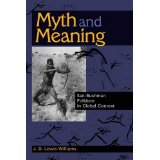
    J.D. Lewis-Williams, one of the leading South African archaeologists and ethnographers, excavates meaning from the complex mythological stories of the San-Bushmen to create a larger theory of how myth is used in culture. He extracts their “nuggets,” the far-reaching but often unspoken words and concepts of language and understanding that are opaque to outsiders, to establish a more nuanced theory of the role of these myths in the thought-world and social circumstances of the San. The book <br>-draws from the unique 19th century Bleek/Lloyd archives, more recent ethnographic work, and San rock art;<br>-includes well-known San stories such as The Broken String, Mantis Dreams, and Creation of the Eland;<br>-extrapolates from our understanding of San mythology into a larger model of how people create meaning from myth. 1629581542

    Let It Burn: MOVE, the Philadelphia Police Department, and the Confrontation that Changed a City

    On a narrow street in a working-class neighborhood, the police are held at bay by a small band of armed radicals. Two assaults have already failed. After a morning-long battle involving machine guns, explosives, and tear gas, the radicals remain defiant. In a command post across the street from the boarded-up row house that serves as the militants' headquarters, the beleaguered police commissioner weighs his options and decides on a new plan. He will bomb the house. Let It Burn is the true-life story of the confrontation between the Philadelphia Police Department and the MOVE organization—a group that rejected modern technology and fought for what it called "natural law." The police commissioner's decision to drop an "explosive device" onto the house's roof—and then to let the resulting fire burn while adults and children remained in the house—was the final tragic chapter in a decades-long series of clashes that had already left one policeman dead and others injured, dozens of MOVE members behind bars, and their original compound razed to the ground. By the time the fire burned itself out, eleven MOVE members, many of them women and small children, would be dead. Sixty-one houses in the neighborhood would be destroyed. There would be a city inquiry, numerous civil suits, and two grand-jury inquests following the confrontation. Michael Boyette served on one of the grand juries, where he had a front-row seat as the key players and witnesses—including Mayor Wilson Goode and future Pennsylvania Governor Ed Rendell—recounted their roles in the tragedy. After the grand jury concluded its investigation, he and coauthor Randi Boyette conducted additional independent research—including exclusive interviews with police who had been on the scene and with MOVE members—to create this moment-by-moment account of the confrontation and the events leading up to it. n75ko.let.it.burn.move.the.philadelphia.police.department.and.the.confrontation.that.changed.a.city

    Thursday, May 28, 2015

    Sister Days: 365 Inspired Moments in African American Women's History

    Stories from the Amazing journey of African American Women "Whether read as history or practical inspiration, the stories of bravery, intelligence, and fortitude revealed . . . give a unique road map to rediscovering sister power."-The New American "A collection of . . . moving stories that celebrate the lives of black women who have overcome the many obstacles in their paths to pursue their dreams."-African Sun Times Now in paperback, Sister Days offers you a daily invitation to share in the life-affirming legacy of African American women. Here are 365 uplifting meditations on courage, daring, and resistance that bring us valuable reminders of how real women in real times-from Harriet Tubman to aviator Bessie Coleman to Wild West legend "Stagecoach Mary" to world-renowned writer Maya Angelou-created a better way of life for themselves and a better world for others. In reading their stories, we ensure that these women live on-as shining beacons to light our own quests for happier, more fulfilled lives. [Janus_Adams]_Sister_Days_365_Inspired_Moments_in_Bokos-Z1_

    Cookin' Crunk: Eating Vegan in the Dirty South

    “Crunk” is a Southern slang term that means “to get excited.” Keepin' it real and makin' it fun, vegan blogger Bianca Phillips adopted the Southern slang term to convey passion and pride for her heritage and the down-home food she was raised on. By incorporating country staples (beans, corn, and fresh produce) that have been the basis of Southern cooking for generations, Bianca offers no-frills, no-nonsense soul food dishes with a wholesome twist. These family classics, minus the meat, eggs, and dairy products, help keep traditional Southern foodways alive while allowing vegans, vegetarians, and anyone who cares about healthful eating to enjoy this satisfying down-home fare. 1570672687cc

    To Live and Dine in Dixie: The Evolution of Urban Food Culture in the Jim Crow South

    This book explores the changing food culture of the urban American South during the Jim Crow era by examining how race, ethnicity, class, and gender contributed to the development and maintenance of racial segregation in public eating places. Focusing primarily on the 1900s to the 1960s, Angela Jill Cooley identifies the cultural differences between activists who saw public eating places like urban lunch counters as sites of political participation and believed access to such spaces a right of citizenship, and white supremacists who interpreted desegregation as a challenge to property rights and advocated local control over racial issues. Significant legal changes occurred across this period as the federal government sided at first with the white supremacists but later supported the unprecedented progress of the Civil Rights Act of 1964, which—among other things—required desegregation of the nation’s restaurants. Because the culture of white supremacy that contributed to racial segregation in public accommodations began in the white southern home, Cooley also explores domestic eating practices in nascent southern cities and reveals how the most private of activities—cooking and dining— became a cause for public concern from the meeting rooms of local women’s clubs to the halls of the U.S. Congress. to live and dine in dixie - angela jill cooley

    Friday, May 22, 2015

    Savage Portrayals: Race, Media and the Central Park Jogger Story

    In 1989, the rape and beating of a white female jogger in Central Park made international headlines. Many accounts reported the incident as an example of “wilding”—episodes of poor, minority youths roaming the streets looking for trouble. Police intent on immediate justice for the victim coerced five African-American and Latino boys to plead guilty. The teenage boys were quickly convicted and imprisoned. Natalie Byfield, who covered the case for the New York Daily News, now revisits the story of the Central Park Five from her perspective as a black female reporter in Savage Portrayals. 1439906343

    From Power to Prejudice: The Rise of Racial Individualism in Midcentury America

    Americans believe strongly in the socially transformative power of education, and the idea that we can challenge racial injustice by reducing white prejudice has long been a core component of this faith. How did we get here? In this first-rate intellectual history, Leah N. Gordon jumps into this and other big questions about race, power, and social justice. To answer these questions, From Power to Prejudice examines American academia—both black and white—in the 1940s and ’50s. Gordon presents four competing visions of “the race problem” and documents how an individualistic paradigm, which presented white attitudes as the source of racial injustice, gained traction. A number of factors, Gordon shows, explain racial individualism’s postwar influence: individuals were easier to measure than social forces; psychology was well funded; studying political economy was difficult amid McCarthyism; and individualism was useful in legal attacks on segregation. Highlighting vigorous midcentury debate over the meanings of racial justice and equality, From Power to Prejudice reveals how one particular vision of social justice won out among many contenders 022623844X

    Malcolm X's Michigan Worldview: An Exemplar for Contemporary Black Studies

    The provocative debate about Malcolm X’s legacy that emerged after the publication of Manning Marable’s 2011 biography raised critical questions about the revolutionary Black Nationalist’s importance to American and world affairs: What was Malcolm’s association with the Nation of Islam? How should we interpret Malcolm’s discourses? Was Malcolm antifeminist? What is Malcolm’s legacy in contemporary public affairs? How do Malcolm’s early childhood experiences in Michigan shape and inform his worldview? Was Malcolm trending toward socialism during his final year? Malcolm X’s Michigan Worldview responds to these questions by presenting Malcolm’s subject as an iconography used to deepen understanding of African descendent peoples’ experiences through advanced research and disciplinary study. A Black studies reader that uses the biography of Malcolm X both to interrogate key aspects of the Black world experience and to contribute to the intellectual expansion of the discipline, the book presents Malcolm as a Black subject who represents, symbolizes, and associates meaning with the Black/Africana studies discipline. Through a range of multidisciplinary prisms and themes including discourse, race, culture, religion, gender, politics, and community, this rich volume elicits insights about the Malcolm iconography that contribute to the continuous formulation, deepening, and strengthening of the Black studies discipline. 1611861624

    Monday, May 18, 2015

    Initiating Change in Highland Ethiopia: Causes and Consequences of Cultural Transformation

    There are two types of rituals performed by the same people in a rural community in Southern Ethiopia. One appears to be remarkably stable, while the other has undergone massive transformations over the years. Focusing on new ethnographical and historical data from the Gamo Highlands of Southern Ethiopia, Dena Freeman analyzes these rituals and provides fascinating insight into the cultural transformations of a little-known region of the world. [Dena_Freeman]_Initiating_Change_in_Highland_Ethio_Bokos-Z1_

    Race, Incarceration, and American Values

    The United States, home to five percent of the worlds' population, now houses twenty-five percent of the world's prison inmates. Our incarceration rate--at 714 per 100,000 residents and rising--is almost forty percent greater than our nearest competitors (the Bahamas, Belarus, and Russia). More pointedly, it is 6.2 times the Canadian rate and 12.3 times the rate in Japan. Economist Glenn Loury argues that this extraordinary mass incarceration is not a response to rising crime rates or a proud success of social policy. Instead, it is the product of a generation-old collective decision to become a more punitive society. He connects this policy to our history of racial oppression, showing that the punitive turn in American politics and culture emerged in the post-civil rights years and has today become the main vehicle for the reproduction of racial hierarchies. Whatever the explanation, Loury agues, the uncontroversial fact is that changes in our criminal justice system since the 1970s have created a nether class of Americans--vastly disproportionately black and brown--with severely restricted rights and life chances. Moreover, conservatives and liberals agree that the growth in our prison population has long passed the point of diminishing returns. Stigmatizing and confining of a large segment of our population should be unacceptable to Americans. Loury's call to action makes all of us now responsible for ensuring that the policy changes. [Glenn_C._Loury]_Race__Incarceration__and_American_Bokos-Z1_

    Showing Our Colors: Afro-German Women Speak Out

    Showing Our Colors: Afro-German Women Speak Out is an English translation of the German book Farbe bekennen, a compilation of texts, testimonials and other secondary source,s bringing to life the stories of Black German women living amid racism, sexism and other institutional constraints in Germany. The book draws on themes and motifs prevalent in Germany from the earliest colonial interactions between Germany and black "otherness," up through the lived experiences of Black German women in the 1980s. It was groundbreaking not only for the degree to which it examined the Afro-German experience, which had been generally ignored in the larger popular discourse, but also as a forum for women to have a voice in constructing this narrative. The book also acted as a source for these Afro-German women to have a platform where their stories can be heard. The stories that were told helped the development of an Afro-German community as a common theme throughout Showing Our Colors was the idea of feeling alone and as though there was no one to relate to. The discussion of this loss of connection to others helped Afro-Germans come together and unite. [may_opitz_katharina_oguntoye_dagmar_schultz]_sh_bokos-z1_.pdf

    The History of Ethiopian Immigrants and Refugees in America, 1900-2000

    Ethiopians form the third largest post-1960 African immigrant in the U.S. Over the years, their migratory patterns have changed in response to changes in Ethiopian and American diplomatic relationships. The Ethiopian immigrants also vary among themselves depending on whether they were granted asylum, are refugees, or benefit from the Diversity Visa (DV) lottery winners. Getahun studies the context of the immigrants arrival, their patterns of settlement, and their adjustment in the U.S. Differences between immigrants may be explained by ethnic or regional origin, class, politics, and religion. The resultant communities support social and religious institutions and Ethiopians are succeeding in establishing community organizations and religious institutions and seek to influence U.S foreign policy towards Ethiopia. [Solomon_Addis_Getahun]_The_History_of_Ethiopian_I_Bokos-Z1__1_

    The Ethiopian Jewish Exodus: Narratives of the Journey

    Between 1977 and 1985, some 20,000 Ethiopian Jews left their homes in Ethiopia and - motivated by an ancient dream of returning to the land of their ancestors, 'Yerussalem' - embarked on a secret and highly traumatic exodus to Israel. Due to various political circumstances they had to leave their homes in haste, go a long way on foot through unknown country, and stay for a period of one or two years in refugee camps, until they were brought to Israel. The difficult conditions of the journey included racial tensions, attacks by bandits, night travel over mountains, incarceration, illness and death. A fifth of the group did not survive the journey. This interdisciplinary, ground-breaking book focuses on the experience of this journey, its meaning for the people who made it, and its relation to the initial encounter with Israeli society. The author argues that powerful processes occur on such journeys that affect the individual and community in life-changing ways, including their initial encounter with and adaptation to their new society. Analysing the psychosocial impact of the journey, he examines the relations between coping and meaning, trauma and culture, and discusses personal development and growth. [Gadi_Benezer]_The_Ethiopian_Jewish_Exodus_Narrat_Bokos-Z1_

    The Jews of Ethiopia: The Birth of an Elite

    This book offers the results of the most recent research carried out in European and Israeli universities on Ethiopian Jews. With a special focus on Europe and the role played by German, English and Italian Jewish communities in creating a new Jewish Ethiopian identity, it investigates such issues as the formation of a new Ethiopian Jewish elite and the transformation of the identity from Ethiopian Falashas to the Jews of Ethiopia during the twentieth century. [Tudor_Parfitt]_The_Jews_of_Ethiopia_The_Birth_of_Bokos-Z1_

    The Ethiopian Revolution 1974-1987: A Transformation from an Aristocratic to a Totalitarian Autocracy

    This book is the most comprehensive account of the Ethiopian revolution currently available, dealing with almost the entire span of the revolutionary government's life. Particular emphasis is placed on effectively isolating and articulating the causes and outcomes of the revolution. Dr. Tiruneh makes extensive use of primary sources written in the national official language, and is the first Ethiopian national to write on this subject. This book is thus a unique account of a fascinating period, capturing the mood of the revolution as never before, yet firmly grounded in scholarship. [Andargachew_Tiruneh]_The_Ethiopian_Revolution_197_Bokos-Z1_

    Wednesday, May 13, 2015

    Black Rage in New Orleans: Police Brutality and African American Activism from World War II to Hurricane Katrina

    In Black Rage in New Orleans, Leonard N. Moore traces the shocking history of police corruption in the Crescent City from World War II to Hurricane Katrina and the concurrent rise of a large and energized black opposition to it. In New Orleans, crime, drug abuse, and murder were commonplace, and an underpaid, inadequately staffed, and poorly trained police force frequently resorted to brutality against African Americans. Endemic corruption among police officers increased as the city's crime rate soared, generating anger and frustration among New Orleans's black community. Rather than remain passive, African Americans in the city formed antibrutality organizations, staged marches, held sit-ins, waged boycotts, vocalized their concerns at city council meetings, and demanded equitable treatment. Moore explores a staggering array of NOPD abuses--police homicides, sexual violence against women, racial profiling, and complicity in drug deals, prostitution rings, burglaries, protection schemes, and gun smuggling--and the increasingly vociferous calls for reform by the city's black community. Documenting the police harassment of civil rights workers in the 1950s and 1960s, Moore then examines the aggressive policing techniques of the 1970s, and the attempts of Ernest "Dutch" Morial--the first black mayor of New Orleans--to reform the force in the late 1970s and early 1980s. Even when the department hired more African American officers as part of that reform effort, Moore reveals, the corruption and brutality continued unabated in the late 1980s and early 1990s. Dramatic changes in departmental leadership, together with aid from federal grants, finally helped professionalize the force and achieved long-sought improvements within the New Orleans Police Department. Community policing practices, increased training, better pay, and a raft of other reform measures for a time seemed to signal real change in the department. The book's epilogue, "Policing Katrina," however, looks at how the NOPD's ineffectiveness compromised its ability to handle the greatest natural disaster in American history, suggesting that the fruits of reform may have been more temporary than lasting. The first book-length study of police brutality and African American protest in a major American city, Black Rage in New Orleans will prove essential for anyone interested in race relations in America's urban centers. [Leonard_N._Moore]_Black_Rage_in_New_Orleans_Poli_Bokos-Z1_

    Being Maasai, Becoming Indigenous: Postcolonial Politics in a Neoliberal World

    What happens to marginalized groups from Africa when they ally with the indigenous peoples’ movement? Who claims to be indigenous and why? Dorothy L. Hodgson explores how indigenous identity, both in concept and in practice, plays out in the context of economic liberalization, transnational capitalism, state restructuring, and political democratization. Hodgson brings her long experience with Maasai to her understanding of the shifting contours of their contemporary struggles for recognition, representation, rights, and resources. Being Maasai, Becoming Indigenous is a deep and sensitive reflection on the possibilities and limits of transnational advocacy and the dilemmas of political action, civil society, and change in Maasai communities. [Dorothy_L._Hodgson]_Being_Maasai__Becoming_Indige_Bokos-Z1_

    To Stand and Fight Together: Richard Pierpoint and the Coloured Corps of Upper Canada

    In 1812, a 67-year-old black United Empire Loyalist named Richard Pierpoint helped raise "a corps of Coloured Men to stand and fight together" against the Americans who were threatening to invade the tiny British colony of Upper Canada. Pierpoint’s unique fighting unit would not only see service throughout the War of 1812, it would also be the first colonial military unit reactiviated to quash the Rebellion of 1837. It would go on to serve as a police force, keeping the peace among the competing Irish immigrant gangs during the construction of the Welland Canal. Pierpoint and the Coloured Corps are the central focus, but the sidebars featuring fascinating facts about the rise and fall of slavery in North America and the state of African-Canadians in early Canada provide an entertaining and informative supplement. Among other tidbits, readers will find out why "Good Queen Bess" launched the British slave industry and how Scottish pineapples are connected to the American Declaration of Independence. 155002731x

    Death and Salvation in Ancient Egypt

    "Human beings," the acclaimed Egyptologist Jan Assmann writes, "are the animals that have to live with the knowledge of their death, and culture is the world they create so they can live with that knowledge." In his new book, Assmann explores images of death and of death rites in ancient Egypt to provide startling new insights into the particular character of the civilization as a whole. Drawing on the unfamiliar genre of the death liturgy, he arrives at a remarkably comprehensive view of the religion of death in ancient Egypt. Assmann describes in detail nine different images of death: death as the body being torn apart, as social isolation, the notion of the court of the dead, the dead body, the mummy, the soul and ancestral spirit of the dead, death as separation and transition, as homecoming, and as secret. Death and Salvation in Ancient Egypt also includes a fascinating discussion of rites that reflect beliefs about death through language and ritual. 0801442419

    The Hadza: Hunter-Gatherers of Tanzania

    In The Hadza, Frank Marlowe provides a quantitative ethnography of one of the last remaining societies of hunter-gatherers in the world. The Hadza, who inhabit an area of East Africa near the Serengeti and Olduvai Gorge, have long drawn the attention of anthropologists and archaeologists for maintaining a foraging lifestyle in a region that is key to understanding human origins. Marlowe ably applies his years of research with the Hadza to cover the traditional topics in ethnography—subsistence, material culture, religion, and social structure. But the book’s unique contribution is to introduce readers to the more contemporary field of behavioral ecology, which attempts to understand human behavior from an evolutionary perspective. To that end, The Hadza also articulates the necessary background for readers whose exposure to human evolutionary theory is minimal. [Frank_Marlowe]_The_Hadza_Hunter-Gatherers_of_Tan_Bokos-Z1_

    Everyday Easy

    The international culinary superstar and author of A Lighter Way to Bake returns with a bright and breezy full-color cookbook that features 100 simple yet elegant recipes for everyday and entertaining. Infused with her charisma and charm, Everyday Easy showcases Lorraine Pascale’s elegant, fuss-free cooking, with recipes perfect for both everyday suppers and annual feasts. Enjoy quick but satisfying weeknight dinners such as Creamy Pancetta Pasta with Mushrooms and Parmesan or Chestnut and Pea Risotto with Truffle Oil. Thinking of entertaining? You’ll find dinner-party delights such as Rioja-Braised Lamb Shanks with Chorizo or Twice-Cooked Chicken Kievs. Everyday Easy offers something for every chef and every occasion, whether you’re looking for a tasty meal for two or planning a crowd-pleasing menu for a fun and relaxed evening with friends. Nearly every recipe is accompanied by a gorgeous color photo along with a cornucopia of kitchen tips and tricks to help you whip up great food without the fuss. 0062305794

    Black Rage Confronts the Law

    In 1971, Paul Harris pioneered the modern version of the black rage defense when he successfully defended a young black man charged with armed bank robbery. Dubbed one of the most novel criminal defenses in American history by Vanity Fair, the black rage defense is enormously controversial, frequently dismissed as irresponsible, nothing less than a harbinger of anarchy. Consider the firestorm of protest that resulted when the defense for Colin Ferguson, the gunman who murdered numerous passengers on a New York commuter train, claimed it was considering a black rage defense. In this thought-provoking book, Harris traces the origins of the black rage defense back through American history, recreating numerous dramatic trials along the way. For example, he recounts in vivid detail how Clarence Darrow, defense attorney in the famous Scopes Monkey trial, first introduced the notion of an environmental hardship defense in 1925 while defending a black family who shot into a drunken white mob that had encircled their home. Emphasizing that the black rage defense must be enlisted responsibly and selectively, Harris skillfully distinguishes between applying an environmental defense and simply blaming society, in the abstract, for individual crimes. If Ferguson had invoked such a defense, in Harris's words, it would have sent a superficial, wrong-headed, blame-everything-on-racism message. Careful not to succumb to easy generalizations, Harris also addresses the possibilities of a white rage defense and the more recent phenomenon of cultural defenses. He illustrates how a person's environment can, and does, affect his or her life and actions, how even the most rational person can become criminally deranged, when bludgeoned into hopelessness by exploitation, racism, and relentless poverty. [paul_harris]_black_rage_confronts_the_law__critic_bokos-z1_

    Sunday, May 10, 2015

    Black Women and International Law: Deliberate Interactions, Movements and Actions

    From Compton to Cairo and Bahia to Brixton, black women have been disproportionally affected by poverty, illiteracy, unemployment, discrimination and violence. Despite being one of the largest and geographically dispersed groups in the world, they are rarely referenced or considered as a subject of analysis in international law literature. Thus, it is vital that scholars refashion global discourse by re-conceptualizing international law and relations from their unique experiences and perspectives. This unique and eclectic collection covers a broad range of topics and issues that examine the complex interactions - as subjects and objects - between black women and international law. The book critically explores the manifold relationship between them with a view toward highlighting the historic and contemporary ways in which they have influenced and been influenced by transnational law, doctrine, norms, jurisprudence, public policy, public discourse and global governance. It purports to unearth old law and fashion new paradigms born out of the experiences of black women. 1107021308

    Friday, May 8, 2015

    The Black Power Movement (African-American History)

    Gr 4-6-There are some admirable qualities to these titles-use of primary source documents, follow-up questions, and "Stop and Think" writing prompts. Unfortunately, negative characteristics mar the set as a whole. The illustrations are disappointing, with several employed more than once throughout the series. When depicting slaves, period drawings are used that do little to convey the actual conditions that were endured. With so many excellent photographs available, the use of these illustrations is puzzling. For the most part, the writing style is clear and straightforward. But African-American Culture lacks nuance and depth and fails to convey the harsh realities of slavery. For instance, in shedding light on the importance of hymns, the author makes the assertion that "the songs brought joy to African American who sang them." Though technically true, this oversimplified explanation glosses over the horrors of slavery and neglects to mention the role of these songs in the Underground Railroad. 1624031447

    Changing White Attitudes toward Black Political Leadership

    Despite the hopes of the civil rights movement, researchers have found that the election of African Americans to office has not greatly improved the well-being of the black community. By shifting the focus to the white community, this book shows that black representation can have a profound impact. Utilizing national public opinion surveys, data on voting patterns in large American cities, and in-depth studies of Los Angeles and Chicago, Zoltan Hajnal demonstrates that under most black mayors there is real, positive change in the white vote and in the racial attitudes of white residents. This change occurs because black incumbency provides concrete information that disproves the fears and expectations of many white residents. These findings not only highlight the importance of black representation; they also demonstrate the critical role that information can play in racial politics to the point where black representation can profoundly alter white views and white votes. [Zoltan_L._Hajnal]_Changing_white_attitutes_toward_Bokos-Z1_

    Black Colleges: New Perspectives on Policy and Practice

    Black colleges are central to the delivery of higher education. Notwithstanding, there is scant treatment of these key institutions in the research literature. There is a need for a comprehensive and cogent understanding of the primary characteristics of the policies and practices endemic to black colleges. This book provides the scholarly basis requisite to organize, give meaning to, and shape the analyses and applications of policy and practice within the black college. The collected chapters respond to the paucity of research literature addressing these institutions. In each chapter, the authors acknowledge the specific characterisics of black colleges that make them unique. Understanding the fundamental characteristics that shape black colleges is critical to gaining a comprehensive understanding of higher education at large. The policy and praxis challenges exhibited at black colleges serve as exemplars to how all colleges perform their respective functions in society. Black colleges serve as testimonies to the transformative power of adversity, and beacons of possibility in and era of retrenchment and ambiguity. These roles call on black colleges to aid and assist in creating an opportunity for educational change. [M._Christopher_Brown__Kassie_Freeman]_Black_Colle_Bokos-Z1__1_

    Arise Ye Starvelings: The Jamaican Labour Rebellion of 1938 and its Aftermath

    Arise Ye Starvelings: The Jamaican Labour Rebellion of 1938 and its Aftermath [Ken_Post__auth._]_Arise_Ye_Starvelings_The_Jamai_Bokos-Z1_

    Working Toward Freedom: Slave Society and Domestic Economy in the American South

    The opportunity for slaves to produce goods, for their own use or for sale, facilitated the development of a domestic economy largely independent of their masters and the wider white community. Drawing from a range of primary sources, In their efforts to protect the integrity of their families they became primary actors in their preparation for freedom. Selected and revised for publication, this collection of essays stems from the University of Rochester conference, "African-American Work and Culture in the 18th and 19th Centuries [larry_e._hudson_jr.]_working_toward_freedom_slave_bokos-z1_

    Rhetoric and Resistance in Black Women's Autobiography

    Johnnie M. Stover explores the origin and power of black women writers' voices using the personal narratives of 19th-century Americans who were slaves or indentured servants. Displaying aspects of the oral traditions of Yoruba culture in West Africa, these voices took on a subversive tone, a form of expression that Stover describes as the “mother tongue” and argues is completely different from literary forms employed by white men or women or black men. Stover maintains that the mother tongue--a system of linguistic and physical techniques--developed in response to black women's struggles to find outlets for expression in a white male dominated society. The African American mother tongue is not a result of biology but grew out of the need of black women to resist oppression. It is a combination of words, rhythms, sounds, and silences that black women encoded with veiled meanings. Moreover, it is a physical way of communicating--a look, a set of the lips, a positioning of the hand, hip, and head. It is a stance, an attitude of resistance, and a powerful force in social and political as well as literary life. She proposes that the linguistic practices are a balance of African, European, and African American communicative techniques and include secrets, silences, hesitations, whispers, feigned misunderstanding, lying, masking, mumbling, sass, invective, impudence, and dissembling. Stover focuses on four texts that employ the mother tongue and engage sociopolitical issues of the 19th century--Harriet Wilson's Our Nig, Harriet Jacobs's Incidents in the Life of a Slave Girl, Elizabeth Keckley's Behind the Scenes, and Susie King Taylor's Reminiscences of My Life in Camp. Rhetoric and Resistance will affect the way African American women's autobiography is read today and will be valuable to scholars interested in linguistics and 19th-century literature and in African American, multicultural, and women's studies. [Johnnie_M._Stover]_Rhetoric_and_Resistance_in_Bla_Bokos-Z1_

    Queen of the Virgins: Pageantry and Black Womanhood in the Caribbean

    Beauty pageants are wildly popular in the U.S. Virgin Islands, outnumbering any other single performance event and capturing the attention of the local people from toddlers to seniors. Local beauty contests provide women opportunities to demonstrate talent, style, the values of black womanhood, and the territory's social mores. Queen of the Virgins: Pageantry and Black Womanhood in the Caribbean is a comprehensive look at the centuries-old tradition of these expressions in the Virgin Islands. M. Cynthia Oliver maps the trajectory of pageantry from its colonial precursors at tea meetings, dance dramas, and street festival parades to its current incarnation as the beauty pageant or "queen show." For the author, pageantry becomes a lens through which to view the region's understanding of gender, race, sexuality, class, and colonial power. Focusing on the queen show, Oliver reveals its twin roots in slave celebrations that parodied white colonial behavior and created creole royal rituals and celebrations heavily influenced by Africanist aesthetics. Using the U.S. Virgin Islands as an intriguing case study, Oliver shows how the pageant continues to reflect, reinforce, and challenge Caribbean cultural values concerning femininity. Queen of the Virgins examines the journey of the black woman from degraded body to vaunted queen and how this progression is marked by social unrest, growing middle-class sensibilities, and contemporary sexual and gender politics. [M._Cynthia_Oliver]_Queen_of_the_Virgins_Pageantr_Bokos-Z1_

    Rough Crossings: The Slaves, the British, and the American Revolution

    If you were black in America at the start of the Revolutionary War, which side would you want to win? When the last British governor of Virginia declared that any rebel-owned slave who escaped and served the king would be emancipated, tens of thousands of slaves fled from farms, plantations, and cities to try to reach the British camp. A military strategy originally designed to break the plantations of the American South had unleashed one of the great exoduses in U.S. history. With powerfully vivid storytelling, Schama details the odyssey of the escaped blacks through the fires of war and the terror of potential recapture, shedding light on an extraordinary, little-known chapter in the dark saga of American slavery. [simon_schama]_rough_crossings_the_slaves_the_br_bokos-z1_

    Balancing Work and Life: The Nia Guide for Black Women

    Second in a series of empowerment guides from NiaOnline.com, the web’s leading community site for black women. It’s a frank and personal guide to handling the complexities, conflicts, and challenges of being a successful black working woman today, from balancing work and personal lives, dealing with race- and gender-related issues in the office, seeking out the most fulfilling work, and finding the composure, peace, and strength necessary to fight (and win!) the corporate wars. Full of insightful perspectives on the realities of black women's working lives, helpful tips and suggestions, and personal stories from other successful black women. [Sheryl_Huggins__Cheryl_Mayberry_McKissack]_The_Ni_Bokos-Z1_

    Voices in Exile: Jamaican Texts of the 18th and 19th Centuries

    The songs, sermons and other materials collected in this anthology thoroughly characterize and demonstrate the distinctive language and culture that developed when African and European exiles came together on the plantations of Jamaica. Accounts of planters, slave-trading captains, and other testimonies from both the colonial and indigenous population effectively illustrate the unfolding of this unique culture. [jean_dcosta_barbara_lalla]_voices_in_exile_jam_bokos-z1_

    Texas Terror: The Slave Insurrection Panic of 1860 and the Secession of the Lower South

    On July 8, 1860, fire destroyed the entire business section of Dallas, Texas. At about the same time, two other fires damaged towns near Dallas. Early reports indicated that spontaneous combustion was the cause of the blazes, but four days later, Charles Pryor, editor of the Dallas Herald, wrote letters to editors of pro-Democratic newspapers, alleging that the fires were the result of a vast abolitionist conspiracy, the purpose of which was to devastate northern Texas and free the region's slaves. White preachers from the North, he asserted, had recruited local slaves to set the fires, murder the white men of their region, and rape their wives and daughters. These sensational allegations set off a panic of unprecedented proportions that extended throughout the Lone Star State and beyond. In Texas Terror, Donald E. Reynolds offers a deft analysis of these events and illuminates the ways in which this fictionalized conspiracy determined the course of southern secession immediately before the Civil War. As Reynolds explains, all three fires probably resulted from a combination of extreme heat and the presence of new, and highly volatile, phosphorous matches in local stores. But from July until mid-September, vigilantes from the Red River to the Gulf of Mexico charged numerous whites and blacks with involvement in the alleged conspiracy and summarily hanged many of them. Lurid stories of the alleged abolitionist plot in Texas were reprinted in most southern newspapers, and a spate of similar panics occurred in other states. States-rights Democrats asserted that the Republican Party had given tacit approval, if not active support, to the abolitionist scheme, and they repeatedly cited the "Texas Troubles" as an example of what would happen throughout the South if Lincoln were elected President. After Lincoln's election, secessionists charged that all who opposed immediate secession were inviting abolitionists to commit unspeakable depredations. This argument, as Reynolds clearly shows, was used with great effectiveness, particularly where there was significant opposition to immediate secession. Mining a rich vein of primary sources, Reynolds shows how secessionists throughout the Lower South created public panic for a purpose: preparing a region that traditionally had been nationalistic for withdrawal from the Union. Their exploitation of the "Texas Troubles," Reynolds asserts, was a critical and possibly decisive factor in the Lower South's decision to leave the Union of their fathers and form the Confederacy. [Donald_E._Reynolds]_Texas_Terror_The_Slave_Insur_Bokos-Z1_

    The Greatest Fight of Our Generation: Louis vs. Schmeling

    Held on June 22, 1938, in Yankee Stadium, the second Louis-Schmeling fight sparked excitement around the globe. For all its length-the fight lasted but two minutes-it remains one of the most memorable events in boxing history and, indeed, one of the most significant sporting events ever. In this superb account, Lewis A. Erenberg offers a vivid portrait of Joe Louis, Max Schmeling, their individualcareers, and their two epic fights, shedding light on what these fighters represented to their nations, and why theirsecond bout took on such international importance. Erenberg shows how in the first fight Schmeling shocked everyone with a dramatic twelfth-round knockout of Louis, becoming a German national hero and a (unwilling) symbol of Aryan superiority. In fact, the second fight was seen around the world in symbolic terms-as a match between Nazism and American democracy. Erenberg discusses how Louis' dramatic first-round victory was a devastating blow to Hitler, who turned on Schmeling and, during the war, had the boxer (thenserving as a paratrooper) sent on a series of dangerous missions. Louis, meanwhile, went from being a hero of his race-"Our Joe"-to the first black champion embraced by all Americans, black and white, an important step forward in United States race relations. Erenberg also describes how, after the war, the two boxers became symbols of German-American reconciliation. With Schmeling as a Coca Cola executive, and Louis down on his luck, the former foes became friends, and when Louis died, Schmeling helped pay for his funeral. Here then is a stirring and insightful account of one of the great moments in boxing history, a confrontation that provided global theater on an epic scale. 0195319990

    I'm Black and I'm Sober: The Timeless Story Of A Woman's Journey Back To Sanity

    This is the first autobiography written by a recovering African American woman. The author discusses the impact of discrimination and the obstacles African Americans face as they become sober. [chaney_allen]_im_black_and_im_sober_the_timele_bokos-z1__1_

    Scroll to Top