• Latest News

    Sunday, June 29, 2014

    The Dead Emcee Scrolls: The Lost Teachings of Hip-Hop by Saul Williams

    In the underground labyrinths of New York City's subway system, beneath the third rail of a long forgotten line, Saul Williams discovered scrolls of aged yellowish-brown paper rolled tightly into a can of spray paint. His quest to decipher this mystical ancient text resulted in a primal understanding of the power hip-hop has to teach us about ourselves and the universe around us. Now, for the first time, Saul Williams shares with the world the wonder revealed to him by the Dead Emcee Scrolls. I have paraded as a poet for years now. In the proc ess of parading I may have actually become one, but that's another story, another book. This book is a book that I have been waiting to finish since 1995. This is the book that finished me. The story I am about to tell may sound fantastic. It may anger some of you who have followed my work. You may feel that you have come to know me over the years, and in some cases you have, but in others...well, this is a confession. saul williams - the dead emcee scrolls the lost teachings of hip-hop

    This Nonviolent Stuff'll Get You Killed: How Guns Made the Civil Rights Movement Possible

    Visiting Martin Luther King Jr. at the peak of the Montgomery, Alabama bus boycott, journalist William Worthy almost sat on a loaded pistol. “Just for self defense,” King assured him. It was not the only weapon King kept for such a purpose; one of his advisors remembered the reverend’s Montgomery, Alabama home as “an arsenal.” Like King, many ostensibly “nonviolent” civil rights activists embraced their constitutional right to selfprotection—yet this crucial dimension of the Afro-American freedom struggle has been long ignored by history. In This Nonviolent Stuff’ll Get You Killed, civil rights scholar Charles E. Cobb Jr. describes the vital role that armed self-defense played in the survival and liberation of black communities in America during the Southern Freedom Movement of the 1960s. In the Deep South, blacks often safeguarded themselves and their loved ones from white supremacist violence by bearing—and, when necessary, using—firearms. In much the same way, Cobb shows, nonviolent civil rights workers received critical support from black gun owners in the regions where they worked. Whether patrolling their neighborhoods, garrisoning their homes, or firing back at attackers, these courageous men and women and the weapons they carried were crucial to the movement’s success. Giving voice to the World War II veterans, rural activists, volunteer security guards, and self-defense groups who took up arms to defend their lives and liberties, This Nonviolent Stuff’ll Get You Killed lays bare the paradoxical relationship between the nonviolent civil rights struggle and the Second Amendment. Drawing on his firsthand experiences in the civil rights movement and interviews with fellow participants, Cobb provides a controversial examination of the crucial place of firearms in the fight for American freedom. This Nonviolent Stuff'll Get You Killed - Cobb_ Charles E

    Knock at the Door of Opportunity: Black Migration to Chicago, 1900-1919

    Disputing the so-called ghetto studies that depicted the early part of the twentieth century as the nadir of African American society, this thoughtful volume by Christopher Robert Reed investigates black life in turn-of-the-century Chicago, revealing a vibrant community that grew and developed on Chicago’s South Side in the early 1900s. Reed also explores the impact of the fifty thousand black southerners who streamed into the city during the Great Migration of 1916–1918, effectively doubling Chicago’s African American population. Those already residing in Chicago’s black neighborhoods had a lot in common with those who migrated, Reed demonstrates, and the two groups became unified, building a broad community base able to face discrimination and prejudice while contributing to Chicago’s growth and development. Reed not only explains how Chicago’s African Americans openly competed with white people for jobs, housing and an independent political voice but also examines the structure of the society migrants entered and helped shape. Other topics include South Side housing, black politics and protest, the role of institutionalized religion, the economic aspects of African American life, the push for citizenship rights and political power for African Americans, and the impact of World War I and the race riot of 1919. The first comprehensive exploration of black life in turn-of-the-century Chicago beyond the mold of a ghetto perspective, this revealing work demonstrates how the melding of migrants and residents allowed for the building of a Black Metropolis in the 1920s. Knock at the Door of Opportunity Black Migration to Chicago_ 1900-1919

    Saturday, June 28, 2014

    Let's Get Free: A Hip-Hop Theory of Justice

    Paul Butler was an ambitious federal prosecutor, a Harvard Law grad who gave up his corporate law salary to fight the good fight—until one day he was arrested on the street and charged with a crime he didn’t commit. The Volokh Conspiracy calls Butler’s account of his trial "the most riveting first chapter I have ever read." In a book Harvard Law professor Charles Ogletree calls "a must read," Butler looks at places where ordinary citizens meet the justice system—as jurors, witnesses, and in encounters with the police—and explores what "doing the right thing" means in a corrupt system. Since Let’s Get Free’s publication in spring 2009, Butler has become the go-to person for commentary on criminal justice and race relations: he appeared on ABC News, Good Morning America, and Fox News, published op-eds in the New York Times and other national papers, and is in demand to speak across the country. The paperback edition brings Butler’s groundbreaking and highly controversial arguments—jury nullification (voting "not guilty" in drug cases as a form of protest), just saying "no" when the police request your permission to search, and refusing to work inside the system as a snitch or a prosecutor—to a whole new audience. 1595583297

    Black Yankees: The Development of an Afro-American Subculture in Eighteenth-Century New England

    Mining rich but rarely touched material, Piersen unearths a sustaining folk culture created from African values. Focusing on Rhode Island, Connecticut, and Massachusetts, where black clusters formed as much as 16 percent of colonial communities, he illuminates the shared traditions of blacks' daily life. His interdisciplinary approach complements Lorenzo Greene's classic The Negro in New England (1942) and adds impressively to the fresh scholarship on black culture exemplified by Sterling Stuckey's Slave Culture ( LJ 4/1/87) and Charles Joyner's Down by the Riverside ( LJ 6/1/84). Highly recommended for local history, folklore, and Afro-American collections. [william_dillon_piersen]_black_yankees_the_develo_bookos-z1.org__1_

    The Book of American Negro Poetry

    James Weldon Johnson is the editor of The Book of American Negro Poetry. Johnson compiled this work because it was his belief that a group of people is not known for their greatness until their art and literature is known. Johnson believed that the status of the American Negro would be improved by making their literature known to the general public. The following is a list of poets included in this collection. Paul Dunbar, James, Campbell, James Corrothers, Daniel Davis, William Moore, W E DuBois, George McClellan, William Braithwaite, George Margetson, James Johnson, John Holloway, Leslie Hill, Ray Dandridge, Edward Jones, FentonJohnson, R Nathaniel Dett, Georgia Johnson, Claude McKay, Joseph Cotter Jr., Roscoe Jamison, Jessie Fauset, Anne Spencer, Alex Rogers, Alice Dunbar-Nelson, Charles Johnson, Otto Bohanan, Theodore Shackleford, Lucian Watkins, Benjamin Brawley, and Joshua Jones Jr. [James_Weldon_Johnson]_The_Book_of_American_Negro__bookos-z1.org_

    The Making of the New Negro: Black Authorship, Masculinity, and Sexuality in the Harlem Renaissance

    The Making of the New Negro examines black masculinity in the period of the Harlem Renaissance, a cultural movement that spanned the 1920s and 1930s in America and was marked by an outpouring of African American art, music, theater and literature. The Harlem Renaissance, or New Negro Movement, began attracting extensive academic attention in the 1990s as scholars discovered how complex, significant, and fascinating it was. Drawing on African American texts, archives, unpublished writings, and contemporaneous European discourses, this book highlights both the canonical figures of the New Negro Movement and African American culture such as W. E. B. Dubois, Booker T. Washington, Alain Locke, and Richard Wright, and other writers such as Wallace Thurman, who have not received as much scholarly attention despite their significant contributions to the movement. [Anna_Pochmara]_The_Making_of_the_New_Negro_Black_bookos-z1.org_

    The Afro-American Novel & It's Tradition

    Civil rights advances in the last 25 years have included an awareness that the traditional canon of American literature excluded important minority authors. This study is a strong addition to the growing body of scholarly analysis examining the Afro-American contribution. Proceeding chronologically from William Wells Brown's Clotel (1853) to experimental novels of the 1980s, Bell comments on more than 150 works, with close readings of 41 novelists. His remarks are framed by an inquiry into the distinctive elements of Afro-American fiction. Bell's conclusions may provoke varied discussion, for the book is broadly accessible and will appeal to general readers and undergraduates as well as to literary scholars. [Bernard_W._Bell]_The_Afro-American_Novel_and_Its__bookos-z1.org_

    Friday, June 27, 2014

    Black Leadership for Social Change

    This book presents a comprehensive overview of Black leadership in every aspect of American life, including movements for social justice, education, business, and politics. In the quest for human rights and social advancement, African-American leaders have emerged to lead the fight to overcome racial and economic barriers. This struggle has influenced the exercise of Black leadership in many other areas and the author uses an interdisciplinary approach to reveal the changes, continuities, and variety of African-American approaches to effective leadership. The book also suggests a theoretical framework for future research on the impact of Black leadership in America. A wide range of issues are considered in this volume, beginning with the definition of leadership and the concept of Black leadership. Gordon then considers outstanding examples of Black leadership in contemporary America in a variety of fields. Scholars and students in history, political science, and ethnic studies will find this an important resource for understanding Black leadership and its impact on American life. [Jacob_U._Gordon]_Black_Leadership_for_Social_Chan_bookos-z1.org_

    Out of Our Minds: Reason and Madness in the Exploration of Central Africa

    Explorers and ethnographers in Africa during the period of colonial expansion are usually assumed to have been guided by rational aims such as the desire for scientific knowledge, fame, or financial gain. This book, the culmination of many years of research on nineteenth-century exploration in Central Africa, provides a new view of those early European explorers and their encounters with Africans. Out of Our Minds shows explorers were far from rational--often meeting their hosts in extraordinary states influenced by opiates, alcohol, sex, fever, fatigue, and violence. Johannes Fabian presents fascinating and little-known source material, and points to its implications for our understanding of the beginnings of modern colonization. At the same time, he makes an important contribution to current debates about the intellectual origins and nature of anthropological inquiry. Drawing on travel accounts--most of them Belgian and German--published between 1878 and the start of World War I, Fabian describes encounters between European travelers and the Africans they met. He argues that the loss of control experienced by these early travelers actually served to enhance cross-cultural understanding, allowing the foreigners to make sense of strange facts and customs. Fabian's provocative findings contribute to a critique of narrowly scientific or rationalistic visions of ethnography, illuminating the relationship between travel and intercultural understanding, as well as between imperialism and ethnographic knowledge. [Johannes_Fabian]_Out_of_Our_Minds_Reason_and_Mad_bookos-z1.org_

    Strengthening the African American Educational Pipeline: Informing Research, Policy, and Practice

    Focusing on pre-K-12 schools, higher education, and social influences, this book examines the following question: What systemic set of strategies is necessary to improve the conditions for African Americans throughout the educational pipeline? "Comprehensive in its approach to representing the educational experiences of African Americans over the life course, this book fills an important gap in the literature." -- James Earl Davis, coeditor of African American Males in School and Society: Practices and Policies for Effective Education "Jerlando F. L. Jackson accomplishes the difficult task of helping us understand the complexities involved in getting the African American student from school to the workplace. While seemingly simple, the multiplicity of factors which emerge and impact the educational process must be understood by researchers, policy makers, and educators as we all become partners in the process to improve the conditions and experiences of African Americans in education. Jackson provides us with manageable ways to learn and begin to understand the systemic implications of this process in his book." -- Barbara M. Pulliam, Superintendent, Clayton County Schools, Jonesboro, Georgia "This volume provides an important window to the pipeline problem. It also offers some viable solutions. If we do the work it challenges us to do, then we hope that the next generation will have no need for a book that calls for strengthening the pipeline." -- from the Foreword by Gloria Ladson-Billings "This book is a must read for all policy agents responsible for making decisions in reference to African Americans in education and will surely emerge as the seminal piece on this topic." -- Congresswoman Gwendolynne S. Moore, 4th District of Wisconsin "The pipeline metaphor has been dominant in discussions of the pre-K-graduate school articulation. Too long have these discussions focused on descriptions of the problem. This book represents a serious effort to bring tools to bear on this significant national concern. The tools redirect the literature from mere descriptive analysis to real solutions of one of the country's most serious human resource development challenges." -- William F. Tate, Washington University in St. Louis "Strengthening the African American Educational Pipeline is a must read because the contributors present a vivid analysis of the situation that African Americans are facing in the educational realm." -- from the Preface by William B. Harvey Contributors include Tracy Buenavista, Tamitha F. Campbell, Brandon D. Daniels, Lamont A. Flowers, R. Evely Gildersleeve, William B. Harvey, Tyrone C. Howard, Jerlando F. L. Jackson, Barbara J. Johnson, Peter Kim, Gloria Ladson-Billings, Jelani Mandara, Tyson Marsh, Carolyn B. Murray, Jennifer E. Obidah, Henrietta Pichon, Ramona Pittman, Mavis G. Sanders, Jeffrey G. Sumrall, and Linda C. Tillman [Jerlando_F._L._Jackson__Gloria_Ladson-Billings]_S_bookos-z1.org_

    African Archaeology: A Critical Introduction

    A landmark introduction to the archaeology of Africa that challenges misconceptions & claims about Africa’s past and teaches students how to evaluate these claims. [Ann_Brower_Stahl]_African_Archaeology_A_Critical_bookos-z1.org_

    Sticks, Stones, Roots & Bones: Hoodoo, Mojo & Conjuring with Herbs

    Hoodoo is an eclectic blend of African traditions, Native American herbalism, Judeo-Christian ritual, and magical healing. Tracing Hoodoo's magical roots back to West Africa, Stephanie Rose Bird provides a fascinating history of this nature-based healing tradition and gives practical advice for applying Hoodoo magic to everyday life. Learn how sticks, stones, roots, and bones - the basic ingredients in a Hoodoo mojo bag - can be used to bless the home, find a mate, invoke wealth, offer protection, and improve your health and happiness. [Stephanie_Rose_Bird]_Sticks__Stones__Roots__Bone_bookos-z1.org_

    Conjure in African American Society

    A history of black America's supernatural beliefs from the colonial era to the present From black sorcerers' client-based practices in the antebellum South to the postmodern revival of hoodoo and its tandem spiritual supply stores, the supernatural has been a key component of the African American experience. Jeffrey E. Anderson unfolds a fascinating story as he traces the origins and evolution of conjuring practices across the centuries. What began as a mixture of African, European, and Native American influences within slave communities finds expression today in a multi-million-dollar business. Though some may see the study of conjure as a perpetuation of old stereotypes that depict blacks as bound to superstition, the truth, Anderson notes, is far more complex. Drawing on folklore, fiction and nonfiction, music, art, and oral interviews, he explores various portrayals of the conjurer-backward buffoon, rebel against authority, and symbol of racial pride. He also examines the actual work performed by conjurers, including the use of pharmacologically active herbs to treat illness, psychology to ease mental ailments, fear to bring about the death of enemies and acquittals at trials, and advice to encourage clients to succeed on their own. Conjure's ability to merge supernaturalism and religion-along with a widespread belief in, fear of, or respect for conjure's effectiveness-has made it a force across generations, Anderson shows, and not only among blacks. New Age spiritualism, Afro-Caribbean syncretic faiths, and modern psychological understandings of magic have all contributed to a recent revival of conjure. By critically examining the many influences that have shaped conjure over time, Anderson effectively redefines magic as a cultural power, one that has profoundly touched the arts, black Christianity, and American society overall. Jeffrey E. Anderson is an assistant professor of history at Middle Georgia College and lives in Cochran. [Jeffrey_E._Anderson]_Conjure_in_African_American__bookos-z1.org_

    The Dying Sahara: US Imperialism and Terror in Africa

    In The Dark Sahara (Pluto, 2009), Jeremy Keenan exposed the collusion between the US and Algeria in fabricating terrorism to justify a new ‘Saharan front’ in Washington’s War on Terror. Now, in The Dying Sahara, he reveals how the designation of the region as a ‘Terror Zone’ has destroyed the lives and livelihoods of thousands of innocent people. Beginning in 2004, with what local people called the US ‘invasion’ of the Sahel, The Dying Sahara shows how repressive, authoritarian regimes - cashing in on US terrorism ‘rents’ - provoked Tuareg rebellions in both Niger and Mali. Further, he argues that US activity has unleashed a new, narco-trafficking branch of Al-Qaeda. Keenan's chillingly detailed research shows that the US and its new combatant African command (AFRICOM) have created instability in a region the size of western Europe. DyingSahara_1_

    How to Improve Self-Esteem In the African American Child

    This book addresses some of the cultural influences that race and color of skin has had on the african American Child. [Ida_Greene]_How_to_Improve_Self-Esteem_in_the_Afr_bookos-z1.org_

    Songs of Zion: The African Methodist Episcopal Church in the United States and South Africa

    Founded by free people of color in Philadelphia in the aftermath of the American Revolution, the African Methodist Episcopal (AME) Church emerged in the nineteenth century as the preeminent black institution in the United States. In 1896, the church opened mission work in South Africa, absorbing an independent "Ethiopian" church founded by dissident African Christians a few years earlier. In the process, the church helped ignite one of the most influential popular movements in South African history. Songs of Zion examines this remarkable historical convergence from both sides of the Atlantic. James Campbell charts the origins and evolution of black American independent churches, arguing that the very act of becoming Christian forced African Americans to reflect on their relationship to their ancestral continent. He then turns to South Africa, exploring the AME Church's entrance and evolution in a series of specific South African contexts. Throughout the book, Campbell focuses on the comparisons that Africans and African Americans themselves drew between their situations. Their transatlantic encounter, he argues, enabled both groups to understand and act upon their worlds in new ways. [James_T._Campbell]_Songs_of_Zion_The_African_Met_bookos-z1.org_

    The Decolonization of Africa

    This bold, popularizing synthesis presents a readily accessible introduction to one of the major themes of twentieth-century world history. Between 1922, when self-government was restored to Egypt, and 1994, when nonracial democracy was achieved in South Africa, 54 new nations were established in Africa. Written within the parameters of African history, as opposed to imperial history, this study charts the processes of nationalism, liberation and independence that recast the political map of Africa in these years. Ranging from Algeria in the North, where a French colonial government used armed force to combat Algerian aspirations to home-rule, to the final overthrow of apartheid in the South, this is an authoritative survey that will be welcomed by all students tackling this complex and challenging topic. [David_Birmingham]_The_Decolonization_of_Africa_bookos-z1.org_

    Amulets and Magic

    This remarkable work contains the original texts with translations and descriptions of a series of Egyptian, Sumerian, Assyrian, Hebrew, Christian, Gnostic, and Muslim amulets and magical devices and figures. Man through the ages has widely held the importance of being able to hold the evil eye at bay. 0710307136Amulets

    Thursday, June 26, 2014

    Space Challenger: The Story of Guion Bluford

    Guion S. Bluford was born in Philadelphia, Pennsylvania, on November 22, 1942. Bluford became the first African American to travel in space in 1983, as a mission specialist aboard the space shuttle Challenger. He later participated in three other missions. His career began as a pilot in the U.S. Air Force, flying 144 missions during the Vietnam War, before becoming a NASA astronaut in 1979. [james_haskins_kathleen_benson]_space_challenger_bookos-z1.org_

    The Colonial Disease: A Social History of Sleeping Sickness in Northern Zaire, 1900-1940

    The Belgians commonly referred to their colonisation of the Congo as a 'civilising mission', and many regarded the introduction of western bio-medicine as a central feature of their 'gift' to Africans. By 1930, however, it was clear that some features of their 'civilising mission' were in fact closely connected to the poor health of many of the Congolese. The Europeans had indeed brought scientific enquiry and western bio-medicine; but they had also introduced a harsh, repressive political system which, coupled with a ruthlessly exploitative economic system, led to the introduction of new diseases while already-existing diseases were exacerbated and spread. Tropical, or 'colonial', medicine was a new field at the turn of the century, linked closely both to European expansionism and human trypanosomiasis, or sleeping sickness. In 1901 a devastating epidemic had erupted in Uganda, killing well over 250,000 people. [Maryinez_Lyons]_The_Colonial_Disease_A_Social_Hi_bookos-z1.org_

    Righteous Content: Black Women's Perspectives of Church and Faith

    Enter most African American congregations and you are likely to see the century-old pattern of a predominantly female audience led by a male pastor. How do we explain the dedication of African American women to the church, particularly when the church's regard for women has been questioned?Following in the footsteps of Evelyn Brooks Higginbotham's pathbreaking work, Righteous Discontent, Daphne Wiggins takes a contemporary look at the religiosity of black women. Her ethnographic work explores what is behind black women's intense loyalty to the church, bringing to the fore the voices of the female membership of black churches as few have done. Wiggins illuminates the spiritual sustenance the church provides black women, uncovers their critical assessment of the church's ministry, and interprets the consequences of their limited collective activism.Wiggins paints a vivid portrait of what lived religion is like in black women's lives today [Daphne_Wiggins]_Righteous_Content_Black_Women's__bookos-z1.org_

    Central Africa to 1870: Zambezia, Zaire and the South Atlantic

    The complete Cambridge History of Africa was intended to present the most comprehensive and up-to-date synthesis of historical development on the African continent. Central Africa to 1870: Zambezia, Zaïre and the South Atlantic consists of chapters written for the History by David Birmingham. They were originally published in three separate volumes, and are reprinted here to provide a continuous survey of the political, social, and economic changes that took place in Central Africa during the eight centuries before the colonial era. The first chapter covers the transition from the early Iron Age culture to more mature cultures, characterized by long-distance trade, by more varied technologies and by the emergence of complex political systems. The expansion of European influence, from the late fifteenth century onwards, is considered in the second chapter, together with the modification of economic and political structures in areas affected by the development of the slave trade. The final chapter deals with the last phase of Central Africa's pre-colonial history during which a series of new dynamic forces intruded into the region. A new bibliographical essay of suggestions for further reading has been compiled for this edition. It will be valuable to both students and teachers of African history. [David_Birmingham]_Central_Africa_to_1870_Zambezi_bookos-z1.org_

    African Brew: Exploring the craft of South African Beer
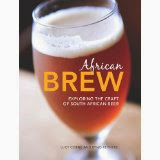
    From beer’s porridge-like beginnings through to the cutting edge craft beers being poured across the country today, African Brew tells the story of South African beer. Join a pint-studded journey through seven provinces to meet the brewers, taste their beers and learn exactly what goes into that beverage you wouldn’t dream of braaiing without. There is also a section that covers up-and-coming breweries. Delve deeper into food and beer pairing with delectable recipes from top South African chefs, each dish paired with a local lager or ale. And for those who don’t know the difference between the two, African Brew hopes to turn the beer novice into a connoisseur with tasting notes and troubleshooting tips showing you what to look for in your preferred pint. 1431702897

    Muslim Societies in African History

    This book examines a series of processes (Islamization, Arabization, Africanization) and case studies from the Muslim societies of Africa over the last thousand years. In contrast to traditions suggesting that Islam did not take root in Africa, David Robinson depicts the complex struggles of Muslims throughout the continent: in Morocco and the Hausaland region of Nigeria; the "pagan" societies of Ashanti (Ghana) and Buganda (Uganda); and the ostensibly Christian state of Ethiopia. "Further reading" sections suggest how undergraduate readers can pursue research, and illustrations and maps supplement the text. [David_Robinson]_Muslim_Societies_in_African_Histo_bookos-z1.org_

    Persons of Color and Religious at the Same Time: The Oblate Sisters of Providence, 1828-1860

    Founded in Baltimore in 1828 by a French Sulpician priest and a mulatto Caribbean immigrant, the Oblate Sisters of Providence formed the first permanent African American Roman Catholic sisterhood in the United States. It still exists today. Exploring the antebellum history of this pioneering sisterhood, Diane Batts Morrow demonstrates the centrality of race in the Oblate experience. By their very existence, the Oblate Sisters challenged prevailing social, political, and cultural attitudes on many levels. White society viewed women of color as lacking in moral standing and sexual virtue; at the same time, the sisters' vows of celibacy flew in the face of conventional female roles as wives and mothers. But the Oblate Sisters' religious commitment proved both liberating and empowering, says Morrow. They inculcated into their communal consciousness positive senses of themselves as black women and as women religious. Strengthened by their spiritual fervor, the sisters defied the inferior social status white society ascribed to them and the ambivalence the Catholic Church demonstrated toward them. They successfully persevered in dedicating themselves to spiritual practice in the Roman Catholic tradition and their mission to educate black children during the era of slavery. [Diane_Batts_Morrow]_Persons_of_Color_and_Religiou_bookos-z1.org_

    Washington during Civil War and Reconstruction: Race and Radicalism

    In this provocative study Robert Harrison provides new insight into grass-roots Reconstruction after the Civil War and into the lives of those of those most deeply affected, the newly emancipated African Americans. Harrison argues that the District of Columbia, far from being marginal to the Reconstruction story, was central to Republican efforts to reshape civil and political relations, with the capital a testing ground for Congressional policy makers. The study describes the ways in which federal agencies such as the Army and the Freedmen's Bureau attempted to assist Washington's freed population and shows how officials struggled to address the social problems resulting from large-scale African-American migration. It also sheds new light on the political processes that led to the abandonment of Reconstruction and the onset of black disfranchisement. Finally, Washington, DC, during Civil War and Reconstruction is a valuable case study of municipal government in an era when Americans faced the challenges of a new urban-industrial society. [Robert_Harrison]_Washington_during_Civil_War_and__bookos-z1.org_

    Bring the Noise: 20 Years of Writing About Hip Rock and Hip Hop

    Bring the Noise weaves together interviews, reviews, essays, and features to create a critical history of the last twenty years of pop culture, juxtaposing the voices of many of rock and hip hop’s most provocative artists—Morrissey, Public Enemy, The Beastie Boys, The Stone Roses, P.J. Harvey, Radiohead—with Reynolds’s own passionate analysis. With all the energy and insight you would expect from the author of Rip It Up and Start Again, Bring the Noise tracks the alternately fraught and fertile relationship between white bohemia and black street music. The selections transmit the immediacy of their moment while offering a running commentary on the broader enduring questions of race and resistance, multiculturalism, and division. From grunge to grime, from Madchester to the Dirty South, Bring the Noise chronicles hip hop and alternative rock’s competing claims to be the cutting edge of innovation and the voice of opposition in an era of conservative backlash. Alert to both the vivid detail and the big picture, Simon Reynolds has shaped a compelling narrative that cuts across a thrillingly turbulent two-decade period of pop music. WritingRock

    The New Red Negro: The Literary Left and African American Poetry, 1930-1946

    The New Red Negro surveys African-American poetry from the onset of the Depression to the early days of the Cold War. It considers the relationship between the thematic and formal choices of African-American poets and organized ideology from the proletarian early 1930s to the neo-modernist late 1940s. This study examines poetry by writers across the spectrum: canonical, less well-known, and virtually unknown. The ideology of the Communist Left as particularly expressed through cultural institutions of the literary Left significantly influenced the shape of African-American poetry in the 1930s and 40s, as well as the content. One result of this engagement of African-American writers with the organized Left was a pronounced tendency to regard the re-created folk or street voice as the authentic voice--and subject--of African-American poetry. Furthermore, a masculinist rhetoric was crucial to the re-creation of this folk voice. This unstable yoking of cultural nationalism, integrationism, and internationalism within a construct of class struggle helped to shape a new relationship of African-American poetry to vernacular African-American culture. This relationship included the representation of African-American working class and rural folk life and its cultural products ostensibly from the mass perspective. It also included the dissemination of urban forms of African-American popular culture, often resulting in mixed media high- low hybrids. [James_Edward_Smethurst]_The_New_Red_Negro_The_Li_bookos-z1.org_

    Honoring the Ancestors: An African Cultural Interpretation of Black Religion and Literature

    In Honoring the Ancestors, Donald H. Matthews affirms once and for all the African foundation of African-American religious practice. His analysis of the methods employed by historians, social scientists, and literary critics in the study of African-American religion and the Negro spiritual leads him to develop a methodology that encompasses contemporary scholarship without compromising the integrity of African-American religion and culture. Exploring the works of such seminal black scholars as W. E. B. DuBois, Melville Herskovits, and Zora Neale Hurston, Matthews traces the early development of the African-centered approach to the interpretation of African-American religion. [Donald_H._Matthews]_Honoring_the_Ancestors_An_Af_bookos-z1.org_

    African Sculpture

    A stunning collection of 164 photographic plates of African masks, votive figures, metalwork, carvings, with introduction. Ashanti, Yoruba, Benin, more. African Sculpture

    Fashioning Africa: Power and the Politics of Dress

    Everywhere in the world there is a close connection between the clothes we wear and our political expression. To date, few scholars have explored what clothing means in 20th-century Africa and the diaspora. In Fashioning Africa, an international group of anthropologists, historians, and art historians bring rich and diverse perspectives to this fascinating topic. From clothing as an expression of freedom in early colonial Zanzibar to Somali women's headcovering in inner-city Minneapolis, these essays explore the power of dress in African and pan-African settings. Nationalist and diasporic identities, as well as their histories and politics, are examined at the level of what is put on the body every day. Readers interested in fashion history, material and expressive cultures, understandings of nation-state styles, and expressions of a distinctive African modernity will be engaged by this interdisciplinary and broadly appealing volume. [Jean_Marie_Allman]_Fashioning_Africa_Power_and_t_bookos-z1.org_

    The Dynamic Dance: Nonvocal Communication in African Great Apes

    Mother and infant negotiate over food; two high-status males jockey for power; female kin band together to get their way. It happens among humans and it happens among our closest living relatives in the animal kingdom, the great apes of Africa. In this eye-opening book, we see precisely how such events unfold in chimpanzees, bonobos, and gorillas: through a spontaneous, mutually choreographed dance of actions, gestures, and vocalizations in which social partners create meaning and come to understand each other. Using dynamic systems theory, an approach employed to study human communication, Barbara King is able to demonstrate the genuine complexity of apes' social communication, and the extent to which their interactions generate meaning. As King describes, apes create meaning primarily through their body movements--and go well beyond conveying messages about food, mating, or predators. Readers come to know the captive apes she has observed, and others across Africa as well, and to understand "the process of creating social meaning." This new perspective not only acquaints us with our closest living relatives, but informs us about a possible pathway for the evolution of language in our own species. King's theory challenges the popular idea that human language is instinctive, with rules and abilities hardwired into our brains. Rather, The Dynamic Dance suggests, language has its roots in the gestural "building up of meaning" that was present in the ancestor we shared with the great apes, and that we continue to practice to this day. [Barbara_J._King]_The_Dynamic_Dance_Nonvocal_Comm_bookos-z1.org_

    Bending the Bow: An Anthology of African Love Poetry

    From the ancient Egyptian inventors of the love lyric to contemporary poets, Bending the Bow: An Anthology of African Love Poetry gathers together both written and sung love poetry from Africa. This anthology is a work of literary archaeology that lays bare a genre of African poetry that has been overshadowed by political poetry. Frank Chipasula has assembled a historically and geographically comprehensive wealth of African love poetry that spans more than three thousand years. By collecting a continent’s celebrations and explorations of the nature of love, he expands African literature into the sublime territory of the heart. Bending the Bow traces the development of African love poetry from antiquity to modernity while establishing a cross-millennial dialogue. The anonymously written love poems from Pharaonic Egypt that open the anthology both predate Biblical love poetry and reveal the longevity of written love poetry in Africa. The middle section is devoted to sung love poetry from all regions of the continent. These great works serve as the foundation for modern poetry and testify to love poetry’s omnipresence in Africa. The final section, showcasing forty-eight modern African poets, celebrates the genre’s continuing vitality. Among those represented are Muyaka bin Hajji and Shaaban Robert, two major Swahili poets; Gabriel Okara, the innovative though underrated Nigerian poet; Léopold Sédar Senghor, the first president of Senegal and a founder of the Negritude Movement in francophone African literature; Rashidah Ismaili from Benin; Flavien Ranaivo from Madagascar; and Gabeba Baderoon from South Africa. Ranging from the subtly suggestive to the openly erotic, this collection highlights love’s endurance in a world too often riven by contention. Bending the Bow bears testimony to poetry’s role as conciliator while opening up a new area of study for scholars and students. [Frank_M_Chipasula]_Bending_the_Bow_An_Anthology__bookos-z1.org_

    A History of Theatre in Africa

    Offering a comprehensive account of a long and varied chronicle, this history of theater in Africa is comprised of essays written by scholars in the field. The coverage is geographically broad and includes an examination of the concepts of "history" and "theater" in Africa; North Africa; Francophone theatre; Anglophone West Africa; East Africa; Southern Africa; Lusophone African theatre; Mauritius and Reunion; as well as the African diaspora. History_Theatre_Africa

    Different Drummers: Rhythm and Race in the Americas (Music of the African Diaspora)

    Long a taboo subject among critics, rhythm finally takes center stage in this book's dazzling, wide-ranging examination of diverse black cultures across the New World. Martin Munro’s groundbreaking work traces the central—and contested—role of music in shaping identities, politics, social history, and artistic expression. Starting with enslaved African musicians, Munro takes us to Haiti, Trinidad, the French Caribbean, and to the civil rights era in the United States. Along the way, he highlights such figures as Toussaint Louverture, Jacques Roumain, Jean Price-Mars, The Mighty Sparrow, Aimé Césaire, Edouard Glissant, Joseph Zobel, Daniel Maximin, James Brown, and Amiri Baraka. Bringing to light new connections among black cultures, Munro shows how rhythm has been both a persistent marker of race as well as a dynamic force for change at virtually every major turning point in black New World history. 0520262832_Different

    Maize and Grace: Africa's Encounter with a New World Crop, 1500-2000

    Sometime around 1500 A.D., an African farmer planted a maize seed imported from the New World. That act set in motion the remarkable saga of one of the world's most influential crops--one that would transform the future of Africa and of the Atlantic world. Africa's experience with maize is distinctive but also instructive from a global perspective: experts predict that by 2020 maize will become the world's most cultivated crop. James McCann moves easily from the village level to the continental scale, from the medieval to the modern, as he explains the science of maize production and explores how the crop has imprinted itself on Africa's agrarian and urban landscapes. Today, maize accounts for more than half the calories people consume in many African countries. During the twentieth century, a tidal wave of maize engulfed the continent, and supplanted Africa's own historical grain crops--sorghum, millet, and rice. In the metamorphosis of maize from an exotic visitor into a quintessentially African crop, in its transformation from vegetable to grain, and from curiosity to staple, lies a revealing story of cultural adaptation. As it unfolds, we see how this sixteenth-century stranger has become indispensable to Africa's fields, storehouses, and diets, and has embedded itself in Africa's political, economic, and social relations. The recent spread of maize has been alarmingly fast, with implications largely overlooked by the media and policymakers. McCann's compelling history offers insight into the profound influence of a single crop on African culture, health, technological innovation, and the future of the world's food supply. [James_C._McCann]_Maize_and_Grace_Africa's_Encoun_bookos-z1.org_

    Bluejackets and Contrabands: African Americans and the Union Navy

    One of the lesser known stories of the Civil War is the role played by escaped slaves in the Union blockade along the Atlantic coast. From the beginning of the war, many African American refugees sought avenues of escape to the North. Due to their sheer numbers, those who reached Union forces presented a problem for the military. The problem was partially resolved by the First Confiscation Act of 1861, which permitted the seizure of property used in support of the South's war effort, including slaves. Eventually regarded as contraband of war, the runaways became known as contrabands. In Bluejackets and Contrabands, Barbara Brooks Tomblin examines the relationship between the Union Navy and the contrabands. The navy established colonies for the former slaves and, in return, some contrabands served as crewmen on navy ships and gunboats and as river pilots, spies, and guides. Tomblin presents a rare picture of the contrabands and casts light on the vital contributions of African Americans to the Union Navy and the Union cause. [Barbara_Brooks_Tomblin]_Bluejackets_and_Contraban_bookos-z1.org_

    Friday, June 20, 2014

    The John Carlos Story: The Sports Moment That Changed the World

    Seen around the world, John Carlos and Tommie Smith’s Black Power salute on the 1968 Olympic podium sparked controversy and career fallout. Yet their show of defiance remains one of the most iconic images of Olympic history and the Black Power movement. Here is the remarkable story of one of the men behind the salute, lifelong activist John Carlos. John Carlos is an African American former track and field athlete, professional football player, and a founding member of the Olympic Project for Human Rights. He won the bronze medal in the 200 meters race at the 1968 Olympics, where his Black Power salute on the podium with Tommie Smith caused much political controversy. The John Carlos Story is his first book. [dave_zirin_john_wesley_carlos]_the_john_carlos_s_bookos-z1.org_

    The Jews of Ethiopia: The Birth of an Elite

    This book offers the results of the most recent research carried out in European and Israeli universities on Ethiopian Jews. With a special focus on Europe and the role played by German, English and Italian Jewish communities in creating a new Jewish Ethiopian identity, it investigates such issues as the formation of a new Ethiopian Jewish elite and the transformation of the identity from Ethiopian Falashas to the Jews of Ethiopia during the twentieth century. [Tudor_Parfitt]_The_Jews_of_Ethiopia_The_Birth_of_bookos-z1.org_

    Foods of Kenya (Taste of Culture)

    Foods of Kenya (Taste of Culture) [Barbara_Sheen]_Foods_of_Kenya__A_Taste_of_Culture_bookos-z1.org_

    Islanders in the Stream: A History of the Bahamian People: Volume One: From Aboriginal Times to the End of Slavery

    From two leading historians of Bahamian history comes this groundbreaking work on a unique archipelagic nation. Islanders in the Stream is not only the first comprehensive chronicle of the Bahamian people, it is also the first work of its kind and scale for any Caribbean nation. This comprehensive volume details the full, extraordinary history of all the people who have ever inhabited the islands and explains the evolution of a Bahamian national identity within the framework of neighboring territories in similar circumstances. Divided into three sections, this volume covers the period from aboriginal times to the end of formal slavery in 1838. The first part includes authoritative accounts of Columbus’s first landfall in the New World on San Salvador island, his voyage through the Bahamas, and the ensuing disastrous collision of European and native Arawak cultures. Covering the islands’ initial settlement, the second section ranges from the initial European incursions and the first English settlements through the lawless era of pirate misrule to Britain’s official takeover and development of the colony in the eighteenth century. The third, and largest, section offers a full analysis of Bahamian slave society through the great influx of Empire Loyalists and their slaves at the end of the American Revolution to the purported achievement of full freedom for the slaves in 1838. This work is both a pioneering social history and a richly illustrated narrative modifying previous Eurocentric interpretations of the islands’ early history. Written to appeal to Bahamians as well as all those interested in Caribbean history, Islanders in the Stream looks at the islands and their people in their fullest contexts, constituting not just the most thorough view of Bahamian history to date but a major contribution to Caribbean historiography. [Michael_Craton__Gail_Saunders]_Islanders_in_the_S_bookos-z1.org_

    Scroll to Top