Saturday, May 31, 2014
Ragged but Right: Black Traveling Shows, "Coon Songs," and the Dark Pathway to Blues and Jazz
The commercial explosion of ragtime in the early twentieth century created previously unimagined opportunities for black performers. However, every prospect was mitigated by systemic racism. The biggest hits of the ragtime era weren't Scott Joplin's stately piano rags. "Coon songs," with their ugly name, defined ragtime for the masses, and played a transitional role in the commercial ascendancy of blues and jazz.
In Ragged but Right, now in paperback, Lynn Abbott and Doug Seroff investigate black musical comedy productions, sideshow bands, and itinerant tented minstrel shows. Ragtime history is crowned by the "big shows," the stunning musical comedy successes of Williams and Walker, Bob Cole, and Ernest Hogan. Under the big tent of Tolliver's Smart Set, Ma Rainey, Clara Smith, and others were converted from "coon shouters" to "blues singers."
Throughout the ragtime era and into the era of blues and jazz, circuses and Wild West shows exploited the popular demand for black music and culture, yet segregated and subordinated black performers to the sideshow tent. Not to be confused with their nineteenth-century white predecessors, black, tented minstrel shows such as the Rabbit's Foot and Silas Green from New Orleans provided blues and jazz-heavy vernacular entertainment that black southern audiences identified with and took pride in.
Maya Angelou (People in the News)
Presents the life and works of the author of ''I Know Why the Caged Bird Sings'' and discusses her struggles as a woman, mother, and artist.
[Gail_Stewart]_Maya_Angelou__People_in_the_News__bookos-z1.org_
Major Taylor: The Inspiring Story of a Black Cyclist and the Men Who Helped Him Achieve Worldwide Fame
In the wake of the Tour de France’s fallen heroes, the story of one of history’s most legendary cyclists provides a much-needed antidote. In 1907 the world’s most popular athlete was not Cy Young or Ty Cobb. Rather, he was a black bicycle racer named “Major” Taylor.
In his day, Taylor became a spiritual and athletic idol. He was the fastest man in America and a champion who prevailed over unspeakable cruelty. The men who aided him were among the most colorful to emerge from the era. When hotel and restaurant operators denied Taylor food and lodgings, forcing him to sleep in horse stables and to race hungry, there was a benevolent racer-turned-trainer named Birdie Munger, who took Taylor under his wing and into his home. Then along came Arthur Zimmerman, an internationally famous bike racer, who gently mentored Taylor when some riders drew the color line and refused to race against him. Taylor’s manager, pugnacious Irishman and famed Broadway producer William Brady, stood up for him when track owners tried barring him from competition. From the Old World came a rakishly handsome, mustachioed sports promoter named Victor Breyer, who lured Taylor overseas for a dramatic, Seabiscuit versus War Admiral–like match race that would be widely remembered a quarter century later.
With a foreword by World Champion and three-time Tour de France winner Greg LeMond, this spellbinding saga of fortitude, grace, forgiveness, and a man’s unyielding will to win against the greatest of odds is sure to become a classic that will be enjoyed by everyone.
major_taylor
Music of the Common Tongue: Survival and Celebration in African American Music
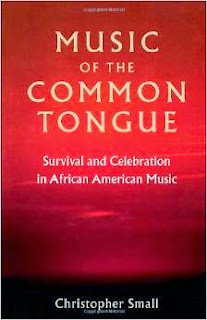
In clear and elegant prose, Music of the Common Tongue, first published in 1987, argues that by any reasonable reckoning of the function of music in human life the African American tradition, that which stems from the collision between African and European ways of doing music which occurred in the Americas and the Caribbean during and after slavery, is the major western music of the twentieth century. In showing why this is so, the author presents not only an account of African American music from its origins but also a more general consideration of the nature of the music act and of its function in human life. The two streams of discussion occupy alternate chapters so that each casts light on the other. The author offers also an answer to what the Musical Times called the "seldom posed though glaringly obtrusive" question: "why is it that the music of an alienated, oppressed, often persecuted black minority should have made so powerful an impact on the entire industrialized world, whatever the color of its skin or economic status?"
[christopher_small]_music_of_the_common_tongue_su_bookos-z1.org__1_
A Short Walk in a Long Journey
A Short Walk in a Long Journey is a story about an American election observer’s experience in the 1994 South African election. This election marked the beginning of democracy in South Africa with the election of Nelson Mandela as president. A Short Walk in a Long Journey is a non-fictional narrative, rewritten 19 years later relying upon the copious notes taken during the adventure and vivid memories. There are several climatic points in the story and the final section is an analysis of present day South Africa, largely based upon research done by Goldman Sachs and UBS. The title is a reference to Mandela’s autobiography, Long Walk to Freedom.
longjourney
African American Journalists: Autobiography as Memoir and Manifesto
In the last decade of the 20th century, during a time when African Americans were starting to take inventory of the gains of the civil rights movement and its effects on the lives of black professionals in the public sphere, the memoirs of several journalists were published, a number of which became national bestsellers. African American Journalists examines select autobiographies written by African American journalists in order to explore the relationship between race, class, gender, and journalism practice.
At the heart of this study is the contention that contemporary memoirs written by African American journalists are quasi-political documents—manifestos written in reaction to and against the forces of institutionalized racism in the newsroom. The memoirs featured in this study include Jill Nelson's Volunteer Slavery: My Authentic Negro Experience, Nathan McCall's Makes Me Wanna Holler: A Young Black Man in America, Jake Lamar's Bourgeois Blues: An American Memoir, and Patricia Raybon's My First White Friend: Confessions on Race, Love, and Forgiveness. The exploration of these works increases our understanding of the problems that members of other underrepresented groups may face in the workplace.
[Calvin_L._Hall]_African_American_Journalists_Aut_bookos-z1.org_
Hallelujah! The Welcome Table: A Lifetime of Memories with Recipes
Throughout Maya Angelou’s life, from her childhood in Stamps, Arkansas, to her world travels as a bestselling writer, good food has played a central role. Preparing and enjoying homemade meals provides a sense of purpose and calm, accomplishment and connection. Now in Hallelujah! The Welcome Table, Angelou shares memories pithy and poignant–and the recipes that helped to make them both indelible and irreplaceable.
Angelou tells us about the time she was expelled from school for being afraid to speak–and her mother baked a delicious maple cake to brighten her spirits. She gives us her recipe for short ribs along with a story about a job she had as a cook at a Creole restaurant (never mind that she didn’t know how to cook and had no idea what Creole food might entail). There was the time in London when she attended a wretched dinner party full of wretched people; but all wasn’t lost–she did experience her initial taste of a savory onion tart. She recounts her very first night in her new home in Sonoma, California, when she invited M. F. K. Fisher over for cassoulet, and the evening Deca Mitford roasted a chicken when she was beyond tipsy–and created Chicken Drunkard Style. And then there was the hearty brunch Angelou made for a homesick Southerner, a meal that earned her both a job offer and a prophetic compliment: “If you can write half as good as you can cook, you are going to be famous.”
Maya Angelou is renowned in her wide and generous circle of friends as a marvelous chef. Her kitchen is a social center. From fried meat pies, chicken livers, and beef Wellington to caramel cake, bread pudding, and chocolate éclairs, the one hundred-plus recipes included here are all tried and true, and come from Angelou’s heart and her home. Hallelujah! The Welcome Table is a stunning collaboration between the two things Angelou loves best: writing and cooking.
[maya_angelou]_hallelujah_the_welcome_table_a_li_bookos-z1.org_
When Victims Become Killers: Colonialism, Nativism, and the Genocide in Rwanda
"When we captured Kigali, we thought we would face criminals in the state; instead, we faced a criminal population." So a political commissar in the Rwanda Patriotic Front reflected after the 1994 massacre of as many as one million Tutsis in Rwanda. Underlying his statement is the realization that, though ordered by a minority of state functionaries, the slaughter was performed by hundreds of thousands of ordinary citizens, including even judges, human rights activists, and doctors, nurses, priests, friends, and spouses of the victims. Indeed, it is its very popularity that makes the Rwandan genocide so unthinkable. This book makes it thinkable.
Rejecting easy explanations of the genocide as a mysterious evil force that was bizarrely unleashed, one of Africa's best-known intellectuals situates the tragedy in its proper context. He coaxes to the surface the historical, geographical, and political forces that made it possible for so many Hutu to turn so brutally on their neighbors. He finds answers in the nature of political identities generated during colonialism, in the failures of the nationalist revolution to transcend these identities, and in regional demographic and political currents that reach well beyond Rwanda. In so doing, Mahmood Mamdani usefully broadens understandings of citizenship and political identity in postcolonial Africa.
There have been few attempts to explain the Rwandan horror, and none has succeeded so well as this one. Mamdani's analysis provides a solid foundation for future studies of the massacre. Even more important, his answers point a way out of crisis: a direction for reforming political identity in central Africa and preventing future tragedies.
0691058210wvbk
Thursday, May 29, 2014
Exiled Egyptians: The Heart of Africa by Moustafa Gadalla
A concise and comprehensive historical account of Egypt and sub-Sahara Africa for the last 3,000 years. Find out how the Islamic jihads fragmented and dispersed the African continent into endless misery and chaos. Discover the true causes and dynamics of African slavery.
Exiled Egyptians The Heart of Africa
Egyptian Romany The Essence of Hispania by Moustafa Gadalla
Revisits the Iberian history for the last 6,000 years, and reveal the Ancient Egyptian roots of the Romany (Gypsies) and how they brought about the civilization and orientalization of Hispania. The book also shows the intimate relationship between Egypt and Hispania—archeologically, historically, culturally, ethnologically, linguistically, etc.
Egyptian Romany The Essence of Hispania
American Holocaust: The Conquest of the New World
For four hundred years-from the first Spanish assaults against the Arawak people of Hispaniola in the 1490s to the U.S. Army's massacre of Sioux Indians at Wounded Knee in the 1890s-the indigenous inhabitants of North and South America endured an unending firestorm of violence. During that time the native population of the Western Hemisphere declined by as many as 100 million people. Indeed, as historian David E. Stannard argues in this stunning new book, the European and white American destruction of the native peoples of the Americas was the most massive act of genocide in the history of the world.
Stannard begins with a portrait of the enormous richness and diversity of life in the Americas prior to Columbus's fateful voyage in 1492. He then follows the path of genocide from the Indies to Mexico and Central and South America, then north to Florida, Virginia, and New England, and finally out across the Great Plains and Southwest to California and the North Pacific Coast. Stannard reveals that wherever Europeans or white Americans went, the native people were caught between imported plagues and barbarous atrocities, typically resulting in the annihilation of 95 percent of their populations. What kind of people, he asks, do such horrendous things to others? His highly provocative answer: Christians. Digging deeply into ancient European and Christian attitudes toward sex, race, and war, he finds the cultural ground well prepared by the end of the Middle Ages for the centuries-long genocide campaign that Europeans and their descendants launched-and in places continue to wage-against the New World's original inhabitants. Advancing a thesis that is sure to create much controversy, Stannard contends that the perpetrators of the American Holocaust drew on the same ideological wellspring as did the later architects of the Nazi Holocaust.
205723435-American-Holocaust
The Yoruba-speaking Peoples of the Slave Coast of West Africa
Many of the earliest books, particularly those dating back to the 1900s and before, are now extremely scarce and increasingly expensive. We are republishing these classic works in affordable, high quality, modern editions, using the original text and artwork.
163219165-Yoruba-Speaking-Peoples-of-the-Slave-Coast-of-West-Africa
Black Rebellion: Five Slave Revolts
Black Rebellion, a fascinating account of five slave insurrections, among them the story of the Maroons, escaped slaves in the West Indies and South America who successfully resisted larger British armies while living an independent existence for generations in the mountains and jungles of Jamaica and Surinam; of Gabriel Prosser, who recruited about 1,000 fellow slaves in 1800 to launch a rebellion throughout Virginia; of Denmark Vesey, an ex-slave, seaman, and artisan, fluent in several languages, who conspired in 1822 to kill the white citizens of Charleston, South Carolina, and take over the city; and of the revolutionary mystic Nat Turner, who in 1831 organized and led the most successful and dramatic slave revolt in North America. The author also describes how whites responded with panic, sweeping arrests, mass executions, and more repressive laws in a futile effort to crush the slaves’ insatiable desire to be free.
130847283-117869666-Black-Rebellion-Five-Slave-Revolts-Higginson-Thomas-Wentworth
Supreme Mathematic African Ma'At Magic
The purpose of the book entitled "Supreme Mathematic, African Ma'at Magic" is to show that Mathematics is of African origin; To show relationships between African and Modern mathematical objects, terms, and concepts; To show how African Mathematical methods can be used to solve certain problems not easily solved by modern mathematical methods; and To Show the Importance that Ancient Africans placed on Mathematics to solve problems, establish Truth and Order (Ma'at), and Apply knowledge to create Systems and Technologies needed for survival and well-being. This book is an introductory educational tool for a long term goal and mission of growing, cultivating, nurturing, and promoting African Creativity, and Ingenuity to develop, engineer, innovate, invent, and create any structures, devices, or systems needed. The importance of Mathematics is emphasized in this book to provide Motivation, inspiration, and Insight into the relationship between Ancient African and Modern Mathematics.
212328870-Supreme-Mathematic-African-Maat-Magic
World of a Slave [2 volumes]: Encyclopedia of the Material Life of Slaves in the United States
Although many encyclopedias discuss slavery, enslaved blacks, and African American life and culture, none focus on the material world of slaves, such as what they saw; touched; heard; ate, drank, and smoked; wore; worked with and in; used, cultivated, crafted, played, and played with; and slept on. The two-volume World of a Slave: Encyclopedia of the Material Life of Slaves in the United StateS≪/i> is a landmark work in this important new field of study.
Recognizing that a full understanding of the complexity of American slavery and its legacy requires an understanding of the material culture of slavery, the encyclopedia includes entries on almost every aspect of that material culture, beginning in the 17th century and extending through the Civil War. Readers will find information on animals, documents, economy, education and literacy, food and drink, home, music, personal items, places, religion, rites of passage, slavery, structures, and work. There are also introductory essays on literacy and oral culture and on music and dance.
[Kym_S._Rice__Martha_B._Katz-Hyman]_World_of_a_Sla_bookos-z1.org_
Wednesday, May 28, 2014
African Americans Doing Feminism: Putting Theory into Everyday Practice
How might ordinary people apply feminist principles to everyday situations? How do feminist ideas affect the daily behaviors and decisions of those who seek to live out the basic idea that women are as fully human as men? This collection of essays uses concrete examples to illuminate the ways in which African Americans practice feminism on a day-to-day basis. Demonstrating real-life situations of feminism in action, each essay tackles an issue—such as personal finances, parenting, sexual harassment, reproductive freedom, incest, depression and addiction, or romantic relationships—and articulates a feminist approach to engaging with the problem or concern. Contributors include African American scholars, artists, activists, and business professionals who offer personal accounts of how they encountered feminist ideas and are using them now as a guide to living. The essays reveal how feminist principles affect people’s perceptions of their ability to change themselves and society, because the personal is not always self-evidently political.
1438431422Feminis
Democratization and the Protection of Human Rights in Africa: Problems and Prospects
Development was achieved in the West by capitalism and industrialization before liberal democracy was introduced as a viable form of government. Africa is grappling with the problems of underdevelopment. Yet, the West insists on liberal democracy for Africa, a form of government which has no economic and social foundations in Africa. The West now faults the African people for not being able to establish and sustain democratic institutions. Ambrose, an African development practitioner who, recently returning from the continent after three intense years of fact-finding, research, and consultation, argues that the solution to Africa's problems does not lie in externally imposed liberal institutions shored up by top-down bureaucracy that most often is ignorant, unresponsive, or outright hostile to the needs of the impoverished majority. Her investigations lead her to believe that the solution for Africa lies in a collective approach based on empowerment of the masses and economic reforms.
[Brendalyn_P._Ambrose]_Democratization_and_the_Pro_bookos-z1.org_
Daily Life in Colonial Latin America
Drawing on a wealth of primary documents and recent research, Daily Life in Colonial Latin America gives readers a genuine sense of everyday living in Central and South America, from the age of the great explorers in the 16th century to the beginning of the era of independence three centuries later.
Daily Life in Colonial Latin America considers the full range of people caught up in the sweep of history during this pivotal time—Indians, Spanish and Portuguese settlers, Africans brought to the region as slaves, Whites and Mestizos, women and children. By focusing on the lives of those often overshadowed by history, the book offers a new way of understanding how peoples from the Iberian peninsula, sub-Saharan Africa, and the western hemisphere interacted to produce a uniquely Latin American culture.
[Ann_Jefferson__Paul_Lokken]_Daily_Life_in_Colonia_bookos-z1.org_
Race and Multiraciality in Brazil and the United States: Converging Paths?
Although both Brazil and the United States inherited European norms that accorded whites privileged status relative to all other racial groups, the development of their societies followed different trajectories in defining white/black relations. In Brazil pervasive miscegenation and the lack of formal legal barriers to racial equality gave the appearance of its being a “racial democracy,” with a ternary system of classifying people into whites (brancos), multiracial individuals (pardos), and blacks (pretos) supporting the idea that social inequality was primarily associated with differences in class and culture rather than race. In the United States, by contrast, a binary system distinguishing blacks from whites by reference to the “one-drop rule” of African descent produced a more rigid racial hierarchy in which both legal and informal barriers operated to create socioeconomic disadvantages for blacks.
But in recent decades, Reginald Daniel argues in this comparative study, changes have taken place in both countries that have put them on “converging paths.” Brazil’s black consciousness movement stresses the binary division between brancos and negros to heighten awareness of and mobilize opposition to the real racial discrimination that exists in Brazil, while the multiracial identity movement in the U.S. works to help develop a more fluid sense of racial dynamics that was long felt to be the achievement of Brazil’s ternary system.
Against the historical background of race relations in Brazil and the U.S. that he traces in Part I of the book, including a review of earlier challenges to their respective racial orders, Daniel focuses in Part II on analyzing the new racial project on which each country has embarked, with attention to all the political possibilities and dangers they involve.
[G._Reginald_Daniel]_Race_and_Multiraciality_in_Br_bookos-z1.org_
Shout, Sister, Shout!: The Untold Story of Rock-and-Roll Trailblazer Sister Rosetta Tharpe
Long before "women in rock" became a media catchphrase, African American guitar virtuoso Rosetta Tharpe proved in spectacular fashion that women could rock. Born in Cotton Plant, Arkansas, in 1915, Tharpe was gospel's first superstar and the preeminent crossover figure of its golden age (1945–1965).
Shout, Sister, Shout! is the first biography of this trailblazing performer who influenced scores of popular musicians, from Elvis Presley and Little Richard to Eric Clapton and Etta James. Tharpe was raised in the Pentecostal Church, steeped in the gospel tradition, but she produced music that crossed boundaries, defied classification, and disregarded the social and cultural norms of the age; incorporating elements of gospel, blues, jazz, popular ballads, folk, country, rhythm and blues, and rock and roll. Tharpe went electric early on, captivating both white and black audiences in the North and South, in the U.S. and internationally, with her charisma and skill. People who saw her perform claimed she made that guitar talk. Ambitious, flamboyant, and relentlessly public, Tharpe even staged her own wedding as a gospel concert-in a stadium holding 20,000 people!
Wald's eye-opening biography, which draws on the memories of more than a hundred people who knew or worked with Tharpe, introduces us to this vibrant, essential, yet nearly forgotten musical heavyweight whose long career helped define gospel, r&b, and rock music. A performer who resisted categorization at many levels-as a gospel musician, a woman, and an African American-Tharpe demands that we rethink our most basic notions of music history and American culture. Her story forever alters our understanding of both women in rock and U.S. popular music.
[Gayle_F._Wald]_Shout__Sister__Shout_The_Untold__bookos-z1.org_
Monday, May 26, 2014
Blacks and Reds: Race and Class in Conflict, 1919-1990
In this important new study, Hutchinson examines in detail the American Communist party's largely unsuccessful effort to win the allegiance of black Americans in the 20th century. From the time of its creation in 1919, Hutchinson argues, the party sought to recruit African Americans, initially by arguing that Marxist ideology best served their interests; further, Communist ideologues declared that injustices visited upon African Americans resulted from economic and class antagonism, not racial bigotry. But as Hutchinson clearly demonstrates, tensions between blacks and "Reds" increased as time passed and as a African American leaders such as W.E.B. DuBois, James Weldon Johnson, and Kelley Miller made it clear that they would not permit African American interests and agendas to become subservient to party ideology.
While Communism may have appealed to some, Hutchinson shows that most blacks were not interested in the party, its penchant for theoretical abstraction, or its call for proletarian revolt. He also dispels the widely held misconception that 20th century black political movements were largely creations of Communist initiatives. Such notions, he argues, are not only wrong, but serve as impediments to understanding African American organizations in the context of their unique and historically black identity.
[earl_ofari_hutchinson]_blacks_and_reds_race_and__bookos-z1.org_
This Child Will Be Great: Memoir of a Remarkable Life by Africa's First Woman President
In January 2006, after the Republic of Liberia had been racked by fourteen years of brutal civil conflict, Ellen Johnson Sirleaf—Africa's "Iron Lady"—was sworn in as president, an event that marked a tremendous turning point in the history of the West African nation.
[ellen_johnson_sirleaf]_this_child_will_be_great__bookos-z1.org_
Sistah Vegan: Food, Identity, Health, and Society: Black Female Vegans Speak
Sistah Vegan is a series of narratives, critical essays, poems, and reflections from a diverse community of North American black-identified vegans. Collectively, these activists are de-colonizing their bodies and minds via whole-foods veganism. By kicking junk-food habits, the more than thirty contributors all show the way toward longer, stronger, and healthier lives. Suffering from type-2 diabetes, hypertension, high blood pressure, and overweight need not be the way women of color are doomed to be victimized and live out their mature lives. There are healthy alternatives. Sistah Vegan is not about preaching veganism or vegan fundamentalism. Rather, the book is about how a group of black-identified female vegans perceive nutrition, food, ecological sustainability, health and healing, animal rights, parenting, social justice, spirituality, hair care, race, gender-identification, womanism, and liberation that all go against the (refined and bleached) grain of our dysfunctional society. Thought-provoking for the identification and dismantling of environmental racism, ecological devastation, and other social injustices, Sistah Vegan is an in-your-face handbook for our time. It calls upon all of us to make radical changes for the betterment of ourselves, our planet, and by extension everyone.
1590561457
The Strike That Changed New York: Blacks, Whites, and the Ocean Hill-Brownsville Crisis
On 9th May 1968, junior high school teacher Fred Nauman received a letter that would change the history of New York City. It informed him that he had been fired from his job. Eighteen other educators in the Ocean Hill-Brownsville area of Brooklyn received similar letters that day. The dismissed educators were white. The local school board that fired them was predominantly African-American. The crisis that the firings provoked became the most racially divisive moment in the city in more than a century, sparking three teachers' strikes and increasingly angry confrontations between black and white New Yorkers at bargaining tables, on picket lines, and in the streets. This study revisits the Ocean Hill-Brownsville crisis - a watershed in modern New York City race relations. Jerald Podair connects the conflict with the sociocultural history of the city and explores its legacy. The work presents a sobering tale of racial misunderstanding and fear, a New York story with national implications.
[Professor_Jerald_E._Podair]_The_Strike_That_Chang_bookos-z1.org_
Who We Are: Blacks
Who We Are: Blacks brings you the facts you need about the size and characteristics of this fast-growing and politically powerful minority. Its 11 chapters examine their attitudes (a new chapter), education, health, housing, income, labor force status, living arrangements, population, spending, time use, and wealth.
In addition to detailed 2010 census counts of the numbers of blacks nationally and by state and metropolitan area, Who We Are: Blacks includes the latest socioeconomic data on the black population. It has detailed spending data for black households and the latest update on black household wealth including the impact of the Great Recession on black net worth, assets, and debt. Results from the American Time Use Survey can also be found here, profiling black time use and comparing it to the averages. Attitudinal data from the General Social Survey compare and contrast black attitudes with those of Asians, Hispanics, and whites on a whole range of issues.
While the government collected the data in Who We Are: Blacks, the tables are not reprints from government reports. Instead, New Strategist s editors spent hundreds of hours scouring web sites, compiling numbers into meaningful statistics, and creating tables with calculations that reveal the trends. New Strategist has done the work for you, delving into the data and providing analysis and comparisons, placing the important information about blacks at your fingertips.
The substantial educational, employment, and economic gains made by blacks over the past few decades and documented in these pages, are contrary to popular perception and media portrayals, but these realities are of utmost importance to policymakers and business leaders. Who We Are: Blacks gives you the information you need to discover and become familiar with the large and growing black population and its many unique characteristics.
[New_Strategist]_Blacks__Who_We_Are__bookos-z1.org_
The Acid Reflux Solution: A Cookbook and Lifestyle Guide for Healing Heartburn Naturally
If you suffer from acid reflux, you’re not alone. More than 50 million Americans have GERD, or gastroesophageal reflux disease, and while antacids can be effective for short-term relief, they can also cause dangerous medical conditions if they’re used for more than the recommended fifty days at a time. Luckily, The Acid Reflux Solution offers a simple plan to help you gradually and safely reduce—and eventually eliminate—the need for pills while alleviating your heartburn.
In this combination medical guide and cookbook, gastroenterologist Jorge E. Rodriguez, MD, has teamed up with registered dietitian and food writer Susan Wyler to present a three-step program to heal heartburn naturally. This isn’t a formal diet plan—no calorie counting required—but you’ll probably shed some pounds while following The Acid Reflux Solution because these recipes were designed for good health. In fact, Dr. Jorge has not only healed his own heartburn since developing this plan, but he has also lost more than 30 pounds!
In step one you make some simple lifestyle modifications, like raising the head of your bed, loosening your belt, and eating less but more often. These are easily achievable goals that you can start working on today. In step two, you start eating to avoid reflux. With 100 high-fiber, low-fat, portion-controlled recipes to choose from, this step is the most delicious—and surprising. The list of foods that actually trigger acid reflux is smaller than you might think, which means you can enjoy meals that you probably thought were off limits, like Cuban Black Bean Soup, Grass-Fed Beef and Portobello Blue Cheese Burgers, Asian Barbecued Chicken, and even Spaghetti and Meatballs.
In the final step, you reduce the dosage and frequency of the medications you were taking to control your heartburn because you won’t need them anymore. The Acid Reflux Solution combines the latest medical research with reflux-friendly recipes to help you feel great, lose weight, and live heartburn free.
Th_A_Ref_Sol
The Boondocks Because I Know You Don't Read the Newspaper by Aaron McGruder
The Boondocks took the syndication world by storm. The notoriety landed Boondocks creator Aaron McGruder in publications ranging from Time magazine to People magazine which named him one of the 25 Most Intriguing People of '99. Centered around the experiences of two young African-American boys, Huey and Riley, who move from inner-city Chicago to the suburbs (or the boondocks to them), the strip fuses hip-hop sensibilities with Japanese anime-style drawings and a candid discussion of race. Funny yet revealing, the combination of superb art and envelope-pushing content provides one of the most unique strips ever.
The Boondocks Because I Know You Don't Read the Newspaper by Aaron McGruder
Where There Is No Doctor
Hesperian's classic manual, Where There Is No Doctor, is arguably the most widely-used health care manual in the world.
This 2013 updated reprint features new information on tuberculosis and HIV, updated medicines, anti-retroviral therapy, and preventing HIV in babies.
All Hesperian books are regularly updated and reprinted to reflect accurate medical information.
Useful for health workers, clinicians, and others involved in primary health care delivery and health promotion programs, with millions of copies in print in more than 75 languages, the manual provides practical, easily understood information on how to diagnose, treat, and prevent common diseases. Special attention is focused on nutrition, infection and disease prevention, and diagnostic techniques as primary ways to prevent and treat health problems.
0942364155_Where
Joe Louis: Hard Times Man
Joe Louis defended his heavyweight boxing title an astonishing twenty-five times and reigned as world champion for more than eleven years. He got more column inches of newspaper coverage in the 1930s than FDR did. His racially and politically charged defeat of Max Schmeling in 1938 made Louis a national hero. But as important as his record is what he meant to African-Americans: at a time when the boxing ring was the only venue where black and white could meet on equal terms, Louis embodied all their hopes for dignity and equality.
Through meticulous research and first-hand interviews, acclaimed historian and biographer Randy Roberts presents Louis, and his impact on sport and country, in a way never before accomplished. Roberts reveals an athlete who carefully managed his public image, and whose relationships with both the black and white communities—including his relationships with mobsters—were far more complex than the simplistic accounts of heroism and victimization that have dominated previous biographies.
Richly researched and utterly captivating, this extraordinary biography presents the full range of Joe Louis’s power in and out of the boxing ring.
94695414-Joe-Louis-Hard-Times-Man-Randy-Roberts
Ring of Hate: Joe Louis Vs. Max Schmeling
The definitive book (The Ring) on one of the greatest sports events of the twentieth century, the heavyweight championship bout between Germany's Max Schmeling and America's "Brown Bomber," Joe Louis. More than the world heavyweight championship was at stake when Joe Louis fought Max Schmeling on June 22, 1938. In a world on the brink of war, the fight was depicted as a contest between nations, races, and political ideologies, the symbol of a much vaster struggle. Nazi propaganda minister Joseph Goebbels boasted that the Aryan Schmeling would crush his "inferior" black opponent. President Roosevelt told Louis, his guest at the White House, that "America needs muscles like yours to beat Germany." For Louis, this was also his chance to avenge the only loss in his brilliant career-by a knockout-to the same Max Schmeling two years earlier. Recreating the drama of their momentous bout, the author traces the lives of both fighters before and after the fight, including Schmeling's efforts in Nazi Germany to protect Jewish friends and the two boxers' surprising friendship in the postwar years. In Ring of Hate Myler tells the story of two decent men, drawn together by boxing and divided by the cruel demands of competing nations.
ring_of_hate_-_patrick_myler
Bad Faith and Antiblack Racism
Lewis Gordon presents the first detailed existential phenomenological investigation of antiblack racism as a form of Sartrean bad faith. Bad faith, the attitude in which human beings attempt to evade freedom and responsibility, is treated as a constant possibility of human existence. Antiblack racism, the attitude and practice that involve the construction of black people as fundamentally inferior and subhuman, is examined as an effort to evade the responsibilities of a human and humane world. Gordon argues that the concept of bad faith militates against any human science that is built upon a theory of human nature and as such offers an analysis of antiblack racism that stands as a challenge to our ordinary assumptions of what it means to be human.
[Lewis_R._Gordon]_Bad_Faith_and_Antiblack_Racism_bookos-z1.org__1_
Saturday, May 24, 2014
Escape Betwixt Two Suns: A True Tale of the Underground Railroad in Illinois
Although the northern Illinois chapters of the story of Susan “Sukey” Richardson’s escape from slavery on the Underground Railroad are documented, the part played by southern Illinois in that historic episode has remained obscure. Carol Pirtle changes that with her investigation into the 1843 suit Andrew Borders lodged against William Hayes, charging his neighbor with helping slaves from the Borders estate escape to Galesburg. In conjunction with her probe into the past, Pirtle also discovered the Hayes correspondence.
Pirtle documents Hayes’s involvement in the Illinois Underground Railroad through approximately two hundred letters received by Hayes from the early 1820s until his death in 1849. Many of these letters specifically corroborate his participation in the escape of slaves from the Borders estate. One such letter came from T. A. Jones in 1843: “You Dear Sir are to me an unknown friend, yet I believe you are a friend to the poor down trodden Slave. This is as good an introduction as I want from any man. My brother, our cause is a holy one.” Letters written by Galesburg residents show that several prominent citizens of that community also assisted in the affair, proving that Knox College administrators and trustees were active in the Underground Railroad.
Pirtle also includes excerpts from the trial transcript from the 1844 civil case against Hayes, which was tried in Pinckneyville, Illinois. She researched newspaper accounts of the event, most notably those in the Western Citizen and the Sparta Herald. Records of the Covenanter Presbyterian church of which Hayes was a member provide partial explanations of Hayes’s motives.
Telling the story of Hayes and his involvement with Susan Richardson and the Underground Railroad, Pirtle provides insight into the work of abolitionists in Illinois. Escape Betwixt Two Suns, in fact, is one of the few books to substantiate the legends of the Underground Railroad. She tells the story of a quiet man who made a difference, of a man deserving the accolades of a hero.
[carol_pirtle]_escape_betwixt_two_suns_a_true_tal_bookos-z1.org_
The Long Walk to Freedom: Runaway Slave Narratives
In this groundbreaking compilation of first-person accounts of the runaway slave phenomenon, editors Devon W. Carbado and Donald Weise have recovered twelve narratives spanning eight decades—more than half of which have been long out of print. Told in the voices of the runaway slaves themselves, these narratives reveal the extraordinary and often innovative ways that these men and women sought freedom and demanded citizenship. Also included is an essay by UCLA history professor Brenda Stevenson that contextualizes these narratives, providing a brief yet comprehensive history of slavery, as well as a look into the daily life of a slave. Divided into four categories—running away for family, running inspired by religion, running by any means necessary, and running to be free—these stories are a testament to the indelible spirit of these remarkable survivors.
The Long Walk to Freedom presents excerpts from the narratives of well-known runaway slaves, like Frederick Douglass and Harriet Jacobs, as well as from the narratives of lesser-known and virtually unknown people. Several of these excerpts have not been published for more than a hundred years. But they all portray the courageous and sometimes shocking ways that these men and women sought their freedom and asserted power, often challenging many of the common assumptions about slaves’ lack of agency.
Among the remarkable and inspiring stories is the tense but triumphant tale of Henry Box Brown, who, with a white abolitionist’s help, shipped himself in a box—over a twenty-seven-hour train ride, part of which he spent standing on his head—to freedom in Philadelphia. And there’s the story of William and Ellen Craft, who fled across thousands of miles, with Ellen, who was light-skinned, disguised as a white male slave-owner so she and her husband could achieve their dream of raising their children as free people.
Gripping, inspiring, and captivating, The Long Walk to Freedom is a remarkable collection that celebrates those who risked their lives in pursuit of basic human rights
0807069124lwf
African-American Poetry: An Anthology, 1773-1927
Rich selection of 74 poems ranging from the religious and moral verse of Phillis Wheatley Peters (ca. 1753–1784) to 20th-century work of Langston Hughes and Countee Cullen. Other contributors include James Weldon Johnson, Paul Laurence Dunbar, many others. Indispensable for students of the black experience in America and any lover of fine poetry. Includes 4 selections from the Common Core State Standards Initiative.
African American Poetry An Anthology 1773-1927
Fresh for '01 . . . You Suckas: The Boondocks by Aaron McGruder
The Boondocks is a rich, multilayered comic strip that offers a frank yet often funny look at race in America. It starts with a simple premise: Two young boys, Riley and Huey, move from innercity Chicago to live with their grandfather. The tension increases, however, because the two boys are African-Americans now compelled to adapt to a white suburban world. They must take all they've learned in the hood and apply it to life in the 'burbs. Superbly illustrated, The Boondocks has stirred controversy, attracted widespread media coverage, and won readers who've applauded McGruder's unapologetic and humorous approach to race.
Fresh For 01-You Suckas A Boondocks Collection by Aaron McGruder
The Black-White Achievement Gap: Why Closing It Is the Greatest Civil Rights Issue of Our Time
In this clarion call, Paige, a former secretary of education (2001–2005) and his sister, a noted educator, pursue two threads of thought: the quest for authentic African-American leadership and the black-white achievement gap. Their argument: while racism and discrimination are still barriers to African American progress, they are no longer the primary barriers; and the black-white achievement gap is the primary civil rights issue of our time. The main obstacle to closing that gap is black leadership culture, which they criticize... for its role in the existence, magnitude, and intractability of the black-white achievement gap. Authenticity is defined as activity by individuals or groups, regardless of ethnicity, which, with moral purpose, [that] affects the attitude and behavior of African Americans, through identifying and confronting major barriers to African American achievement. In making their argument, the authors report quantities of confirming data; assess various explanations for the gap; review the place of education in the black experience; find the NAACP, Congressional Black Caucus, and Urban League to have overlooked the issue; and predictably argue for the success of No Child Left Behind, the voucher system, and charter schools. Their last chapter, The Way Forward: A Call to Service, concludes with a useful, thought-provoking list of suggestions.
[Dr._Rod_Paige__Dr._Elaine_Witty]_The_Black-White__bookos-z1.org_
Raising Black Students' Achievement Through Culturally Responsive Teaching
In this book, Johnnie McKinley presents the results of her in-depth study of a group of teachers in grades 3 8 who managed to radically narrow the achievement gap between their black and white students by using a set of culturally responsive strategies in their classrooms. McKinley uses the educators' own words and illustrative "virtual walkthroughs" of lessons in action to examine these strategies in detail. In addition, the book includes
* An overview of the research literature on effective responses to the achievement gap;
* Instructions for conducting classroom walkthroughs, including a series of feedback forms that teachers can use to conduct walkthroughs in their schools; and
* A comprehensive guide to the author's Teaming for Culturally Responsive Classrooms (TCRC) model--an innovative multistep framework for assessing the cultural responsiveness of teaching strategies in schools.
Educators have been struggling for decades to remedy the disparity in academic outcomes between black and white students. This book shows how one remarkable group of teachers harnessed the power of culturally responsive teaching to do just that. By following the path outlined in Raising Black Students' Achievement Through Culturally Responsive Teaching, you too can help your black students to become engaged, self-confident, and successful learners.
[Johnnie_Mckinley]_Raising_Black_Students'_Achieve_bookos-z1.org_
Shadrach Minkins: From Fugitive Slave to Citizen
On February 15, 1851, Shadrach Minkins was serving breakfast at a coffeehouse in Boston when history caught up with him. The first runaway to be arrested in New England under the 1850 Fugitive Slave Law, this illiterate black man from Virginia found himself the catalyst of one of the most dramatic episodes of rebellion and legal wrangling before the Civil War. In a remarkable effort of historical sleuthing, Gary Collison has recovered the true story of Shadrach Minkins' life and times and perilous flight. His book restores an extraordinary chapter to our collective history and at the same time offers a rare and engrossing picture of the life of an ordinary black man in nineteenth-century North America.
As Minkins' journey from slavery to freedom unfolds, we see what day-to-day life was like for a slave in Norfolk, Virginia, for a fugitive in Boston, and for a free black man in Montreal. Collison recreates the drama of Minkins' arrest and his subsequent rescue by a band of black Bostonians, who spirited the fugitive to freedom in Canada. He shows us Boston's black community, moved to panic and action by the Fugitive Slave Law, and the previously unknown community established in Montreal by Minkins and other refugee blacks from the United States. And behind the scenes, orchestrating events from the disastrous Compromise of 1850 through the arrest of Minkins and the trial of his rescuers, is Daniel Webster, who through the exigencies of his dimming political career, took the role of villain.
Webster is just one of the familiar figures in this tale of an ordinary man in extraordinary circumstances. Others, such as Frederick Douglass, Richard Henry Dana, Jr., Harriet Jacobs, and Harriet Beecher Stowe (who made use of Minkins' Montreal community in Uncle Tom's Cabin), also appear throughout the narrative. Minkins' intriguing story stands as a fascinating commentary on the nation's troubled times--on urban slavery and Boston abolitionism, on the Underground Railroad, and on one of the federal government's last desperate attempts to hold the Union together.
[Gary_L._Collison]_Shadrach_Minkins_From_Fugitive_bookos-z1.org_


.jpg)


